
Growing knol-khol
Brassica oleracea var. gongylodes · also called ganth gobhi, monj (Kashmiri)A cool season cole crop grown for its swollen, tender stem, cooked or pickled along with its leaves. A biennial grown as an annual, it is one of the main kitchen vegetables of Kashmir.
Sub-tropical foothills: Jammu, Kangra, Dehradun
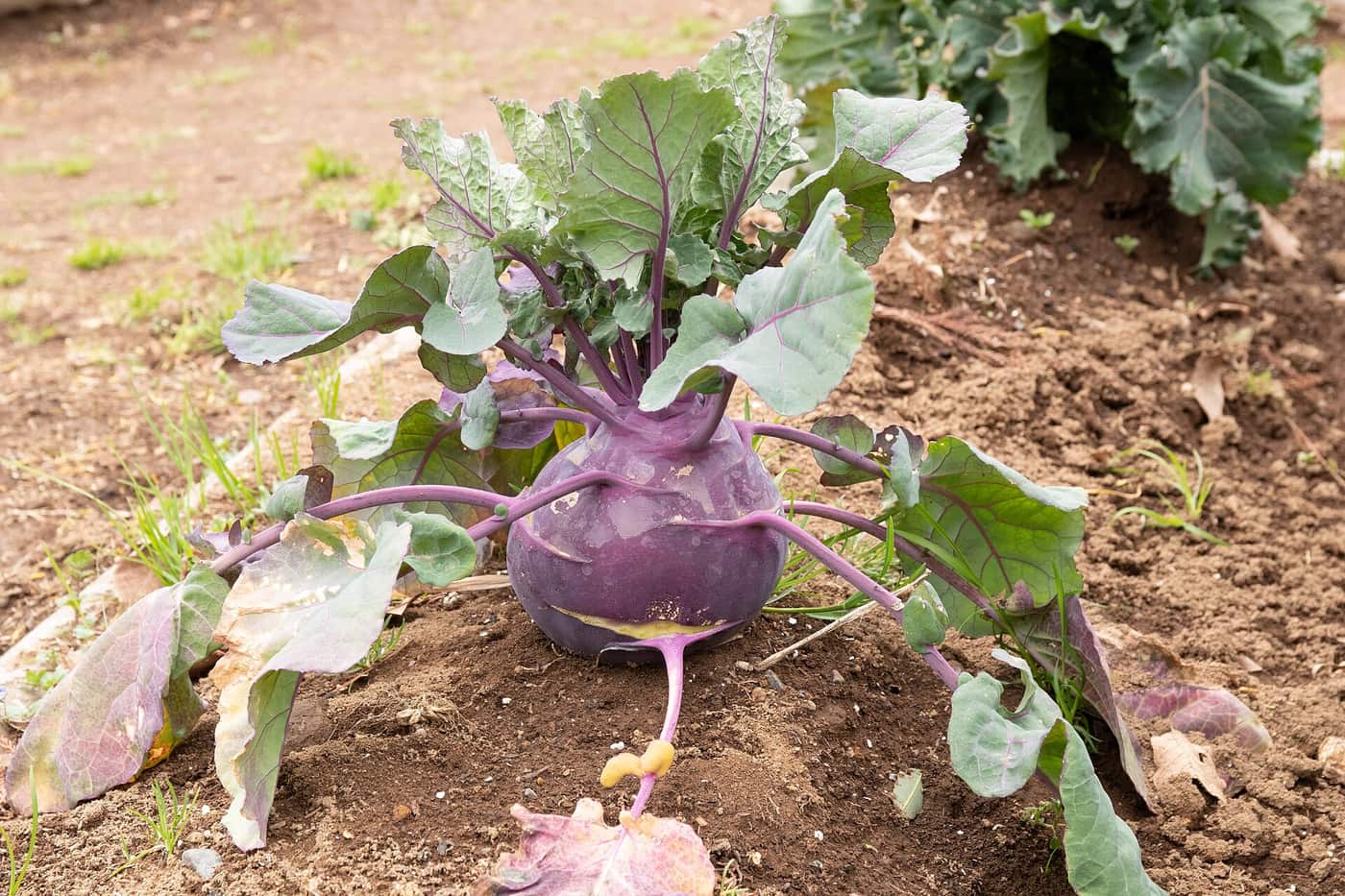
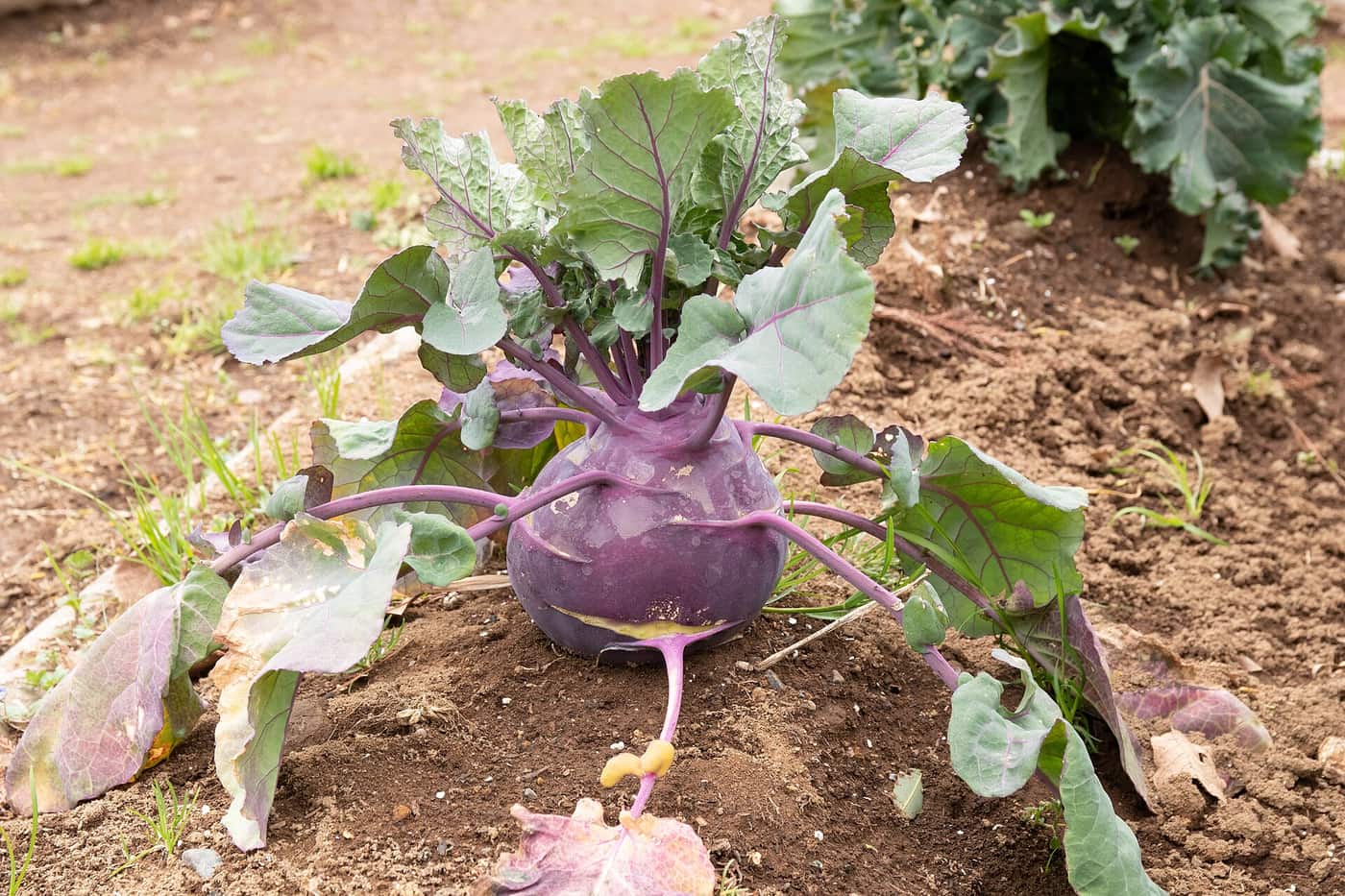
At a glance
Knol-khol in the Sub-tropical foothills
Across India
When to sow it
Twelve growing regions, January to December. Your region comes first.
Wait until August
The next sowing here is Last week of August, sown direct.
- Sow
- Nursery
- Transplant
- Harvest
- Under cover
- Today
Compare all 12 regionsShow fewer regions
See the dates as a table
| Region | Sow | Nursery | Transplant | Harvest |
|---|---|---|---|---|
| Sub-tropical foothills | Last week of August, sown direct | Mid-SeptemberMid-OctoberMid-FebruaryLast week of March | Mid-OctoberSecond week of DecemberLast week of MarchMid-April | |
| Temperate Himalaya | March to mid-AprilJuly | Mid-April to mid-MayAugust | June to JulyOctober to November | |
| Cold desert | Under cover: April, under polythene | MayUnder cover: Mid-October, in a polyhouse | July to early September | |
| North-west plains | September | October | December to January | |
| Gangetic plains | Late August to September | September to October | Late November to January | |
| North-east hills and valleys | September to mid-October | October to mid-November | December to mid-February | |
| Arid west | Mid-September to October | Mid-October to November | Late December to mid-February | |
| Central plateau | Mid-September to October | Mid-October to November | December to January | |
| Deccan plateau | October | November | Late December to mid-February | |
| South interior | September to mid-November | October to mid-December | December to February | |
| West coast | October to mid-November | November to mid-December | January to mid-February | |
| East coast | October to mid-November | November to mid-December | January to mid-February |
From seed to harvest
One season, day by day
Days from sowing
Before sowing
Field preparation
Farmyard manure
10 t per acre
Mix it into the soil while preparing the field.
Day 0
Sow
Before sowing
Farmyard manure1
10 t per acre · Mix it into the soil while preparing the field. · Field preparation
Day 0
Sow
Day 5 to 8
Seeds come up1,3Part of this comes from the sources cited. The rest is an AI suggestion.
Day 60 to 100
Last picking1Part of this comes from the sources cited. The rest is an AI suggestion.
Water every 7 to 10 days, more at knob swelling.No published guide covers this for the Sub-tropical foothills, so this is an AI suggestion. Check it with local advice before you rely on it.
What it needs
Soil, sun and warmth
Soil pH1
Grows on most soils if they are fertile. Light sandy or sandy loam soils suit an early crop; clay loam and silty soils, which hold more moisture, suit a late crop.
SunlightNo published guide covers this for the Sub-tropical foothills, so this is an AI suggestion. Check it with local advice before you rely on it.
At least 6 hours a day
Full sun in an open spot. In shade the stems swell slowly and stay small.
Temperature1,3Part of this comes from the sources cited. The rest is an AI suggestion.
Grows best at 15 to 25 °C
Takes hard frost.
Monthly temperatures for the Sub-tropical foothills aren't in the library yet.
Water and feeding
WateringNo published guide covers this for the Sub-tropical foothills, so this is an AI suggestion. Check it with local advice before you rely on it.
Water right after transplanting, then keep the soil evenly moist. A dry spell checks growth and makes the knobs woody.
Weeding1
Hoe often and shallow to kill weeds and keep the topsoil loose. The roots are shallow, so avoid deep digging. Weed once the plants have settled in the field.
| When | What | How much | How |
|---|---|---|---|
| Field preparation | Farmyard manure | 10 t per acre | Mix it into the soil while preparing the field. |
Varieties and yield
300 to 350 quintals a hectare
Yields vary with the plot, the seed and the season.
G-40 (SJKK-01)
Early; marketable knobs in 35 to 40 days. Flat round knobs. Tolerates alternaria blight, stalk rot, downy mildew, cabbage butterfly and semi loopers.
White Vienna
Early, about 70 days. Round, light green, smooth knob with creamy white flesh.
Purple Vienna
About a week later than White Vienna. Purple knob.
King of Market
Early, about 70 days. Flattened light green knob with plenty of leaves.
Good neighbours1
Pests and diseases1
Organic and cultural controls only.
Cutworm (Agrotis species)
Signs
Caterpillars cut young plants at the base, mostly at night.
What to do
- Plough deep before planting to expose the caterpillars.
Cabbage butterfly (Pieris brassicae)
Signs
Caterpillars feed in groups and eat the leaves from the edges inwards.
What to do
- Release the egg parasitoid Trichogramma chilonis, 20,000 an acre, six times at weekly intervals from mid-January.
- Spray Bacillus thuringiensis, 200 g an acre.
Prevention
- Plant border rows of mustard and coriander; their flowers bring in Cotesia wasps that parasitise the caterpillars.
White grubs
Signs
Grubs in the soil feed on roots; plants wilt and die.
What to do
- Plough deep before planting.
Tobacco caterpillar (Spodoptera litura)
Signs
Caterpillars eat the leaves, often in groups.
What to do
- Put up 5 to 6 pheromone traps an acre to catch the moths.
- Spray Spodoptera NPV in the evening.
Black rot (Xanthomonas campestris)
Signs
V-shaped yellow patches at the leaf edges turn dark brown; the veins blacken.
What to do
- Destroy diseased plant remains after harvest.
Prevention
- Take seed only from healthy plants grown where the disease is absent.
Damping off
Signs
Seedlings die before or just after they come up.
Prevention
- Use healthy seed.
- Transplant only healthy seedlings.
Stalk rot
Signs
Leaves droop and the stalk rots and turns hollow inside, with black specks.
What to do
- Pull out and destroy diseased plants.
Prevention
- Rotate with paddy.
Seed and the season's end
Saving seed1
Leave only healthy knobs that are true to type in the field for seed, and keep the seed crop 1,600 m from other knol-khol and other cole crops. Make sure insect pollinators are about at flowering.
When the seed is ready
Flowers appear 30 to 35 days after the chosen knobs are replanted, then pods set. Cut the branches as the pods ripen.
Cleaning the seed
Stack the cut branches to dry for 4 to 5 days, then turn them upside down and leave them 4 to 5 days more before threshing.
After the last picking1
Destroy diseased plant remains after harvest. Rotate cole crops with paddy against stalk rot.
Destroy diseased plant remains after harvest.
Rotation
SKUAST-Jammu advises rotating cole crops with paddy against stalk rot.
Sources
Where this comes from
Our team has checked this guide against the sources at the end of the page.Reviewed by our team on 13 November 2026.
These published guides are the sources. Where none of them covers a detail for this region, the page shows an AI suggestion and labels it.
- Package of Practices for Vegetable Crops 2020 (Knol-khol; insect-pest and disease management in cole crops; preface)Directorate of Extension, Sher-e-Kashmir University of Agricultural Sciences and Technology of Jammu (SKUAST-Jammu)Read the source
- Package of Practices for Vegetable Crops 2016 (Knol-khol)Directorate of Extension, Sher-e-Kashmir University of Agricultural Sciences and Technology of Jammu (SKUAST-Jammu)Read the source
- Production Technology of Vegetables and Flowers (VSF-231), Part I: Vegetable production (Knol khol; diseases and insect-pests of cole crops)CSK Himachal Pradesh Krishi Vishvavidyalaya, Palampur (Department of Vegetable Science and Floriculture)Read the source
AI Farm Manager · In development
Plan this crop on your land
AI Farm Manager will turn guides like this one into a plan for your own plot. It doesn't make plans yet.