
Growing onion
Allium cepa · also called pyazA cool-season bulb crop grown as an annual from nursery seedlings. Leaves grow in cool weather and bulbs swell in warmth, so the season changes a lot from region to region.
Deccan plateau: interior Maharashtra, Telangana, north Karnataka
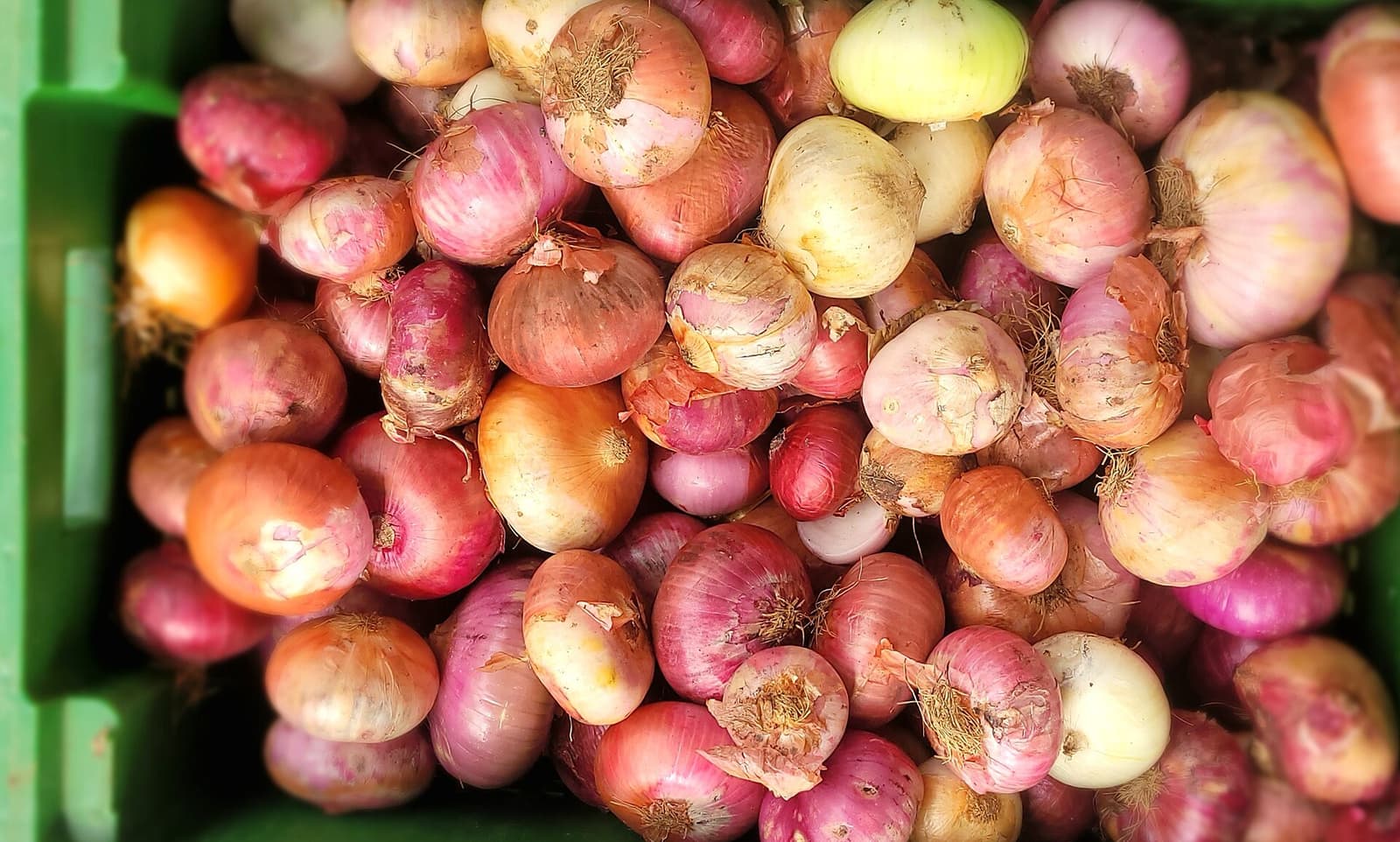
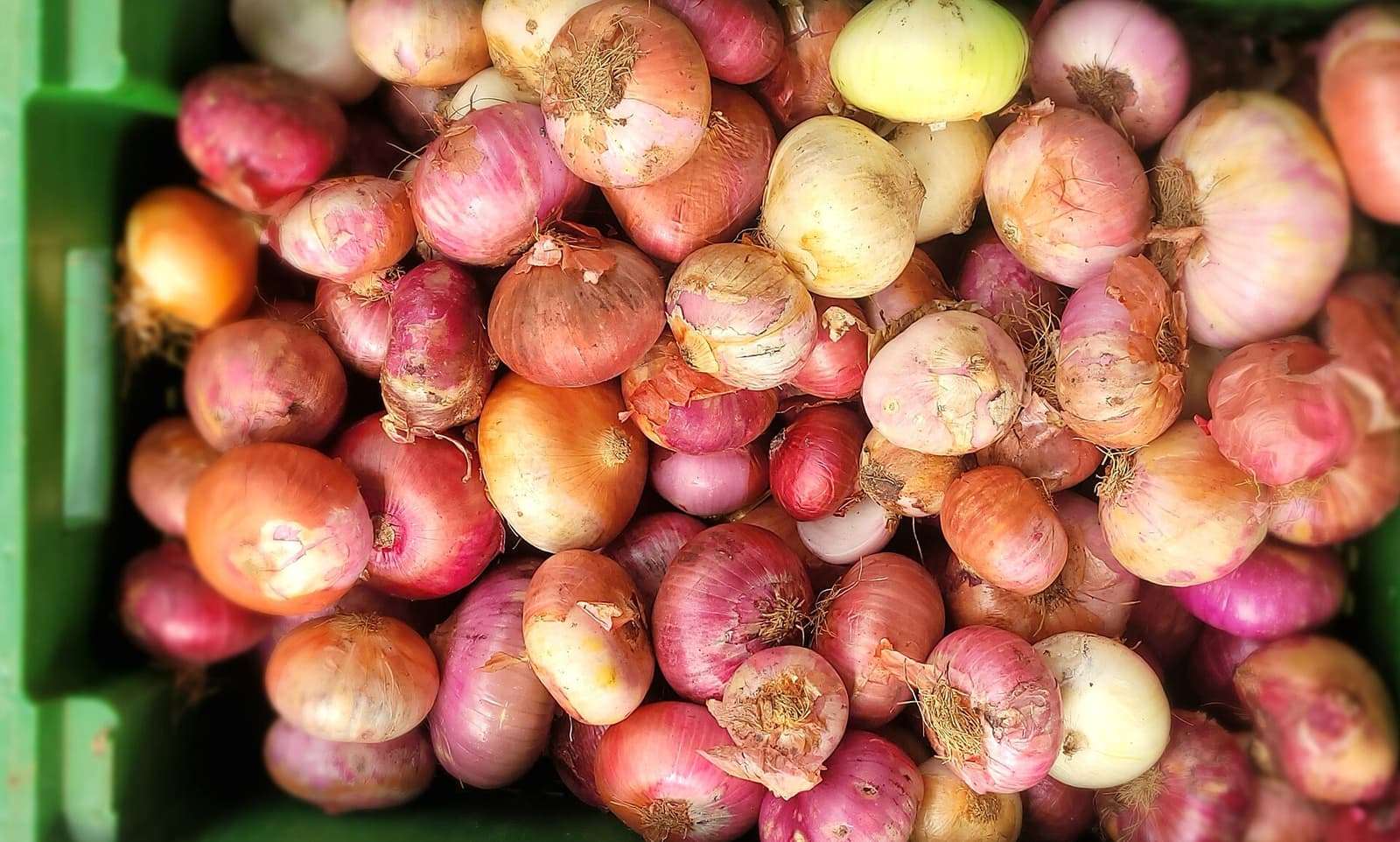
At a glance
Onion in the Deccan plateau
Across India
When to sow it
Twelve growing regions, January to December. Your region comes first.
Sow now
The window here is October to November.
- Nursery
- Transplant
- Harvest
- Today
Compare all 12 regionsShow fewer regions
See the dates as a table
| Region | Sow | Nursery | Transplant | Harvest |
|---|---|---|---|---|
| Deccan plateau | May to JuneAugust to SeptemberOctober to November | July to AugustSeptember to OctoberNovember to December | October to NovemberMarch to April | |
| Temperate Himalaya | September to early OctoberMarch to early April | Late October to NovemberLate April to May | June to JulyLate August to September | |
| Cold desert | April | Late May to early June | September to early October | |
| Sub-tropical foothills | October to NovemberAugust | December to JanuaryOctober | May to early June | |
| North-west plains | Late October to mid-NovemberMay to June | Last week of December to mid-JanuaryJuly to August | Late April to May | |
| Gangetic plains | October to NovemberJune to JulyAugust to September | December to JanuaryAugust to SeptemberOctober to November | April to May | |
| North-east hills and valleys | October to early November | Late November to December | Late March to April | |
| Arid west | End of May to first week of JuneOctober to November | Mid to end of JulyDecember to January | End of October to end of November | |
| Central plateau | November to DecemberJuly to August | Late March to AprilOctober to November | ||
| South interior | February to AprilMay to JuneSeptember to October | April to JuneJuly to AugustNovember to December | ||
| West coast | November to December | December to January | April to early May | |
| East coast | May to JuneSeptember to OctoberAugust to September | July to AugustNovember to DecemberOctober to November |
From seed to harvest
One season, day by day
Days from sowing
Before sowing
15 days before transplanting
Well rotted organic manure
25 to 30 t per hectare
Work into the soil.
At planting
Neem cake
250 kg per hectare
Apply as a basal dose.
At planting
PSB and Azotobacter
5 kg each per hectare
Apply through rotted manure, or in liquid form through drip.
Day 0
Sow
Before sowing
Well rotted organic manure
25 to 30 t per hectare · Work into the soil. · 15 days before transplanting
Neem cake
250 kg per hectare · Apply as a basal dose. · At planting
PSB and Azotobacter14
5 kg each per hectare · Apply through rotted manure, or in liquid form through drip. · At planting
Day 0
Sow
Day 6 to 10
Seeds come up1,2,3,8Part of this comes from the sources cited. The rest is an AI suggestion.
Day 40 to 55
Day 90 to 130
Water every 7 days, more at bulb formation.9
What it needs
Soil, sun and warmth
Soil pH1,2,4,13
5.8 to 7.5
Light, deep, friable and fertile soil with good drainage: sandy loam to clay loam rich in organic matter. Waterlogging, a high water table, and strongly alkaline or saline soils do not suit it. Sandy soil needs more frequent watering and extra manure.
Sunlight4,15
At least 10 hours a day
Needs good light: at least 10 hours a day for growth and bulbing. The kharif crop bulbs with 11 to 12 hour days, and clear sunny weather at harvest helps curing.
Temperature1,2,4,16
Grows best at 13 to 25 °C
Takes light frost.
Monthly temperatures for the Deccan plateau aren't in the library yet.
Water and feeding
Watering9
Water straight after transplanting, then lightly about once a week. A kharif crop needs about 8 to 10 waterings depending on rain, late kharif 12 to 15 and rabi 15 to 20. Do not let the crop go dry while bulbs form, or bulbs split and mature early. Stop watering 10 days before a kharif harvest, and when the tops start to fall in rabi.
| When | What | How much | How |
|---|---|---|---|
| 15 days before transplanting | Well rotted organic manure | 25 to 30 t per hectare | Work into the soil. |
| At planting | Neem cake | 250 kg per hectare | Apply as a basal dose. |
| At planting | PSB and Azotobacter | 5 kg each per hectare | Apply through rotted manure, or in liquid form through drip. |
Varieties and yield
10 to 15 tonnes a hectare
Yields vary with the plot, the seed and the season.
Bhima Super
ICAR-DOGR; kharif and late kharif (Maharashtra, Karnataka and others).
Bhima Raj
ICAR-DOGR; kharif and late kharif for Maharashtra.
Bhima Red
ICAR-DOGR; kharif for Maharashtra and Karnataka, rabi for Maharashtra.
Baswant 780
MPKV Rahuri; kharif and late kharif.
Phule Samarth
MPKV Rahuri; kharif and late kharif.
N-2-4-1
Maharashtra; late kharif and rabi.
Bhima Shakti
ICAR-DOGR; rabi for Maharashtra, Karnataka and Andhra Pradesh.
NHRDF Red-2 (L-355)
Rabi, zone VI (Maharashtra, Karnataka, Andhra Pradesh).
Grows well with
- Maize
- Sugarcane
Organic and cultural controls only.
Onion thrips (Thrips tabaci)
Signs
Tiny insects between the leaves suck sap; leaves get silvery blotches that turn brown and twist from the tip, and bulbs stay small.
Onion maggot
Signs
Small white maggots eat into the base of the bulb; plants yellow and dry up, and bulbs rot in store.
Prevention
- Rotate crops; do not plant onion after onion.
- Use only well rotted manure and avoid soil full of undecomposed matter.
- Do not plant too close.
Cutworm
Signs
Greasy brown caterpillars cut seedlings at ground level at night in the nursery and in newly planted fields.
Damping off
Signs
Seeds and seedlings rot in the nursery, or collapse at the soil line; worst in the rainy season.
What to do
- Apply Trichoderma viride to the soil at 1.2 kg per hectare.
Prevention
- Sow healthy seed.
- Do not raise the nursery on the same plot every year.
- Solarise the bed under 250 gauge polythene for 30 days before sowing.
Anthracnose or twister (Colletotrichum)
Signs
Pale yellow water-soaked spots that spread along the leaf; leaves shrivel and droop.
Prevention
- Destroy infected crop debris.
- Plant on raised beds with good drainage and rotate crops.
Purple blotch (Alternaria porri)
Signs
Small sunken white flecks with purple centres on leaves and flower stalks; common in hot, humid kharif weather.
Prevention
- Plant healthy seed.
- Rotate for 2 to 3 years with unrelated crops.
Black mould in store
Signs
Black powdery spores on the scales of bulbs stored in hot weather.
Prevention
- Leave lifted bulbs in the field for 2 days, then dry them in shade for 10 to 15 days.
Seed and the season's end
Saving seed1,2,5
Onion takes two seasons to make seed. Raise bulbs from seed in the first year, then plant these mother bulbs 45 x 20 cm apart in October; the seed crop is ready in April or May. Keep at least 1,000 m between varieties and pull out off-type and sick plants. Sun the mother bulbs for about 12 days before planting to kill downy mildew.
Onion seed stays viable for only about one year.
After the last picking10
As a winter crop, onion follows cereals, groundnut or cowpea. After a monsoon or late monsoon onion, growers plant coriander, French bean, sorghum, pearl millet, chillies or groundnut.
Clear and destroy crop residues after harvest: the blight and anthracnose fungi survive on them.
Rotation
Do not grow onion on the same land year after year; keep 2 to 3 years between onion crops. As a winter crop it can follow cereals, groundnut or cowpea, and it does well after cauliflower, tomato or potato that got plenty of manure.
Sources
Where this comes from
Our team has checked this guide against the sources at the end of the page.Reviewed by our team on 13 November 2026.
These published guides are the sources. Where none of them covers a detail for this region, the page shows an AI suggestion and labels it.
- Onion: Intercultural Operations (weed control, rotation and mixed cropping)National Horticulture BoardRead the source
- Onion: Manuring and FertilizationNational Horticulture BoardRead the source
- Onion: Post Harvest Technology (curing, grading, storage)National Horticulture BoardRead the source
- How to get high yield from rabi onion? (Sable and Sonpure), Indian Horticulture, July-August 2023Indian Council of Agricultural Research (Indian Horticulture magazine)Read the source
- Scientific cultivation of kharif onion (Sable, Mahajan and Sonpure), Indian Horticulture, March-April 2021Indian Council of Agricultural Research (Indian Horticulture magazine)Read the source
- Pusa Sona: a new variety of onion (Joshi, Islam, Khar, Tomar and Pandita), Indian Horticulture, January-February 2020ICAR-Indian Agricultural Research Institute, New Delhi (Indian Horticulture magazine)Read the source
- Horticulture: Vegetables: Bellary onionTamil Nadu Agricultural University (TNAU Agritech Portal)Read the source
- Onion: Propagation (nursery beds, season of planting by state, raising seedlings, small bulblets)National Horticulture BoardRead the source
- Onion: Soil and ClimateNational Horticulture BoardRead the source
- Onion: DiseasesNational Horticulture BoardRead the source
- Onion: PestsNational Horticulture BoardRead the source
- Onion: Harvesting (and yield)National Horticulture BoardRead the source
- Onion: PlantingNational Horticulture BoardRead the source
- Onion: IrrigationNational Horticulture BoardRead the source
AI Farm Manager · In development
Plan this crop on your land
AI Farm Manager will turn guides like this one into a plan for your own plot. It doesn't make plans yet.