
Growing saffron
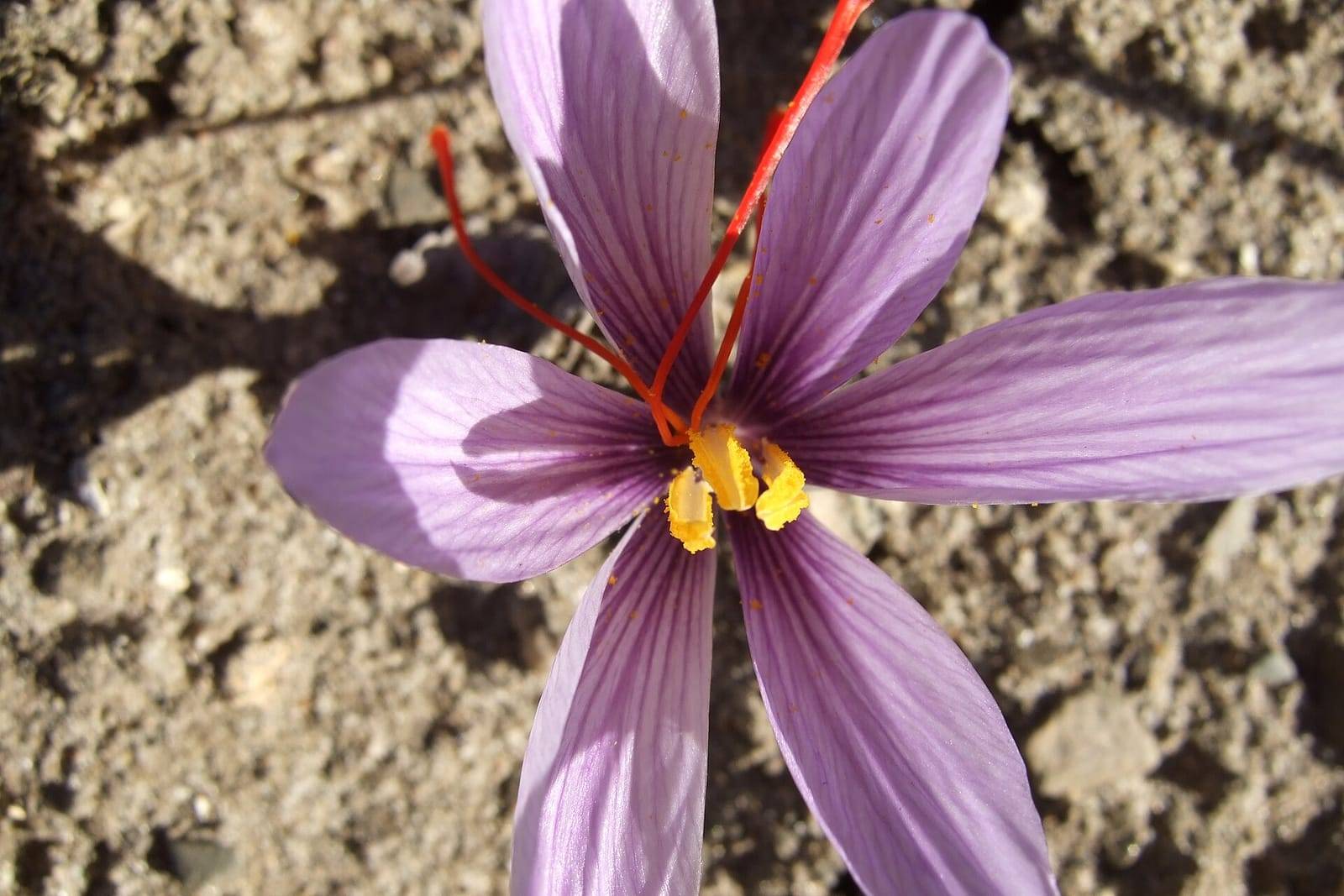
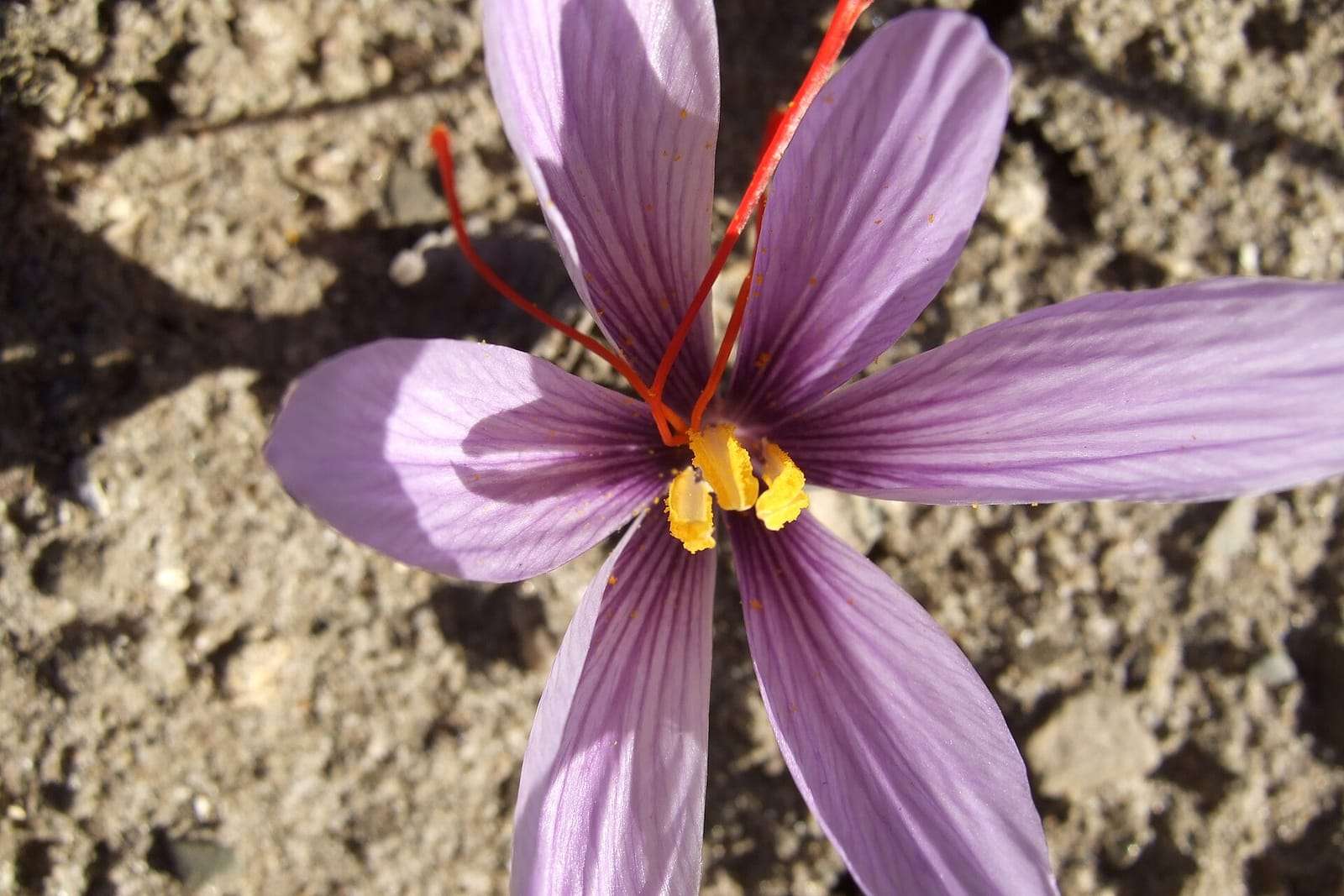
Crocus sativus · also called kesar, kong (Kashmiri)A low autumn-flowering crocus grown from corms for its red stigmas, dried into the spice. In India it is a crop of the Kashmir valley and Kishtwar, planted in July and picked by hand in autumn.
Temperate Himalaya: Kashmir valley, Shimla, Kullu, Uttarakhand hills
At a glance
Saffron in the Temperate Himalaya
Corms planted in July, flowers picked in autumn (October to November)1
Part of this comes from the sources cited. The rest is an AI suggestion.A perennial planting. Corms stay in the ground for four years and flower every autumn, from the first autumn after planting. Leaves grow through winter and spring, then the corms rest from about May to August.1
Part of this comes from the sources cited. The rest is an AI suggestion.15 to 30 July1
Part of this comes from the sources cited. The rest is an AI suggestion.
Across India
When to sow it
Twelve growing regions, January to December. Your region comes first.
Wait until July
The next sowing here is 15 to 30 July.
- Sow
- Harvest
- Today
Compare all 12 regionsShow fewer regions
See the dates as a table
| Region | Sow | Nursery | Transplant | Harvest |
|---|---|---|---|---|
| Temperate Himalaya | 15 to 30 July | Mid-October to early November | ||
| Cold desert | No guide for this region yet | |||
| Sub-tropical foothills | No guide for this region yet | |||
| North-west plains | No guide for this region yet | |||
| Gangetic plains | No guide for this region yet | |||
| North-east hills and valleys | No guide for this region yet | |||
| Arid west | No guide for this region yet | |||
| Central plateau | No guide for this region yet | |||
| Deccan plateau | No guide for this region yet | |||
| South interior | No guide for this region yet | |||
| West coast | No guide for this region yet | |||
| East coast | No guide for this region yet | |||
From seed to harvest
One season, day by day
Days from sowing
Before sowing
Compost or well-rotted FYM
15 t per hectare (7.5 quintals per kanal) · Spread evenly and mix in at the first ploughing. It helps the soil hold water. · First ploughing
Vermicompost1
10 quintals per hectare (50 kg per kanal) · Mix well into the soil before the corms go in. · Final ploughing, before planting
Day 40 to 60
Seeds come up1,2,3Part of this comes from the sources cited. The rest is an AI suggestion.
Saffron needs water most from August to November. SKUAST-Kashmir sets five waterings of 140 m³ a hectare each, about 15 days apart: two for sprouting (1 to 15 and 16 to 30 September), one before flowering (1 to 10 October) and two after flowering (10 to 20 and 21 to 30 November). That is 70 mm on top of about 131 mm of rain from August to November. Keep the top of the beds from staying wet, as corm rot follows.1,2
What it needs
Soil, sun and warmth
Soil pH1,2,3
7 to 8
Loose, friable, well-drained clay or clay loam that is calcareous, rich in organic matter and free of pebbles. Slightly alkaline soil gives a better stand.
SunlightNo published guide covers this for the Temperate Himalaya, so this is an AI suggestion. Check it with local advice before you rely on it.
Full sun. Grow it in an open field with no shade from trees or buildings.
TemperatureNo published guide covers this for the Temperate Himalaya, so this is an AI suggestion. Check it with local advice before you rely on it.
Grows best at 10 to 25 °C
Takes hard frost.
Monthly temperatures for the Temperate Himalaya aren't in the library yet.
Water and feeding
Watering1,2
Saffron needs water most from August to November. SKUAST-Kashmir sets five waterings of 140 m³ a hectare each, about 15 days apart: two for sprouting (1 to 15 and 16 to 30 September), one before flowering (1 to 10 October) and two after flowering (10 to 20 and 21 to 30 November). That is 70 mm on top of about 131 mm of rain from August to November. Keep the top of the beds from staying wet, as corm rot follows.
Sprouting: September, two waterings. Before flowering: early October, one. After flowering: November, two.
Weeding1,2,3
Saffron is low and slow, so weeds can cut flower and corm yields by about 30%. Hand weed from December to April while the leaves are growing, with light hoeing in winter. Hoe once in the second half of June to air the soil, but skip it if the soil is wet, as that brings corm rot and packs the soil. Hoe again in August and leave a fine tilth so the sprouts come through. SKUAST-Jammu asks for at least three hoeings in the summer rest.
| When | What | How much | How |
|---|---|---|---|
| First ploughing | Compost or well-rotted FYM | 15 t per hectare (7.5 quintals per kanal) | Spread evenly and mix in at the first ploughing. It helps the soil hold water. |
| Final ploughing, before planting | Vermicompost | 10 quintals per hectare (50 kg per kanal) | Mix well into the soil before the corms go in. |
Varieties and yield
8 to 10 kg a hectare
Yields vary with the plot, the seed and the season.
Shalimar Saffron-1 (SD 1-13)
SKUAST-Kashmir composite variety. Large corms that look like gladiolus corms, suits high-density planting, moderately resistant to corm rot and leaf blight.
Organic and cultural controls only.
Blyth's vole
Signs
A small burrowing rodent, active from November to April. It bites the shoots off at the corm and carries the corms away to store. Plants wither and dry in patches, much like corm rot.
What to do
- Clear fallen debris and grass from the field so voles find no food or cover
- Cut boundary bunds down to about 30 cm so voles leave them
- Smoke out live burrows with a burrow fumigator burning cow dung, maize straw and local herbs
- Set live traps in a grid or line, 15 to 20 traps a hectare
- Work with neighbours: control works only across large joined areas, repeated
Prevention
- Keep the field and bunds clean of weeds and debris
Indian crested porcupine
Signs
A large quilled rodent that digs up and eats the corms.
What to do
- Place lamps in and around the field at night
- Fence the field with metal sheet 45 to 60 cm high
Prevention
- The porcupine is protected under the Jammu and Kashmir Wildlife (Protection) Act, so keep it out rather than harm it
Corm rot (Fusarium)
Signs
Plants wither and dry in patches and the corms rot. Wet soil in the top of the beds makes it worse.
What to do
- Collect and burn affected plants with their corms
- Mix Trichoderma into FYM before spreading, 1 kg to 20 kg of FYM
Prevention
- Plough deep in the summer months
- Plant on raised beds with paths between them that drain water away
- Plant only healthy corms
- Add well-rotted FYM, 20 t per hectare
- Do not hoe when the soil is wet
Seed and the season's end
Saving seed1,3Part of this comes from the sources cited. The rest is an AI suggestion.
Saffron sets no seed, so it is kept going from corms. Each corm makes 3 or 4 daughter corms. Lift them after the planting cycle, which is four years for Shalimar Saffron-1.
When the seed is ready
Lift in June, when the leaves have dried off and the corms are dormant.
Cleaning the seed
Clean off the husk and soil. Keep large, healthy corms, at least 2.5 cm across, for planting, and throw out any that are soft or rotting.
Store lifted corms in boxes, covered with soil, at 19 to 23°C and 65 to 75% humidity for 40 to 45 days, then plant. Good storage stops them sprouting early.
After the last picking1
After the fourth year, lift the corms in June while they are dormant. Store them in boxes covered with soil at 19 to 23°C and 65 to 75% humidity for 40 to 45 days before planting again. In a high-density planting Shalimar Saffron-1 can give 250 to 275 quintals of corms a hectare at the end of the cycle.
Work the dried leaves into the soil when hoeing in summer.
Rotation
A planting stays four years. Then lift the corms in June and plant them again in freshly prepared land rather than the same beds, which cuts the build-up of corm rot.
Sources
Where this comes from
Our team has checked this guide against the sources at the end of the page.Reviewed by our team on 13 November 2026.
These published guides are the sources. Where none of them covers a detail for this region, the page shows an AI suggestion and labels it.
- Package of Practices for Shalimar Saffron-1 (Manual Series AU/DR/Booklet/PoP/Saffron/20/009)Advanced Research Station for Saffron and Seed Spices, Directorate of Research, Sher-e-Kashmir University of Agricultural Sciences and Technology of Kashmir (SKUAST-Kashmir)Read the source
- Package of Practices for Shalimar Saffron-1 (SD 1-13), Heritage Crop (pamphlet)Advanced Research Station for Saffron and Seed Spices, Konibal, Pampore, SKUAST-Kashmir (AICRP on Spices extension pamphlet)Read the source
- Package of Practices for Kharif Crops 2016 (5.2 Saffron)Directorate of Extension, Sher-e-Kashmir University of Agricultural Sciences and Technology of Jammu (SKUAST-Jammu)Read the source
AI Farm Manager · In development
Plan this crop on your land
AI Farm Manager will turn guides like this one into a plan for your own plot. It doesn't make plans yet.