
Growing banana
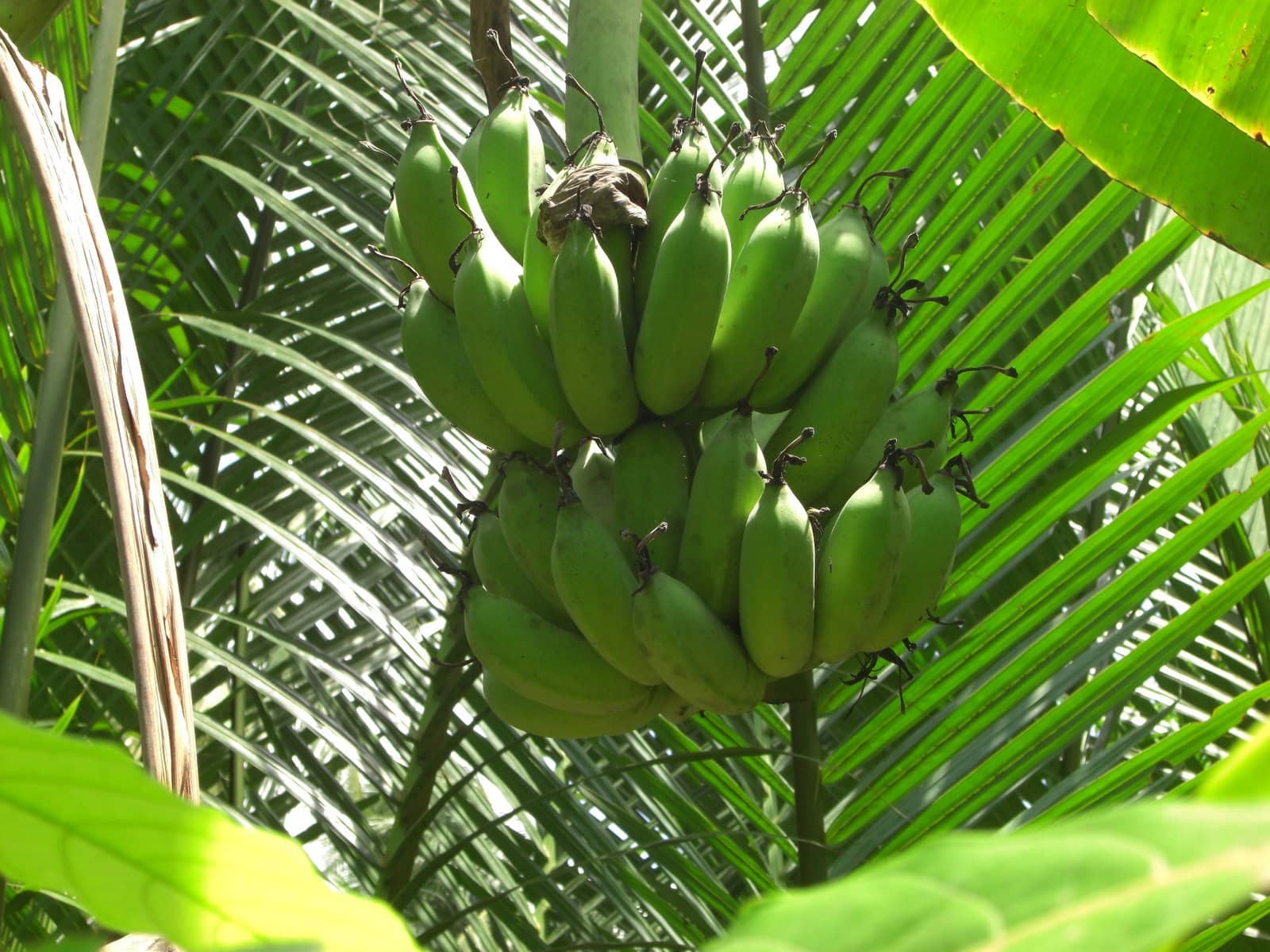
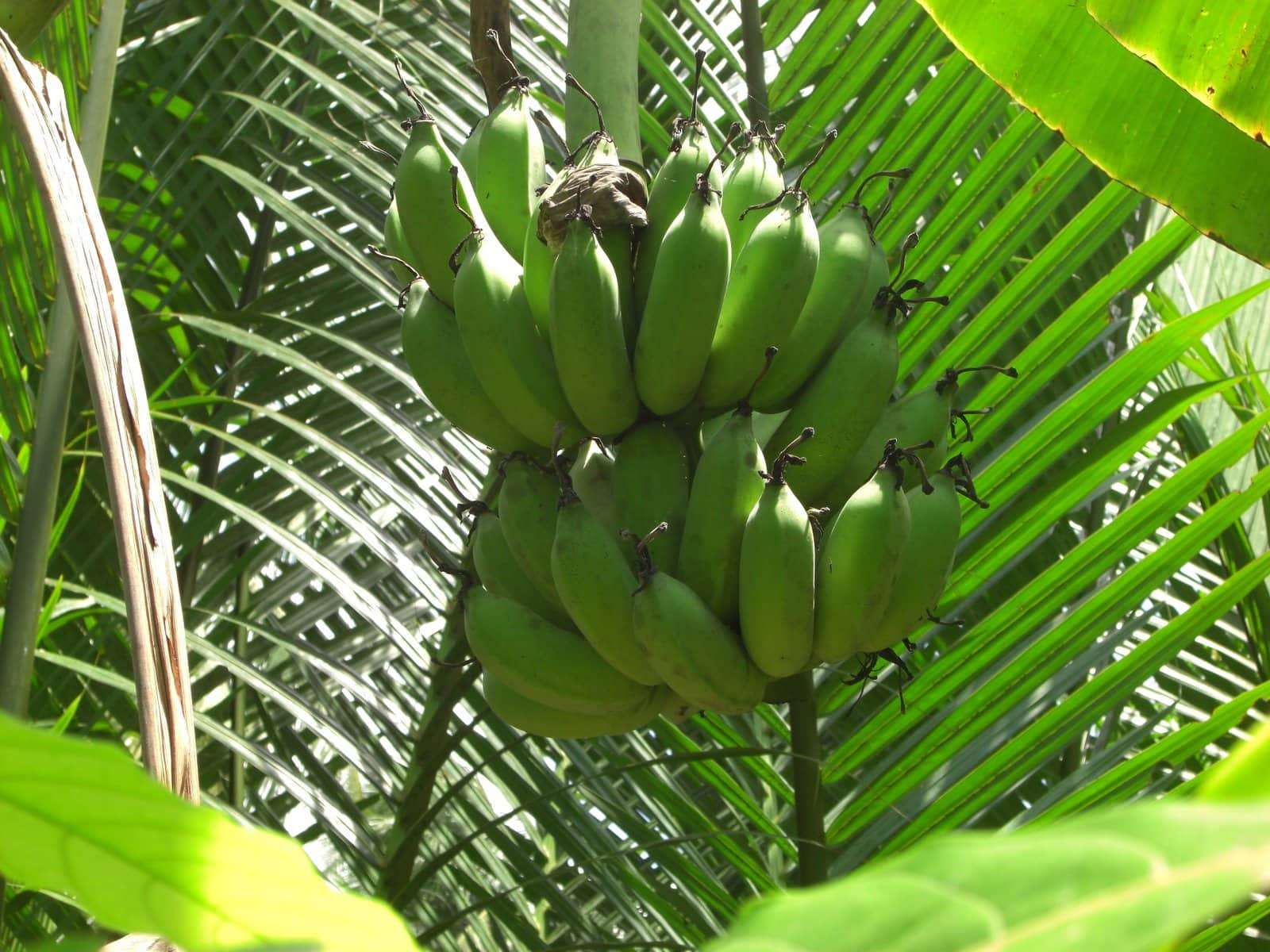
Musa spp. · also called kelaBanana is a tall tropical herb planted from suckers or tissue-culture plants. It wants warmth, rich moist soil and plenty of water, and fruits about a year after planting, with ratoon crops from the suckers.
Gangetic plains: eastern Uttar Pradesh, Bihar, West Bengal plains
At a glance
Banana in the Gangetic plains
Across India
When to sow it
Twelve growing regions, January to December. Your region comes first.
Too late this season
The window here was September to October. The next one opens in May.
- Transplant
- Harvest
- Today
- Not suited here
Compare all 12 regionsShow fewer regions
See the dates as a table
| Region | Sow | Nursery | Transplant | Harvest |
|---|---|---|---|---|
| Gangetic plains | May to JuneSeptember to October | |||
| Temperate Himalaya | Not suited here | |||
| Cold desert | Not suited here | |||
| Sub-tropical foothills | Late February to early March | April to May of the next year | ||
| North-west plains | Mid-February to early March | April to May | ||
| North-east hills and valleys | March to May | |||
| Arid west | Not suited here | |||
| Central plateau | May to JuneSeptember to October | |||
| Deccan plateau | June to JulyOctober to NovemberFirst week of February | |||
| South interior | November to DecemberJanuary to FebruaryApril to May | |||
| West coast | May to JuneSeptember to October | |||
| East coast | February to AprilApril to May | |||
From seed to harvest
One season, day by day
Days from sowing
Before sowing
Well-rotted FYM
40 to 50 t per hectare · Work into the soil before planting · Field preparation
FYM
10 to 15 kg per pit · Mix into the pit soil · Pit planting
Banana needs plenty of water; how much depends on the soil, the weather and the variety. Water in basins around each plant rather than flooding the spaces between, and do not link one basin to the next. With flood watering, irrigate once a week; near Jalgaon growers water every 3 to 4 days in hot weather. Cut the number and amount of irrigations after the rains. Tissue-culture plants do well on drip. Stop watering about a week before harvest.9,11
What it needs
Soil, sun and warmth
Soil pH1,6
6.5 to 7.5
Deep (0.5 to 1 m), rich, fertile, well-drained loam that holds moisture and has plenty of organic matter. Alluvial and volcanic soils suit it well. Standing water causes disease, and alkaline or saline soils are to be avoided.
SunlightNo published guide covers this for the Gangetic plains, so this is an AI suggestion. Check it with local advice before you rely on it.
Full sun in open fields. Plants also grow in light shade, as in coconut and arecanut gardens, but bunches are smaller.
Temperature6Part of this comes from the sources cited. The rest is an AI suggestion.
Grows best at 20 to 35 °C
Frost: none tolerated.
Monthly temperatures for the Gangetic plains aren't in the library yet.
Water and feeding
Watering9,11
Banana needs plenty of water; how much depends on the soil, the weather and the variety. Water in basins around each plant rather than flooding the spaces between, and do not link one basin to the next. With flood watering, irrigate once a week; near Jalgaon growers water every 3 to 4 days in hot weather. Cut the number and amount of irrigations after the rains. Tissue-culture plants do well on drip. Stop watering about a week before harvest.
Weeding10
Weed regularly in the first four months. About four spadings a year keep weeds down, and a double crop of cowpea between the rows smothers them too. Vegetables or flowers such as radish, cauliflower, cabbage, spinach, chilli, brinjal, okra and marigold can be grown between young plants.
| When | What | How much | How |
|---|---|---|---|
| Field preparation | Well-rotted FYM | 40 to 50 t per hectare | Work into the soil before planting |
| Pit planting | FYM | 10 to 15 kg per pit | Mix into the pit soil |
| Tissue-culture plants | Topsoil, well-rotted FYM and sand | Fill pits of 45 cm each way with equal parts of the three |
Varieties and yield
30 to 40 tonnes a hectare
Yields vary with the plot, the seed and the season.
Dwarf Cavendish
Grown widely in Bihar and West Bengal (NHB).
Rasthali
Grown commercially in Bihar (NHB).
Red Banana
Known as Lal Velchi in Bihar (NHB).
Karpuravalli
Grown in patches in Bihar as Kanthali (NHB).
Keep it away from
Organic and cultural controls only.
Pseudostem borer
Signs
Sap oozes from small holes in the stem with a black mass. The grubs feed inside the stem, and a badly attacked plant dies. Most active in summer and the monsoon.
What to do
- Uproot and burn badly attacked plants
- Keep the plantation clean of dry leaves and old stems
Rhizome weevil
Signs
Grubs tunnel through the corm, which rots. Leaves yellow, wither and die early, and yields fall.
What to do
- Clear the debris and rotting stems where the weevils shelter
- Lay split pieces of old stem or rhizome, 30 to 60 cm long, between the plants as traps and pick off the weevils that gather
Prevention
- Plant only suckers from fields known to be clear of the weevil
Banana aphid
Signs
Yellowish-green aphids on the underside of leaves suck sap; parts turn discoloured and misshapen. This aphid spreads bunchy top.
Prevention
- Take suckers only from healthy clumps in places without bunchy top
- Dig out bunchy top plants at once so the aphid has nothing to spread
Leaf and fruit scarring beetle
Signs
Beetles eat young leaves and the skin of young fruit, leaving scarred, spotted fingers. Worst in the rainy season.
What to do
- Remove grass weeds from the plantation
- Cover the bunches
Burrowing nematode
Signs
Small dark spots on the roots, then rotting roots. Bunches carry fewer, smaller fruit, and the plants stop responding to feeding or water. Numbers build up in ratoon crops.
What to do
- Neem cake, 250 to 400 g per pit at planting
Prevention
- Plant clean corms in soil that has been left fallow
Panama wilt (Fusarium wilt)
Signs
Older leaves yellow from the edges, hang down around the stem and wither. A cut stem shows yellow to reddish streaks, darker towards the rhizome. Worst in poor, light, wet or badly drained soil cropped with banana year after year.
What to do
- Uproot and burn badly affected plants
- Put quick lime near the base of the plant and water it in
- Add Trichoderma viride or Pseudomonas fluorescens to the soil
Prevention
- Do not replant banana in badly infected soil for at least 3 to 4 years
- Use clean planting material and resistant varieties
- Grow paddy in the rotation, and keep sunflower and sugarcane out of it
Sigatoka leaf spot
Signs
Light yellow spots on the leaves grow into oval dark brown spots with a dead grey centre and a brown ring. Spots join and kill large parts of the leaf. Spreads in rain and dew above about 21°C.
What to do
- Improve drainage and keep weeds down
- Remove diseased suckers
Prevention
- Keep the right spacing so the plants stay airy
Bunchy top
Signs
New leaves come narrow, upright, pale and brittle with rolled-up edges, and dark green broken streaks run along the veins and midrib. The plant stays stunted and gives no useful bunch. Dwarf types are very susceptible.
What to do
- Dig out and destroy affected plants, their suckers and the whole clump
Prevention
- Never take planting material from places where the disease occurs
Moko (bacterial wilt)
Signs
Inner leaves yellow near the stalk and collapse, and most leaves wilt within a week. Yellow fingers on an otherwise green bunch are a sign. Cut suckers regrow black and stunted.
What to do
- Find and destroy suspect plants early
- Clean pruning and cutting tools between plants
Prevention
- Remove the male bud as soon as the last female hand opens, since insects carry the bacterium from the male flowers
Cigar end tip rot
Signs
A dry black rot spreads from the flower end into the tips of young fingers and looks like the ash on a cigar.
What to do
- Remove the dried flower parts (pistil and perianth) by hand 8 to 10 days after the bunch forms
Bract mosaic
Signs
Yellow-green bands or mottling on young leaves, with thickened veins. Bunch growth suffers.
What to do
- Remove and destroy affected plants with their rhizomes
Prevention
- Do not grow cucurbits in or around the banana field
Seed and the season's end
Saving seed15,18
Commercial bananas are seedless and are raised only from suckers, rhizomes or tissue culture. Take planting material from healthy, high-yielding clumps whose bunches carry at least 10 hands, since banana varies from plant to plant.
When the seed is ready
Choose sword suckers 2 to 4 months old with a well-developed base and narrow, sword-shaped leaves.
In Jalgaon, Basrai rhizomes are lifted after harvest and stored in a cool, dry place for about two months before planting. Pick conical rhizomes of 500 to 750 g and reject flat ones (NHB). MPKV's Jalgaon station found moderately large, straight, non-cylindrical rhizomes of 450 to 750 g the most suitable planting material.
After the last pickingNo published guide covers this for the Gangetic plains, so this is an AI suggestion. Check it with local advice before you rely on it.
After cutting the bunch, leave the old stem standing for a few weeks to feed the sucker kept for the next crop, then chop it and use it as mulch. After two or three ratoon crops, or when wilt or bunchy top appears, dig out the clumps and grow another crop before replanting.
After harvest, cut the stem leaving a stump about 0.6 m tall; it keeps feeding the daughter sucker until it dries. Uproot, chop and burn plants attacked by stem weevil, and keep them out of manure pits.
Rotation
Do not replant banana in soil badly infected with wilt for 3 to 4 years. Grow paddy in the rotation, and keep sunflower and sugarcane out of it.
Sources
Where this comes from
Our team has checked this guide against the sources at the end of the page.Reviewed by our team on 13 November 2026.
These published guides are the sources. Where none of them covers a detail for this region, the page shows an AI suggestion and labels it.
- Banana: crop production guideTNAU Agritech Portal, Tamil Nadu Agricultural UniversityRead the source
- Banana: intercultural operationsNational Horticulture BoardRead the source
- Banana: irrigationNational Horticulture BoardRead the source
- Banana: manuring and fertilisationNational Horticulture BoardRead the source
- Banana: pestsNational Horticulture BoardRead the source
- Banana: plantingNational Horticulture BoardRead the source
- Banana: propagationNational Horticulture BoardRead the source
- Banana: varietiesNational Horticulture BoardRead the source
- Banana: soil and climateNational Horticulture BoardRead the source
- Banana: area under cultivationNational Horticulture BoardRead the source
- Banana: diseasesNational Horticulture BoardRead the source
- Banana: harvestingNational Horticulture BoardRead the source
AI Farm Manager · In development
Plan this crop on your land
AI Farm Manager will turn guides like this one into a plan for your own plot. It doesn't make plans yet.