
Growing cherry
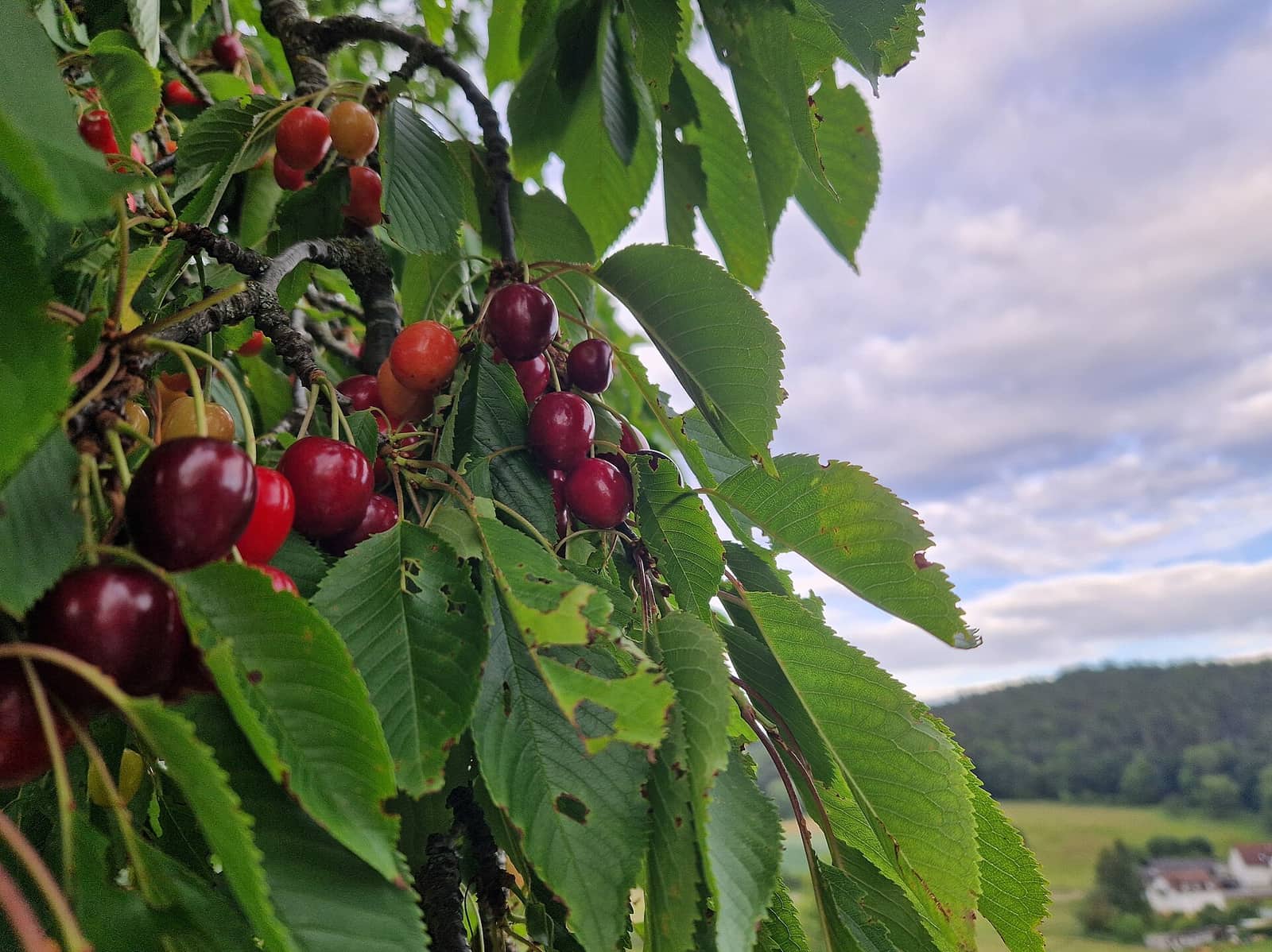
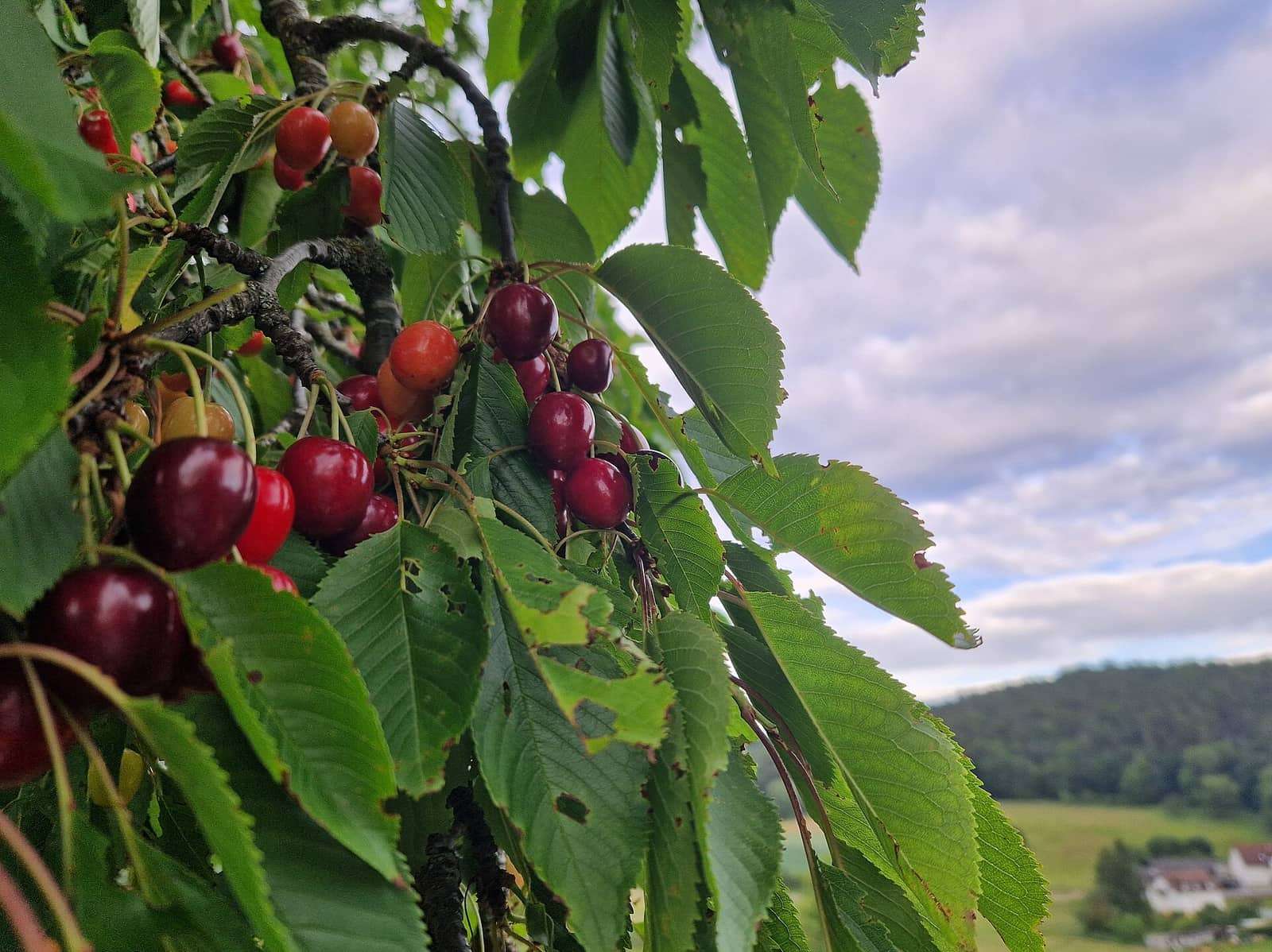
Prunus avium · also called gilasSweet cherry is a temperate tree fruit of the cold Himalayan hills, grown mostly in the Kashmir valley. It needs long, cold winters and is one of the first fruits picked each summer.
Temperate Himalaya: Kashmir valley, Shimla, Kullu, Uttarakhand hills
At a glance
Cherry in the Temperate Himalaya
Picked in May and June3
Fruit ripens about two months after full bloom, by variety. A grafted tree starts bearing in about its fourth or fifth year and bears for many years.
No published guide covers this for the Temperate Himalaya, so this is an AI suggestion. Check it with local advice before you rely on it.January to March3
Across India
When to sow it
Twelve growing regions, January to December. Your region comes first.
Wait until January
The next sowing here is January to March.
- Transplant
- Harvest
- Today
- Not suited here
Compare all 12 regionsShow fewer regions
See the dates as a table
| Region | Sow | Nursery | Transplant | Harvest |
|---|---|---|---|---|
| Temperate Himalaya | January to March | May to June | ||
| Cold desert | Not suited here | |||
| Sub-tropical foothills | Not suited here | |||
| North-west plains | Not suited here | |||
| Gangetic plains | Not suited here | |||
| North-east hills and valleys | Not suited here | |||
| Arid west | Not suited here | |||
| Central plateau | Not suited here | |||
| Deccan plateau | Not suited here | |||
| South interior | Not suited here | |||
| West coast | Not suited here | |||
| East coast | Not suited here | |||
From seed to harvest
One season, day by day
Days from sowing
Before sowing
Pit filling, a month before planting
Farmyard manure mixed with top soil
35 to 40 kg per pit
At planting
Mycorrhiza culture, or a basket of soil from an old cherry orchard
50 g per pit
At planting
Neem cake
100 kg per acre
The source gives it at planting to reduce borer damage and soil-borne disease
Trees 1 to 3 years old
Farmyard manure
10 to 20 kg per plant
Apply in December
Trees 4 to 6 years old
Farmyard manure
25 to 35 kg per plant
Apply in December
Trees 7 to 9 years old
Farmyard manure
35 to 50 kg per plant
Apply in December
Trees 10 years and older
Farmyard manure
60 kg per plant
Apply in December
In the tree basins
Green manure crops (bean, pea, red clover or white clover)
Grow in the basins to improve soil texture and fertility
Day 0
Sow
Day 55 to 75
Last picking
No published guide covers this for the Temperate Himalaya, so this is an AI suggestion. Check it with local advice before you rely on it.
Before sowing
Farmyard manure mixed with top soil
35 to 40 kg per pit · Pit filling, a month before planting
Mycorrhiza culture, or a basket of soil from an old cherry orchard
50 g per pit · At planting
Neem cake
100 kg per acre · The source gives it at planting to reduce borer damage and soil-borne disease · At planting
Farmyard manure
10 to 20 kg per plant · Apply in December · Trees 1 to 3 years old
Farmyard manure
25 to 35 kg per plant · Apply in December · Trees 4 to 6 years old
Farmyard manure
35 to 50 kg per plant · Apply in December · Trees 7 to 9 years old
Farmyard manure
60 kg per plant · Apply in December · Trees 10 years and older
Green manure crops (bean, pea, red clover or white clover)2
Grow in the basins to improve soil texture and fertility · In the tree basins
Day 0
Sow
Day 20
Day 55 to 75
Last pickingNo published guide covers this for the Temperate Himalaya, so this is an AI suggestion. Check it with local advice before you rely on it.
Day 365 to 730
Never let cherry trees run dry or stand in water. Water little and often rather than heavily, keep the trunk and crown dry, and drain wet spots. Bud burst and flowering, and fruit development, are the stages that need water most. Drip is the preferred method.2,3
What it needs
Soil, sun and warmth
Soil pH3,2
6 to 7.5
Deep sandy loam rich in organic matter; loam and clay loam also suit. The soil must drain well, since cherry roots and collars rot in wet, waterlogged ground.
Sunlight3Part of this comes from the sources cited. The rest is an AI suggestion.
Full sun. Lay the orchard out so the trees face the sun.
TemperatureNo published guide covers this for the Temperate Himalaya, so this is an AI suggestion. Check it with local advice before you rely on it.
Grows best at 15 to 25 °C
Takes hard frost.
Monthly temperatures for the Temperate Himalaya aren't in the library yet.
Water and feeding
| When | What | How much | How |
|---|---|---|---|
| Pit filling, a month before planting | Farmyard manure mixed with top soil | 35 to 40 kg per pit | |
| At planting | Mycorrhiza culture, or a basket of soil from an old cherry orchard | 50 g per pit | |
| At planting | Neem cake | 100 kg per acre | The source gives it at planting to reduce borer damage and soil-borne disease |
| Trees 1 to 3 years old | Farmyard manure | 10 to 20 kg per plant | Apply in December |
| Trees 4 to 6 years old | Farmyard manure | 25 to 35 kg per plant | Apply in December |
| Trees 7 to 9 years old | Farmyard manure | 35 to 50 kg per plant | Apply in December |
| Trees 10 years and older | Farmyard manure | 60 kg per plant | Apply in December |
| In the tree basins | Green manure crops (bean, pea, red clover or white clover) | Grow in the basins to improve soil texture and fertility |
Varieties and yield
15 to 30 kg a tree
Yields vary with the plot, the seed and the season.
Bigarreau Noir Grossa
Recommended for Jammu and Kashmir.
Bigarreau Napoleon
Recommended for Jammu and Kashmir.
Guigne Noir Hative
Recommended for Jammu and Kashmir.
Early Purple Black Heart and Black Heart
Recommended for Jammu and Kashmir; Black Heart is also listed for the Uttarakhand hills.
Guigne Pourpre Precoce
Recommended for Jammu and Kashmir.
CITH-Cherry-1 and CITH-Cherry-2
ICAR-CITH Srinagar selections recommended for Jammu and Kashmir.
Bing, Lapins and Stella
Recommended for Jammu and Kashmir; also used as pollinisers.
White Heart, Lambert, Van, Black Tartarian and Napoleon White
Recommended for Himachal Pradesh. Stella is also listed there.
Pink Early, Early Rivers and Black Republican
Recommended for Himachal Pradesh.
Governor's Wood and Bedford Prolific
Listed for the Uttar Pradesh hills, now Uttarakhand.
Good neighbours2
Grows well with
Keep it away from
Pests and diseases2
Organic and cultural controls only.
Stem borer and round-headed borer
Signs
Large exit holes in the trunk and main branches, with borings at the base of the tree. Branches wilt, dry and die back.
What to do
- Clean out the borer holes with a flexible wire and plug them with mud
- Cover exposed parts of the stem with dry grass or gunny bag, renewed each month from March to October
- Spray neem seed kernel extract
Prevention
- Keep trees vigorous and free of wounds, winter injury and cankers
Shot hole and pin hole borer
What to do
- Prune out infested branches
- Remove severely infested trees
- Burn or remove all infested wood from the orchard before the growing season
- Do not keep pruned limbs or woodpiles near the orchard, since beetles emerge from them
Prevention
- Keep trees sound with enough water, balanced feeding and protection from sunburn
Aphids
Signs
Dense colonies on young shoots and leaves cause wilting, slow growth, yellow spots and sticky honeydew.
What to do
- Yellow sticky traps, 4 to 5 an acre
- Conserve ladybird beetles, lacewings and hoverflies
- Spray neem seed kernel extract
Hairy caterpillar (Indian gypsy moth, Kashmir willow defoliator)
Signs
Caterpillars feed in groups and strip the leaves.
What to do
- Collect and destroy egg masses and young caterpillars
- Tie sacking (burlap) bands around the trunks and collect and destroy the caterpillars and pupae under them from May to the end of June
Chaffer and defoliating beetles
Signs
Beetles eat the leaves at night.
What to do
- Shake young, non-bearing trees over a cloth at dusk and destroy the beetles
- A light trap, 1 an acre, run from 6 to 10 pm
Prevention
- Keep trees well fed and free of water stress
Root borer
What to do
- Collect and destroy the grubs while preparing the tree basins
Prevention
- Do not grow okra or other mallow-family crops in sequence with cherry
Leaf spot (Cercospora)
Signs
Brown spots with reddish-brown edges on both sides of the leaf; badly hit leaves look scorched. Worse on stressed trees in still air.
What to do
- Remove and destroy infected leaves
Shot hole (Coryneum blight)
Signs
Small red spots on young leaves turn purple with pale centres, then drop out and leave holes. Purple-red spots also form on the fruit.
What to do
- Prune out infected shoots as soon as they show
- After leaf fall, prune out infected buds and twigs
- Keep the orchard clean
Prevention
- Avoid overhead sprinklers, or keep them low so the leaves stay dry
Bacterial gummosis (canker)
Signs
Cankers on twigs, at bud bases, at spurs and in pruning wounds ooze amber gum. Trees 2 to 8 years old are hit most.
What to do
- Avoid stress and wounds to the trees
Prevention
- Choose a variety and rootstock that suit the site
Silver leaf
Signs
Leaves take on a silvery sheen, branches die back, and cut wood shows a brown stain.
What to do
- Prune at the first sign of silvering, cutting back into healthy wood
- Seal pruning cuts wider than 1.5 cm
- Remove and burn or bury all infected branches, leaves and twigs
White root rot
Signs
Yellow leaves, shrivelled fruit and little new growth; white cottony growth covers the feeder roots. Wet, waterlogged soil favours it.
What to do
- Uproot and dispose of infected trees and any infected neighbours
- Remove as many root pieces as possible and trench around the site
- Keep water from running off the infected site to healthy trees
Collar and root rot
Signs
Trees wilt and collapse with the first warm spring weather, the dry leaves staying on; milder attacks cause slow growth and early leaf fall. Cool, wet soil favours it.
What to do
- Water little and often, and keep sprinkler water off the trunk and crown
Prevention
- Plant in well-drained soil, on raised berms where drainage is poor
- Avoid sites with a history of root and crown rot
Powdery mildew
Signs
Pale round patches on leaves inside the canopy turn powdery; shoots may be distorted.
Prevention
- Space trees so air moves through the canopy
Prunus necrotic ringspot virus
Signs
Yellowing, dead patches, misshapen leaves and stunting.
Prevention
- Plant only nursery stock tested free of viruses
Seed and the season's end
Saving seed1Part of this comes from the sources cited. The rest is an AI suggestion.
Cherry does not come true from seed, so seed is saved only to raise rootstock seedlings. Take it from fully ripe fruit of healthy, vigorous, high-yielding trees.
Cleaning the seed
Wash the seed clean in water and dry it in the shade.
Keep dry seed in airtight containers in a cool, dry place; cherry seed keeps for 1 to 3 years. It needs moist chilling (stratification) before it will germinate.
After the last pickingNo published guide covers this for the Temperate Himalaya, so this is an AI suggestion. Check it with local advice before you rely on it.
Cherry is a perennial, so nothing is cleared after the harvest. After leaf fall, rake up the leaves and fallen fruit and compost them, then prune in the dormant season. Burn wood cut out for borers or silver leaf.
Rake up fallen leaves and fruit after leaf fall and compost them in a pit away from the trees. Burn wood cut out for borers, silver leaf or canker rather than leaving it near the orchard.
Rotation
When an old orchard is removed, grow a few seasons of legumes, fodder or vegetables before planting stone fruit again, and do not set new trees back into the old pits.
Sources
Where this comes from
Our team has checked this guide against the sources at the end of the page.Reviewed by our team on 13 November 2026.
These published guides are the sources. Where none of them covers a detail for this region, the page shows an AI suggestion and labels it.
- Package of practices for fruit crops 2020 (nursery raising)Directorate of Extension, SKUAST-JammuRead the source
- AESA based IPM package: cherryDirectorate of Plant Protection, Quarantine and Storage, Faridabad, and National Institute of Plant Health Management, Hyderabad (Ministry of Agriculture and Farmers Welfare)Read the source
- Detailed project report, model template for NHB Scheme No. 1: cherryNational Horticulture BoardRead the source
AI Farm Manager · In development
Plan this crop on your land
AI Farm Manager will turn guides like this one into a plan for your own plot. It doesn't make plans yet.