
Growing okra
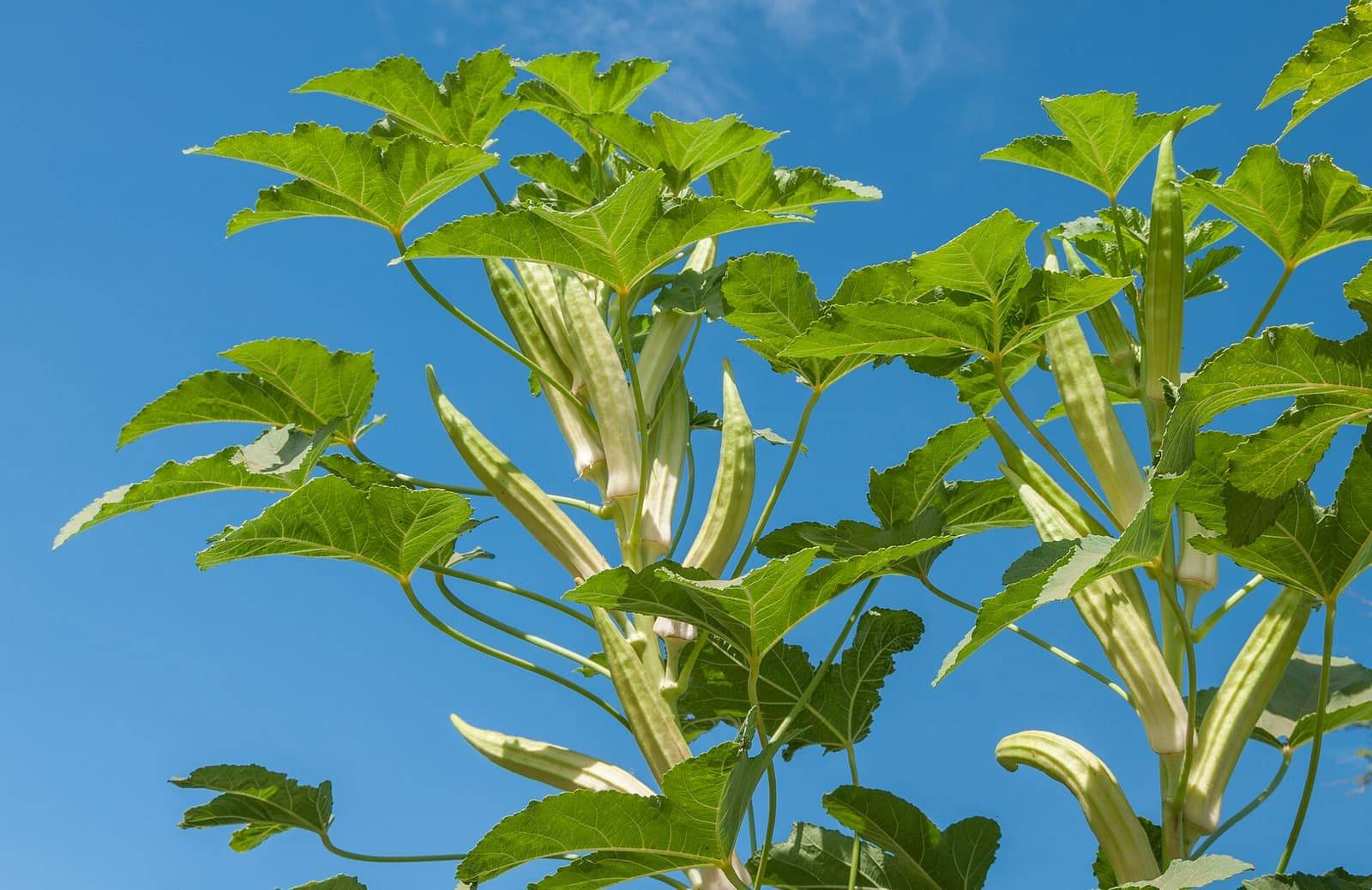
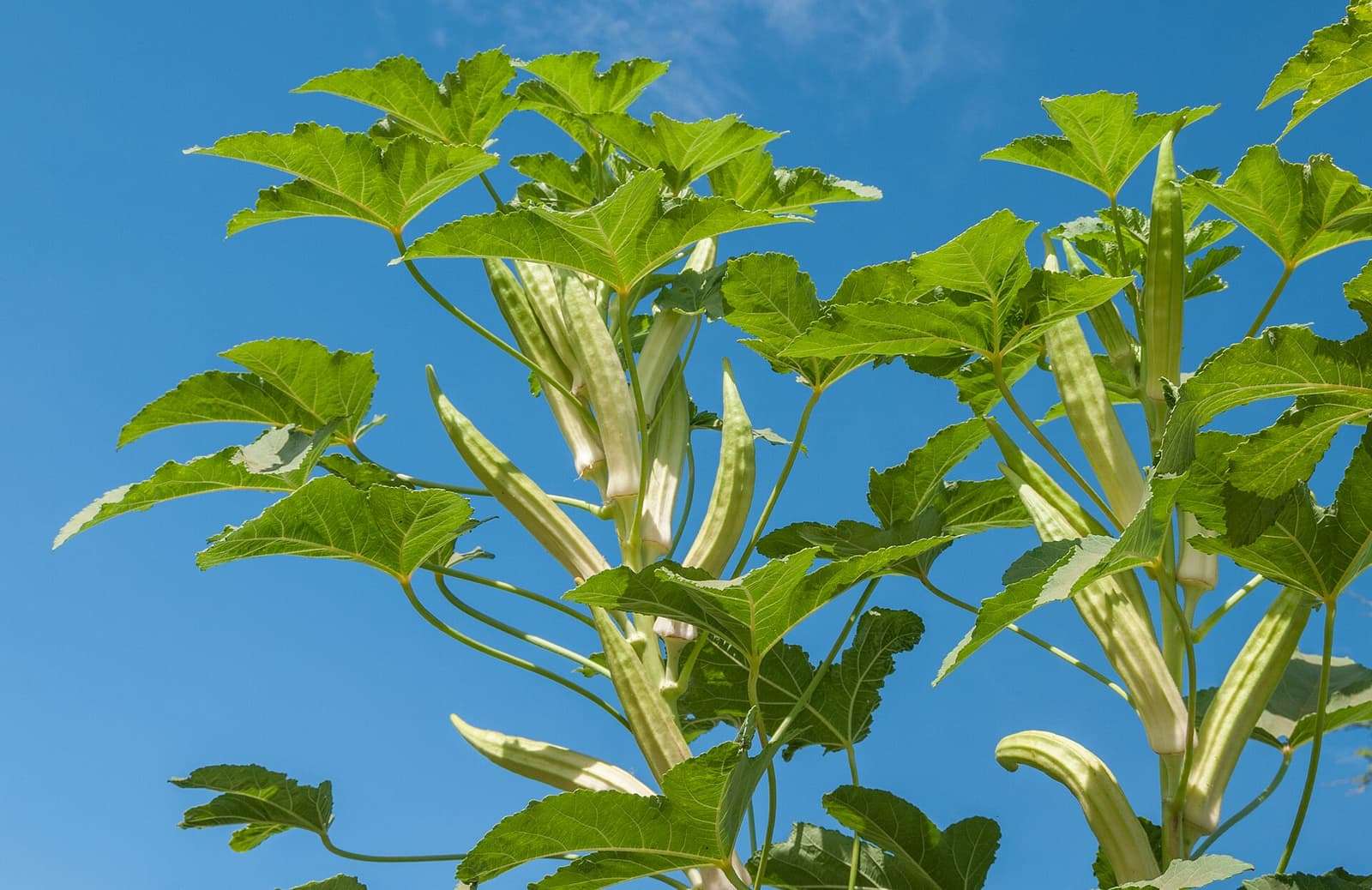
Abelmoschus esculentus · also called BhindiA hot weather vegetable grown for its tender green pods. It is sown straight in the field in spring-summer and in the rains, and needs full sun and no frost.
East coast: coastal Tamil Nadu, Puducherry, coastal Andhra, coastal Odisha
At a glance
Okra in the East coast
Across India
When to sow it
Twelve growing regions, January to December. Your region comes first.
Too late this season
The window here was September. The next one opens in January.
- Sow
- Harvest
- Under cover
- Today
Compare all 12 regionsShow fewer regions
See the dates as a table
| Region | Sow | Nursery | Transplant | Harvest |
|---|---|---|---|---|
| East coast | June to JulyLate January to FebruarySeptember | |||
| Temperate Himalaya | March to JuneApril to MayApril to MayMay | July to September | ||
| Cold desertUnder cover only | Under cover: May, inside a polyhouse | Under cover: July to early September | ||
| Sub-tropical foothills | February to MarchJune to JulyMarch to May | April to JuneAugust to October | ||
| North-west plains | February to MarchJune to JulyMid-June | April to JuneAugust to October | ||
| Gangetic plains | February to MarchJanuary to FebruaryJune to JulyJuly to September | |||
| North-east hills and valleys | February to early AprilApril to May | Late April to August | ||
| Arid west | June to JulyFebruary to March | August to October | ||
| Central plateau | June to JulyFebruary to March | August to October | ||
| Deccan plateau | June to JulyJanuary to March | August to October | ||
| South interior | June to JulyLate January to FebruarySeptember to early October | |||
| West coast | February to MarchJune to JulyOctober to November |
From seed to harvest
One season, day by day
Days from sowing
Before sowing
Field preparation
Farmyard manure or compost
20 to 25 t per hectare
Mix in at the last ploughing.
Sowing
Neem cake
about 250 kg per hectare
Apply along the ridges.
About 30 days after sowing
Vermicompost
1 to 2 t per hectare
Place along the rows at earthing up.
No published guide covers this for the East coast, so this is an AI suggestion. Check it with local advice before you rely on it.
Day 0
Sow
Before sowing
Farmyard manure or compost
20 to 25 t per hectare · Mix in at the last ploughing. · Field preparation
Neem cake
about 250 kg per hectare · Apply along the ridges. · Sowing
VermicompostNo published guide covers this for the East coast, so this is an AI suggestion. Check it with local advice before you rely on it.
1 to 2 t per hectare · Place along the rows at earthing up. · About 30 days after sowing
Day 0
Sow
Day 5 to 10
Seeds come up1,2Part of this comes from the sources cited. The rest is an AI suggestion.
Day 45 to 65
First picking10
Every other day to every 3 or 4 days
Day 90 to 120
Last picking8
Water every 4 to 8 days, more at flowering and fruit set.No published guide covers this for the East coast, so this is an AI suggestion. Check it with local advice before you rely on it.
What it needs
Soil, sun and warmth
Soil pH1
6 to 6.8
Grows on sandy to clay loam with plenty of organic matter and good drainage. Loose, friable, well manured loam suits it most. Waterlogging harms the crop.
Sunlight1
Full sun. Plenty of sunshine matters for growth and yield.
Temperature1,8
Grows best at 25 to 30 °C
Frost: none tolerated.
Monthly temperatures for the East coast aren't in the library yet.
Water and feeding
WateringNo published guide covers this for the East coast, so this is an AI suggestion. Check it with local advice before you rely on it.
Water every 4 to 5 days in the hot months and every 7 to 8 days in cooler months. Never let the soil dry out at flowering and fruit set, but avoid waterlogging.
Weeding9
Weed first 20 days after sowing, then every 25 days, 3 or 4 times in all until the canopy covers the soil. Earth up at 30 days.
| When | What | How much | How |
|---|---|---|---|
| Field preparation | Farmyard manure or compost | 20 to 25 t per hectare | Mix in at the last ploughing. |
| Sowing | Neem cake | about 250 kg per hectare | Apply along the ridges. |
| About 30 days after sowing | Vermicompost | 1 to 2 t per hectare | Place along the rows at earthing up. |
Varieties and yield
7.5 to 10 tonnes a hectare
Yields vary with the plot, the seed and the season.
Arka Anamika
Parbhani Kranti
Varsha Uphar
Pusa A-4
Bangalore local
Local type popular with Tamil Nadu organic growers.
Kulemagali vendai
Local type popular with Tamil Nadu organic growers.
Nattu vendai
Local type popular with Tamil Nadu organic growers.
Good neighbours5
Grows well with
Pests and diseases5
Organic and cultural controls only.
Shoot and fruit borer (Earias species)
Signs
Young shoots droop and dry; pods have bore holes and twist.
What to do
- Clip off bored shoots below the entry hole, and pick and destroy bored pods.
- Set pheromone traps to watch the moths.
- Release the egg parasitoid Trichogramma chilonis and conserve lacewings, ladybirds, spiders and birds.
- Spray neem seed kernel extract 5% or a neem oil product, or Bt or Beauveria bassiana.
Prevention
- Do not grow okra after cotton or another mallow family crop.
Leafhopper (jassid)
Signs
Leaf edges yellow and curl upwards, then turn bronze; tiny green nymphs under the leaves.
What to do
- Spray neem seed kernel extract 5% or a neem oil product.
- Conserve predators such as lacewings.
Prevention
- Remove other host plants nearby.
- Grow tolerant varieties; an intercrop of baby corn lowers numbers.
Whitefly (carrier of yellow vein mosaic)
Signs
Small white insects under the leaves suck sap; they spread yellow vein mosaic.
What to do
- Pull out virus-hit plants and keep the field clean.
- Hang yellow sticky traps to watch numbers.
- Conserve ladybirds, lacewings and spiders.
Prevention
- Grow four rows of maize, sorghum or pearl millet round the field as a barrier.
- Grow tolerant varieties.
Red spider mite
Signs
Pale speckled leaves with fine webbing underneath; leaves dry and drop.
What to do
- Uproot and destroy the first infested plants.
- Conserve predatory mites, ladybirds and lacewings.
Prevention
- Avoid water and nutrient stress; mulch and add organic matter.
- Keep the field free of weeds.
Root-knot nematode
Signs
Knots and galls on the roots; plants stay stunted and wilt in the heat.
What to do
- Intercrop marigold with okra.
Prevention
- Rotate with cereals.
- Plough deep in summer, or solarise the soil under clear polythene for three weeks before sowing.
Yellow vein mosaic
Signs
Leaf veins turn yellow, then whole leaves; plants stay stunted and bear few pale, small pods. Spread by whitefly.
What to do
- Pull out infected plants early.
- Keep whitefly down with border crops and sticky traps.
Prevention
- Grow tolerant or resistant varieties.
Powdery mildew
Signs
White powdery growth on the leaves, which then drop.
What to do
- Spray a neem oil product.
Prevention
- Keep the right plant spacing so air moves.
- Watch nearby fields for the disease.
Cercospora leaf spot
Signs
Brown to sooty spots on both sides of the leaves; badly hit leaves drop.
What to do
- Pick off and destroy infected leaves.
Seed and the season's end
Saving seed1,3Part of this comes from the sources cited. The rest is an AI suggestion.
Keep at least 200 m between two varieties, because okra often crosses. Walk the seed crop before flowering, at flowering and fruiting, and before harvest, and pull out off-types and diseased plants. In the Punjab plains the seed crop is sown flat in mid-June at 60 x 25 cm.
When the seed is ready
The seed crop matures in 90 to 100 days. Pods ripen unevenly, so pick them dry and brown in 3 or 4 rounds.
Cleaning the seed
Dry the picked pods in the sun, thresh them and clean the seed.
Dry the seed well in the sun before storing. Keep it in airtight containers in a cool, dry place; it keeps well for a year or two.
After the last picking5
After the last picking, pull out and destroy plants with mites or borers, compost the rest, and follow with a cereal rather than another mallow family crop.
Pull out and destroy plants and residues carrying mites or borers straight after the last picking. Healthy residues can go to the compost heap.
Rotation
Do not follow okra with another crop of the mallow family (cotton, hollyhock). Rotate with cereals, which also lowers root-knot nematodes. In Punjab, potato, okra and early cauliflower follow one another in a year; in nematode fields, cauliflower, onion and then okra.
Sources
Where this comes from
Our team has checked this guide against the sources at the end of the page.Reviewed by our team on 13 November 2026.
These published guides are the sources. Where none of them covers a detail for this region, the page shows an AI suggestion and labels it.
- Package of Practices for Vegetable Crops 2020 (Bhindi/Okra)Directorate of Extension, Sher-e-Kashmir University of Agricultural Sciences and Technology of JammuRead the source
- Organic farming practices: bhendi, harvesting and post-harvestTamil Nadu Agricultural University, TNAU Agritech PortalRead the source
- Production Technology of Vegetables and Flowers (VSF-231), Part I: Vegetable production (Okra)CSK Himachal Pradesh Krishi Vishvavidyalaya, Palampur (Department of Vegetable Science and Floriculture)Read the source
- AESA based IPM package: OkraNational Institute of Plant Health Management and Directorate of Plant Protection, Quarantine and Storage, Government of IndiaRead the source
- Bhendi: sowing (Horticulture, vegetables)Tamil Nadu Agricultural University, TNAU Agritech PortalRead the source
- Organic farming practices: bhendi, climate and soilTamil Nadu Agricultural University, TNAU Agritech PortalRead the source
- Organic farming practices: bhendi, cultivationTamil Nadu Agricultural University, TNAU Agritech PortalRead the source
AI Farm Manager · In development
Plan this crop on your land
AI Farm Manager will turn guides like this one into a plan for your own plot. It doesn't make plans yet.