
Growing pear
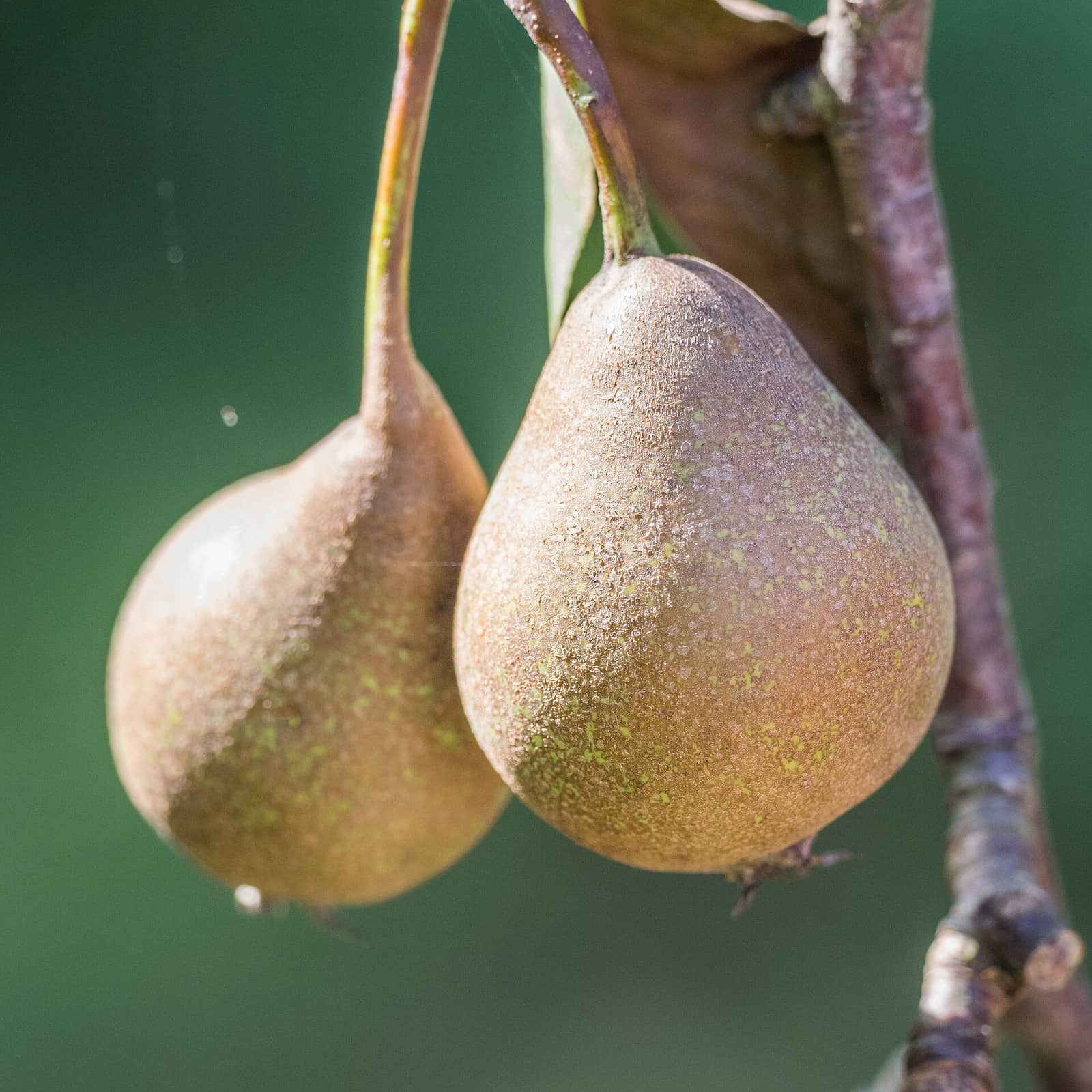
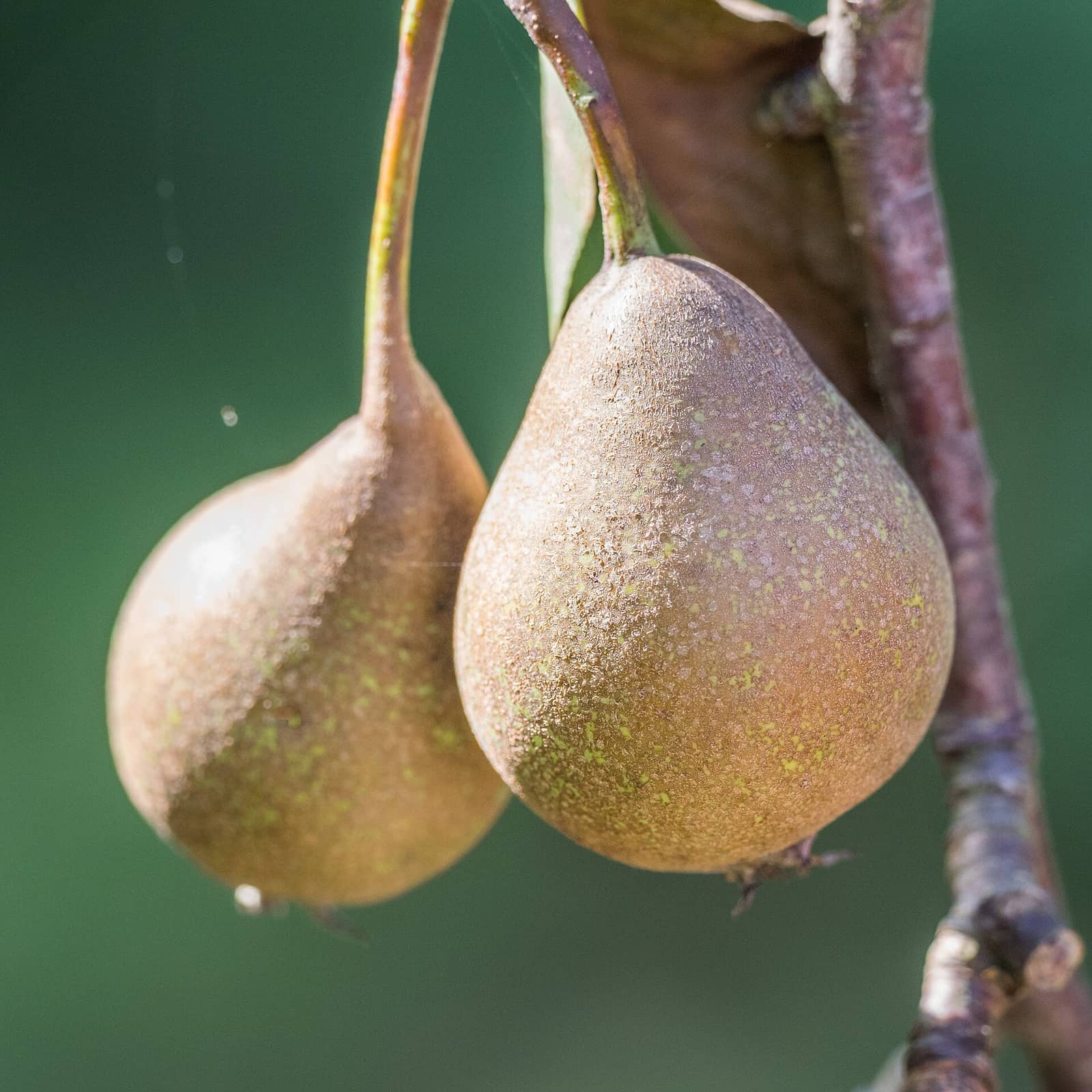
Pyrus communis · also called nashpati, tang (Kashmiri)Pear is a fruit tree raised from grafted plants. European pears need cold winters and suit the Himalayan hills; low-chill sand pears such as Patharnakh grow in the foothills and the north-west plains.
North-west plains: Punjab, Haryana, Delhi, western Uttar Pradesh
At a glance
Pear in the North-west plains
Planted in winter while dormant; picked in summer, each variety in its own week2
Patharnakh is ready about 145 days after fruit set, Punjab Nectar and Punjab Gold about 140 days, and Baggugosha and Punjab Beauty about 135 days. Old trees that are cut back to renew them fruit again in the third year and give a commercial crop in the fifth.2
Winter, finishing by the end of January2
Part of this comes from the sources cited. The rest is an AI suggestion.
Across India
When to sow it
Twelve growing regions, January to December. Your region comes first.
Wait until December
The next sowing here is Winter, finishing by the end of January.
- Transplant
- Harvest
- Today
- Not suited here
Compare all 12 regionsShow fewer regions
See the dates as a table
| Region | Sow | Nursery | Transplant | Harvest |
|---|---|---|---|---|
| North-west plains | Winter, finishing by the end of January | End of June to first week of JulyThird week of JulyFourth week of JulyLast week of JulyFirst week of August | ||
| Temperate Himalaya | Winter, up to mid-February | Last week of June to third week of JulyThird week of July to third week of AugustLast week of August to second week of September | ||
| Cold desert | Not suited here | |||
| Sub-tropical foothills | Winter, up to mid-February | Last week of JulyAugust | ||
| Gangetic plains | Not suited here | |||
| North-east hills and valleys | December to mid-February | July to August | ||
| Arid west | Not suited here | |||
| Central plateau | Not suited here | |||
| Deccan plateau | Not suited here | |||
| South interior | Not suited here | |||
| West coast | Not suited here | |||
| East coast | Not suited here | |||
From seed to harvest
One season, day by day
Days from sowing
Before sowing
FYM
10 to 20 kg per tree · Apply in December · Trees 1 to 3 years old
FYM
25 to 35 kg per tree · Apply in December · Trees 4 to 6 years old
FYM
40 to 50 kg per tree · Apply in December · Trees 7 to 9 years old
FYM2
50 kg per tree · Apply in December · Trees 10 years and older
Water every 5 to 7 days, more at after planting and fruit growth in summer.2
What it needs
Soil, sun and warmth
Soil pH1,2
Deep, fertile, well-drained soil that stays moist, from sandy loam to clay loam, with no hard layer in the top 2 m. Pear grows on a wide range of soils if they hold enough moisture; it stands drought less well than apple but copes better with slow drainage.
SunlightNo published guide covers this for the North-west plains, so this is an AI suggestion. Check it with local advice before you rely on it.
Full sun, in an open site with good air movement.
TemperatureNo published guide covers this for the North-west plains, so this is an AI suggestion. Check it with local advice before you rely on it.
Takes hard frost.
Monthly temperatures for the North-west plains aren't in the library yet.
Water and feeding
Watering2
Water often after planting. In summer water every 5 to 7 days, by flooding for bearing trees so the fruit sizes up, and every 15 days in July and August. Cut back watering after harvest and give none in January, when the trees are dormant.
Weeding2
Keep weeds down with light cultivation. In the second week of April, spread a 10 cm layer of paddy straw under the tree canopies, about 5.5 tonnes per acre, to smother weeds.
| When | What | How much | How |
|---|---|---|---|
| Trees 1 to 3 years old | FYM | 10 to 20 kg per tree | Apply in December |
| Trees 4 to 6 years old | FYM | 25 to 35 kg per tree | Apply in December |
| Trees 7 to 9 years old | FYM | 40 to 50 kg per tree | Apply in December |
| Trees 10 years and older | FYM | 50 kg per tree | Apply in December |
Varieties and yield
60 to 100 kg a tree
Yields vary with the plot, the seed and the season.
Punjab Nakh
Hard pear selected from Patharnakh; gritty, crisp, juicy fruit that keeps well. Ripens in the fourth week of July; about 190 kg a tree on average.
Patharnakh
Hard pear; round green fruit that keeps well and stands transport. Ripens in the last week of July; about 150 kg a tree on average.
Punjab Gold
Semi-soft; large golden yellow fruit for table and processing. Ripens at the end of July; about 80 kg a tree.
Punjab Nectar
Semi-soft, early bearing and very juicy. Ripens in the fourth week of July; about 80 kg a tree on average.
Punjab Beauty
Semi-soft; yellow fruit with a red blush, regular bearing. Ripens in the third week of July; about 80 kg a tree on average.
Baggugosha
Semi-soft; greenish yellow, sweet fruit that travels well. Ripens in the first week of August; about 60 kg a tree on average.
Nijisseiki
Soft pear; golden brown, very juicy fruit for juice and squash. Ripens from the end of June to the first week of July; about 80 kg a tree.
Punjab Soft
Soft and very juicy, for processing. Ripens in the first week of July; about 85 kg a tree on average.
Good neighboursNo published guide covers this for the North-west plains, so this is an AI suggestion. Check it with local advice before you rely on it.
Grows well with
Keep it away from
Pests and diseases2
Organic and cultural controls only.
Fruit flies
Signs
Flies puncture fruit close to ripening to lay eggs; the maggots bore inside and spoil the fruit. Isolated orchards suffer less.
What to do
- Pick ripening fruit and do not leave ripe fruit on the tree
- Collect fallen fruit regularly and bury it at least 60 cm deep
- Plough shallowly right after harvest to expose the pupae in the top few centimetres of soil
- Hang PAU fruit fly traps, 16 per acre, in the first week of June and recharge them when needed
Spider mites
Signs
Yellowish-white specks on leaves from April to June, then scorched leaves that drop early and gather dust.
What to do
- Water frequently from April to June
- Remove castor and bhang plants nearby, which carry the mites
Bark eating caterpillar
Signs
Holes bored into the stem and branches, with the caterpillar feeding on the bark under a cover of webbing and droppings. Worst in neglected orchards.
What to do
- Remove the webbing from the bark
Aphids
Signs
Feed on buds, leaves, flowers and young fruit from February to mid-April; worse on semi-soft than on hard pears.
Hairy caterpillar
Signs
Caterpillars feed in groups and skeletonise the leaves, then spread out; bad attacks strip the tree.
Leafhoppers
Signs
Suck sap from leaves and tender fruit and can do serious damage at times.
Shoot and fruit blight, bark canker
Signs
Elliptical cankers on bud scars, wounds, twig stubs or crotches; small round brown spots spread and sink into the bark.
What to do
- Peel off the dead bark along with 2 cm of healthy bark
- Destroy all dead and pruned wood
Root rot and sapwood rot
Signs
Gum oozes from the trunk and limbs; roots rot brown with white fungus in the cracks. Trees wilt, drop leaves early and may topple.
What to do
- Find the affected trees and water them separately
Prevention
- Avoid deep hoeing that injures the roots
- Do not grow intercrops that need heavy winter watering
- Do not pile soil around the trunk
Seed and the season's end
Saving seed1Part of this comes from the sources cited. The rest is an AI suggestion.
Pear does not come true from seed, so seed is saved only to raise rootstock seedlings. Take it from fully ripe fruit of healthy, vigorous, high-yielding trees.
Cleaning the seed
Wash the seed clean in water and dry it in the shade.
Keep dry seed in airtight containers in a cool, dry place; pear seed keeps for about 3 years. Before sowing it needs 30 to 50 days of moist chilling at 1 to 5°C, and comes up about 45 days after sowing.
After the last pickingNo published guide covers this for the North-west plains, so this is an AI suggestion. Check it with local advice before you rely on it.
Pear is a perennial, so nothing is cleared after harvest. Collect fallen fruit through the season, cut back watering after picking, and prune dead wood and old spurs in January.
Rake up fallen leaves and fruit after leaf fall and compost them in a pit away from the trees. Chip or compost prunings; burn diseased wood rather than leaving it in the orchard.
Rotation
When an old orchard is removed, grow a few seasons of legumes, fodder or vegetables before planting fruit trees again, and do not set new trees back into the old pits.
Sources
Where this comes from
Our team has checked this guide against the sources at the end of the page.Reviewed by our team on 13 November 2026.
These published guides are the sources. Where none of them covers a detail for this region, the page shows an AI suggestion and labels it.
- Package of practices for fruit crops 2020 (pear chapter and nursery chapter)Directorate of Extension, SKUAST-JammuRead the source
- Package of practices for cultivation of fruits 2021 (pear chapter)Punjab Agricultural University, LudhianaRead the source
AI Farm Manager · In development
Plan this crop on your land
AI Farm Manager will turn guides like this one into a plan for your own plot. It doesn't make plans yet.