
Growing coriander
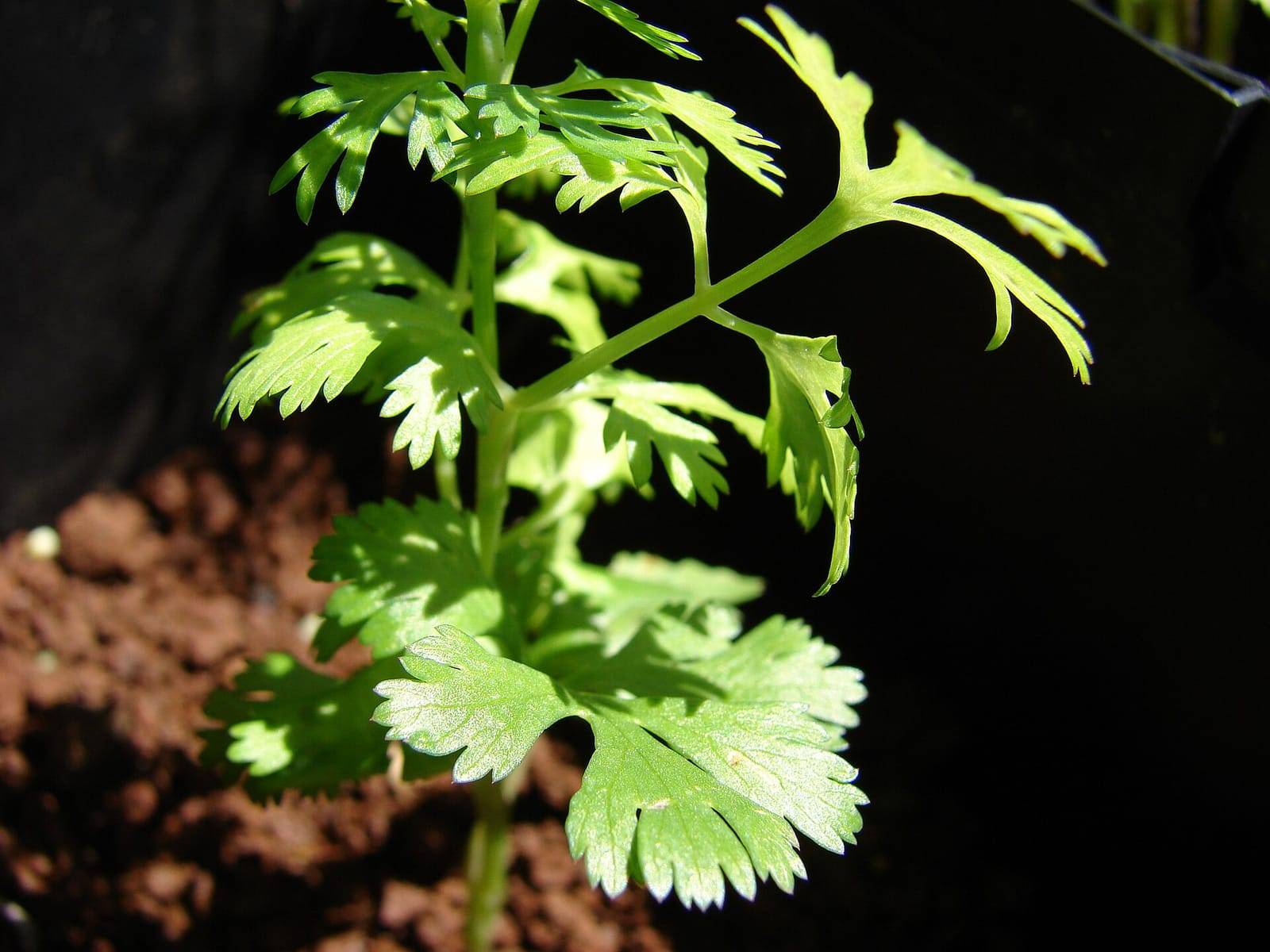
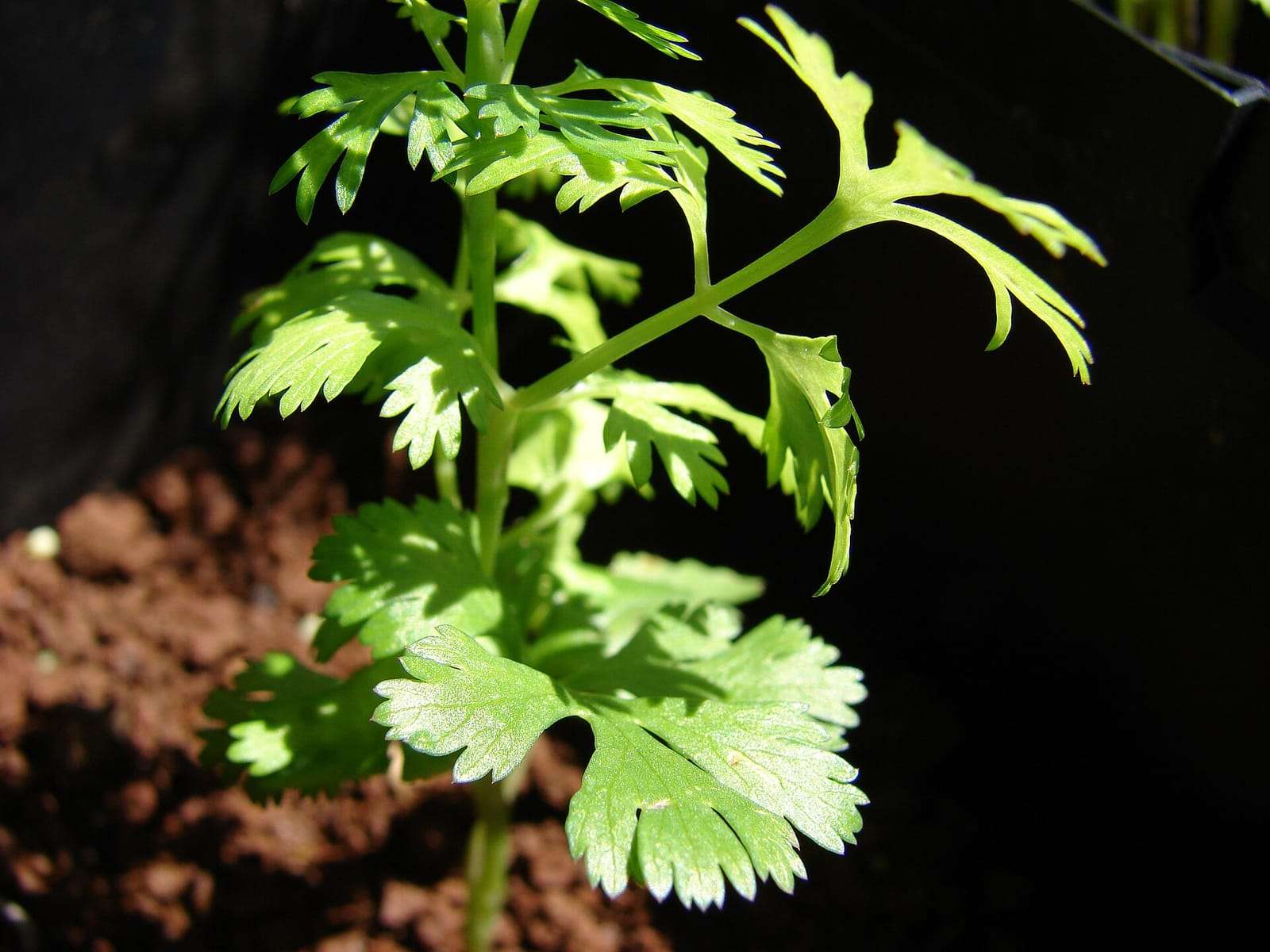
Coriandrum sativum · also called DhaniyaA quick cool season herb sown direct for its green leaves, which are cut or pulled young. Left to flower, the same plants give dhaniya seed.
Arid west: Rajasthan, Kutch, north Gujarat
At a glance
Coriander in the Arid west
Across India
When to sow it
Twelve growing regions, January to December. Your region comes first.
Sow now
The window here is Mid-October to mid-November.
Under cover, from March to April, under shade net.
- Sow
- Harvest
- Under cover
- Today
Compare all 12 regionsShow fewer regions
See the dates as a table
| Region | Sow | Nursery | Transplant | Harvest |
|---|---|---|---|---|
| Arid west | Mid-October to mid-NovemberLast week of October to first half of NovemberUnder cover: March to April, under shade net | |||
| Temperate Himalaya | April to early August | Mid-May to early October | ||
| Cold desert | May to early July | Mid-June to early September | ||
| Sub-tropical foothills | Last week of October | |||
| North-west plains | First week of OctoberLast week of October to first week of NovemberLater sowings, up to the last week of DecemberUnder cover: March to April, under shade net | End of April | ||
| Gangetic plains | First half of OctoberMid-October to first week of NovemberUnder cover: March to April, under shade net | |||
| North-east hills and valleys | October to November | Mid-November to February | ||
| Central plateau | Mid-October to mid-NovemberUnder cover: March to April, under shade net | |||
| Deccan plateau | Mid-October to NovemberUnder cover: March to April, under shade net | |||
| South interior | June to JulyOctober to November | |||
| West coast | Last week of October to first half of NovemberUnder cover: October to December, under a rain shelter | |||
| East coast | June to JulyOctober to NovemberFirst half of November |
From seed to harvest
One season, day by day
Days from sowing
Before sowing
Field preparation
Farmyard manure
15 to 20 t per hectare
Work it into the soil before sowing.
Field preparation (alternative)
Vermicompost
10 to 15 t per hectare
Can be used in place of farmyard manure.
Day 0
Sow
Day 40 to 140
Last picking
No published guide covers this for the Arid west, so this is an AI suggestion. Check it with local advice before you rely on it.
Before sowing
Farmyard manure
15 to 20 t per hectare · Work it into the soil before sowing. · Field preparation
Vermicompost4
10 to 15 t per hectare · Can be used in place of farmyard manure. · Field preparation (alternative)
Day 0
Sow
Day 7 to 20
Seeds come up1,2,3,4,5Part of this comes from the sources cited. The rest is an AI suggestion.
Day 40 to 140
Last pickingNo published guide covers this for the Arid west, so this is an AI suggestion. Check it with local advice before you rely on it.
Day 75
First picking4
On irrigated land, give four or five waterings after the seedlings are up: about 30 to 35 days after sowing, 60 to 70 days, 80 to 90 days, 100 to 105 days and 110 to 150 days. Drip suits it.4
What it needs
Soil, sun and warmth
Soil pH1,3,4
6 to 8
Grows on a wide range of soils. Well drained sandy loam or loam rich in organic matter suits an irrigated crop; a rainfed crop on stored moisture does well on black or heavy clay soil. Saline, alkaline and sandy soils do not suit it.
SunlightNo published guide covers this for the Arid west, so this is an AI suggestion. Check it with local advice before you rely on it.
At least 5 hours a day
Full sun in the cool months. In warm weather, light afternoon shade keeps the leaves tender and slows bolting.
Temperature3Part of this comes from the sources cited. The rest is an AI suggestion.
Grows best at 20 to 25 °C
Takes light frost.
Monthly temperatures for the Arid west aren't in the library yet.
Water and feeding
Watering4
On irrigated land, give four or five waterings after the seedlings are up: about 30 to 35 days after sowing, 60 to 70 days, 80 to 90 days, 100 to 105 days and 110 to 150 days. Drip suits it.
Weeding4
Thin and give the first hoeing and weeding about 30 days after sowing, as coriander is slow at first. Hoe and weed again 50 to 60 days after sowing if weeds come back.
| When | What | How much | How |
|---|---|---|---|
| Field preparation | Farmyard manure | 15 to 20 t per hectare | Work it into the soil before sowing. |
| Field preparation (alternative) | Vermicompost | 10 to 15 t per hectare | Can be used in place of farmyard manure. |
Varieties and yield
5 to 8 tonnes a hectare
Yields vary with the plot, the seed and the season.
RCr 435
Irrigated land; moderately resistant to root knot and powdery mildew.
RCr 436
Early; limited moisture and heavy soils.
RCr-446
Listed for rainfed areas of Rajasthan; tall and leafy.
RCr-41
Highly resistant to stem gall and wilt.
RCr 684
Resists stem gall.
RCr-728
RCr 475
For seed, not for leaf.
Hisar Sugandh
Listed for Haryana and Rajasthan; irrigated land.
Pests and diseases4
Organic and cultural controls only.
Coriander aphid (Hyadaphis coriandri)
Signs
Colonies on leaves, tender shoot tips and flower heads suck the sap; plants grow twisted, leaves yellow and lose vigour. Worst from December to March.
What to do
- Spray neem seed kernel extract 5% or neem oil 2%.
- Spray the fungus Verticillium lecanii.
- Hang yellow or blue sticky traps.
Prevention
- Sow on time (15 to 30 October in the main seed areas).
- Keep the field and its edges free of weeds that host aphids.
- Do not overdo nitrogen or water.
- Protect ladybirds, which feed on the aphids in large numbers.
Seed wasp (Systole albipennis)
Signs
The larva feeds inside developing seeds; adults leave through an exit hole, and damage carries on into storage.
What to do
- Spray neem seed kernel extract 5% or neem oil 2%.
Prevention
- Sow on time; late sown crops get more.
- Keep to the advised spacing.
- Intercropping with sesame lowers it.
Thrips (Thrips tabaci)
Signs
Nymphs and adults gather between the leaf sheath and stem and feed on flower heads; leaves dry, and a bad attack dries the flowers and leaves shrivelled fruits.
What to do
- Spray neem seed kernel extract 5% or neem oil 2%, or the fungus Verticillium lecanii.
- Hang yellow or blue sticky traps.
Prevention
- Sow between 15 and 30 October where that is the local season.
- Keep the field and its edges clean of weeds.
Wilt (Fusarium oxysporum)
Signs
Plants wilt and dry, in patches, at any stage.
What to do
- Apply Pseudomonas fluorescens and Trichoderma to the soil before sowing.
Prevention
- Grow a tolerant variety and use healthy seed.
- Plough in summer, solarise the soil and rotate crops.
Powdery mildew (Erysiphe polygoni)
Signs
White powder on the leaves, then on stems and flower heads.
What to do
- Spray neem seed kernel extract 5% three times, first when it appears and then at 10-day intervals.
- A 5% onion leaf extract sprayed three times also helps.
- Treat seed with Pseudomonas fluorescens.
Prevention
- Grow a tolerant variety.
- The guide's organic module: vermicompost in the soil, seed treated with neem seed kernel extract, and neem sprays when mildew or aphids first show.
Seed and the season's end
Saving seed1,4,5
Grow the seed crop as for leaves. A month after sowing, take one or two cuttings of green leaves, then let the plants flower. Coriander is mostly cross pollinated, so keep it about 1,000 m from other coriander.
When the seed is ready
Ready when about half the seeds have turned yellow. PAU harvests when the fruits are mature but still green, as green seed fetches more than brown, over-ripe seed.
Cleaning the seed
Dry the cut plants in shade, or hang them in bundles upside down out of direct sun, so the seed keeps its colour. Beat them lightly with sticks and winnow out the seed.
Dry the seed fully, then keep it in bags in a dry, airy store.
After the last pickingNo published guide covers this for the Arid west, so this is an AI suggestion. Check it with local advice before you rely on it.
Pull spent plants after the last cutting or the seed harvest and compost them. Follow with a crop from another family.
Pull bolted or spent plants and compost them. Leave a few to flower if you can: the small white flowers draw ladybirds and other helpful insects.
Rotation
Summer ploughing and rotation cut wilt and stem gall. Common sequences are green gram or black gram, summer moong, or cluster bean or cowpea followed by coriander, and maize, then potato, then coriander.
Growing under cover4
For leaf out of season, coriander sown in March to April under 50% shade net gave tender, mature leaves on the 45th day in AICRP trials (variety CS 11).
Sources
Where this comes from
Our team has checked this guide against the sources at the end of the page.Reviewed by our team on 13 November 2026.
These published guides are the sources. Where none of them covers a detail for this region, the page shows an AI suggestion and labels it.
- Coriander (Horticulture: spice crops)TNAU Agritech Portal, Tamil Nadu Agricultural University, CoimbatoreRead the source
- Coriander: Good Agricultural Practices (September 2019)ICAR-Indian Institute of Spices Research, Kozhikode (with AICRP on Spices and ICAR-NRC on Seed Spices, Ajmer); hosted by the Spices Board of IndiaRead the source
AI Farm Manager · In development
Plan this crop on your land
AI Farm Manager will turn guides like this one into a plan for your own plot. It doesn't make plans yet.