
Growing marigold
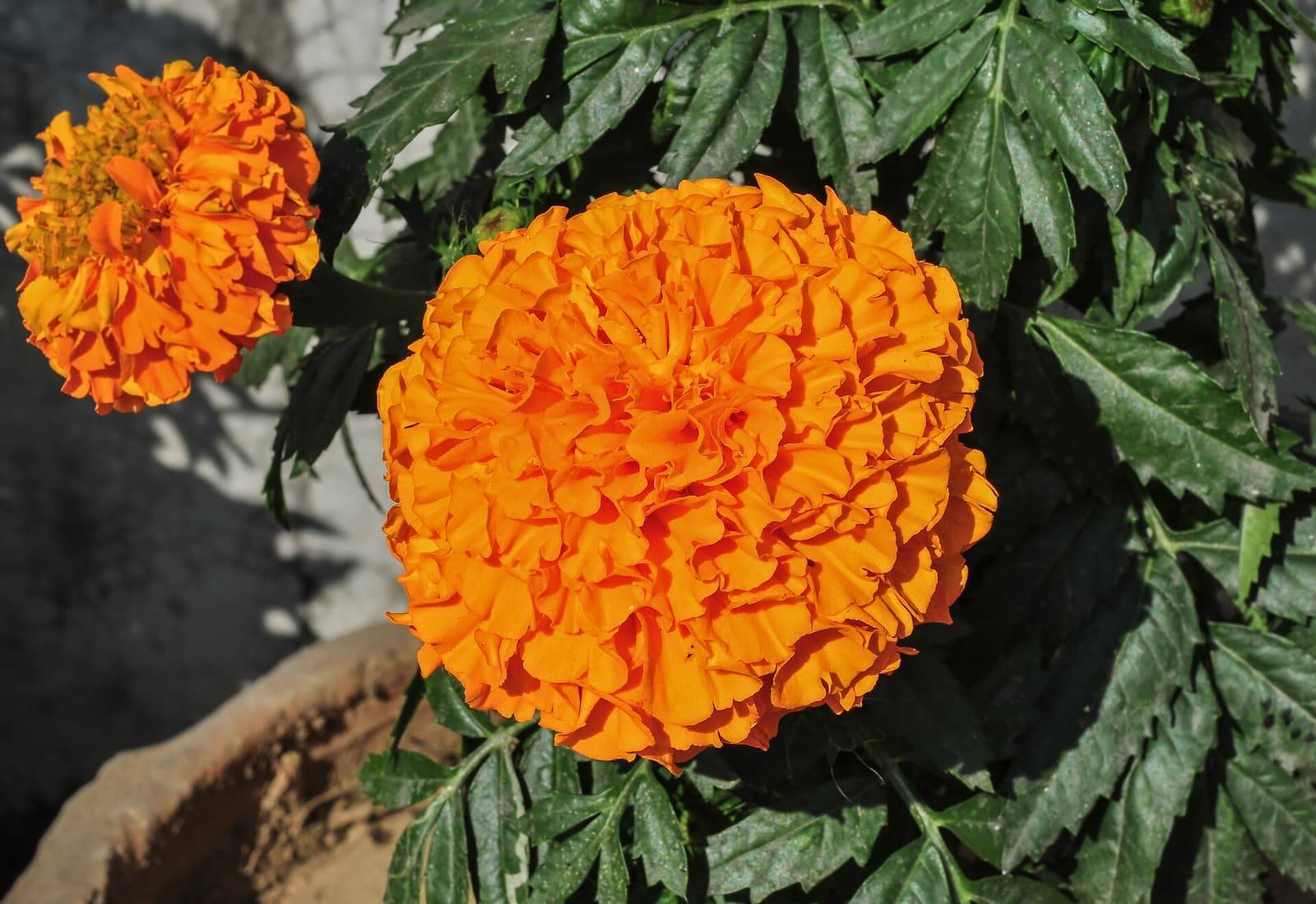
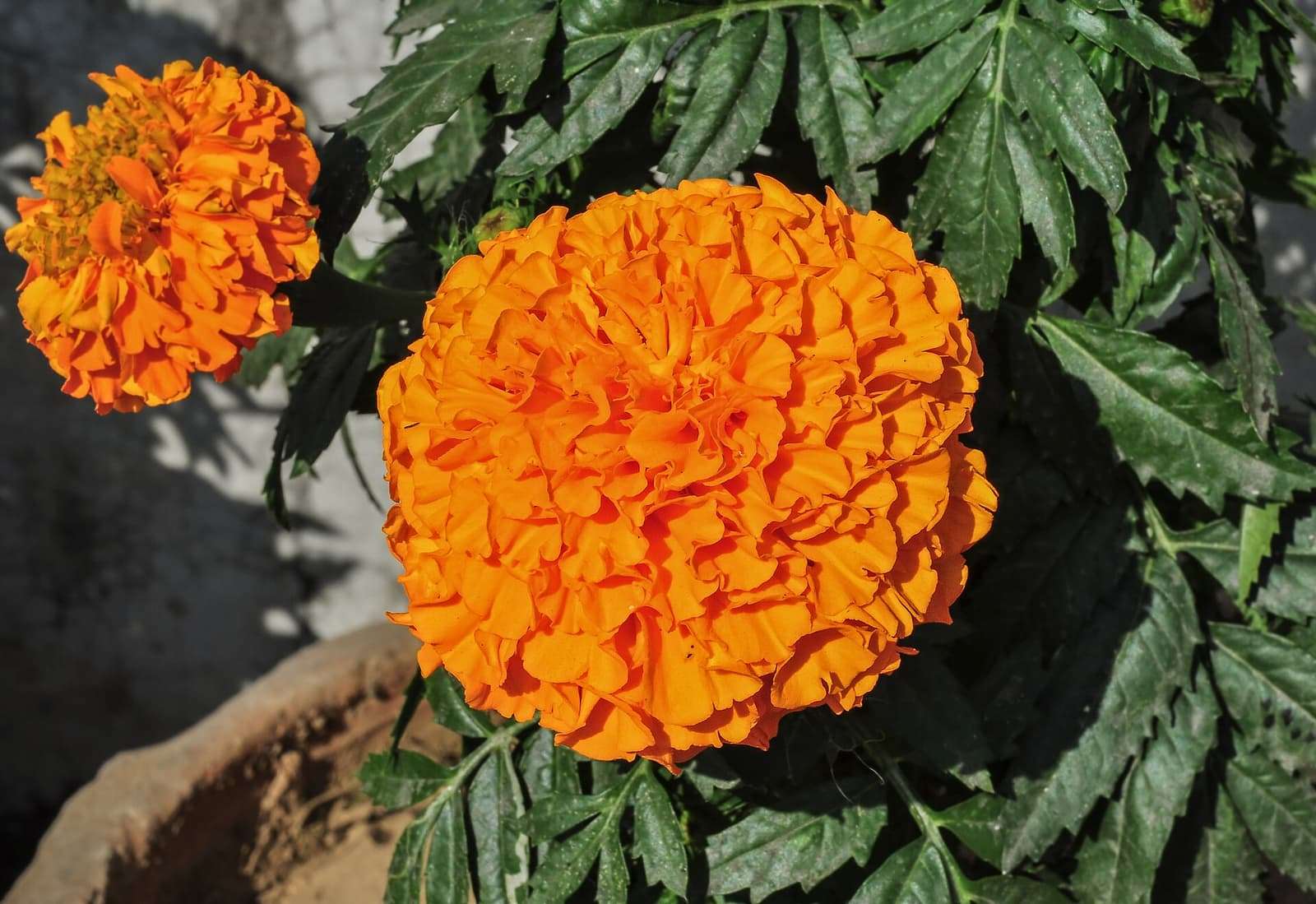
Tagetes erecta · also called Genda, GaindaAfrican marigold, grown for its large orange and yellow flowers for garlands and worship, and as a border row in vegetable plots. Raised in a nursery and transplanted; frost kills it.
Sub-tropical foothills: Jammu, Kangra, Dehradun
At a glance
Marigold in the Sub-tropical foothills
Across India
When to sow it
Twelve growing regions, January to December. Your region comes first.
Too late this season
The window here was September to October. The next one opens in June.
Under cover, from January, under cover.
- Nursery
- Transplant
- Harvest
- Under cover
- Today
Compare all 12 regionsShow fewer regions
See the dates as a table
| Region | Sow | Nursery | Transplant | Harvest |
|---|---|---|---|---|
| Sub-tropical foothills | JuneSeptember to OctoberUnder cover: January, under cover | JulyOctober to NovemberFebruary | ||
| Temperate Himalaya | Under cover: Late March to April, under cover | May to early June | Late July to early October | |
| Cold desert | Under cover: April, in a greenhouse | Late May to early June | Late July to September | |
| North-west plains | End of JuneMid SeptemberUnder cover: January, under polythene | By 25 FebruaryFirst half of AugustBy mid October | ||
| Gangetic plains | Mid JuneMid SeptemberJanuary to February | Mid JulyMid OctoberFebruary to March | ||
| North-east hills and valleys | September to early OctoberMarch | October to early NovemberApril | December to March | |
| Arid west | JuneSeptember | JulyOctober | December to early March | |
| Central plateau | FebruaryMayAugustNovember | MarchJuneSeptemberDecember | April to JulyJuly to OctoberNovember to JanuaryFebruary to April | |
| Deccan plateau | FebruaryMayAugustNovember | MarchJuneSeptemberDecember | April to JulyJuly to OctoberNovember to JanuaryFebruary to April | |
| South interior | FebruaryMayAugustNovember | MarchJuneSeptemberDecember | April to JulyJuly to OctoberNovember to JanuaryFebruary to April | |
| West coast | Late August to SeptemberDecember | Late September to OctoberJanuary | December to February | |
| East coast | FebruaryMayAugustNovember | MarchJuneSeptemberDecember | April to JulyJuly to OctoberNovember to JanuaryFebruary to April |
From seed to harvest
One season, day by day
Days from sowing
Before sowing
Last ploughing
Well rotted farmyard manure
20 tonnes per hectare
Mix into the soil at the last ploughing.
Day 0
Sow
Day 150 to 210
Last picking
No published guide covers this for the Sub-tropical foothills, so this is an AI suggestion. Check it with local advice before you rely on it.
Before sowing
Well rotted farmyard manure1
20 tonnes per hectare · Mix into the soil at the last ploughing. · Last ploughing
Day 0
Sow
Day 4 to 5
Day 21 to 28
Transplant1
Day 150 to 210
Last pickingNo published guide covers this for the Sub-tropical foothills, so this is an AI suggestion. Check it with local advice before you rely on it.
How often to water depends on the soil and the weather. Most crops need water every 7 to 10 days.1
What it needs
Soil, sun and warmth
Soil pH1,3
7 to 7.5
Deep, fertile, well drained soil that holds water well; sandy loam suits it. Mix well rotted farmyard manure in at the last ploughing.
Sunlight2Part of this comes from the sources cited. The rest is an AI suggestion.
At least 6 hours a day
Full sun. In shade the plants grow lanky and flower poorly.
Temperature3,1Part of this comes from the sources cited. The rest is an AI suggestion.
Grows best at 18 to 20 °C
Frost: none tolerated.
Monthly temperatures for the Sub-tropical foothills aren't in the library yet.
Water and feeding
Watering1
How often to water depends on the soil and the weather. Most crops need water every 7 to 10 days.
Weeding1
Weed by hand three or four times over the life of the crop.
| When | What | How much | How |
|---|---|---|---|
| Last ploughing | Well rotted farmyard manure | 20 tonnes per hectare | Mix into the soil at the last ploughing. |
Varieties and yield
150 to 300 quintals a hectare
Yields vary with the plot, the seed and the season.
Pusa Narangi Gainda
Orange, double flowers 6 to 7 cm across on plants 60 to 70 cm tall.
Pusa Basanti Gainda
Sulphur yellow, double flowers 6 to 7 cm across on plants 60 to 70 cm tall.
Pests and diseases1
Organic and cultural controls only.
Cutworm
Signs
Grey brown caterpillars feed at night and cut young plants at ground level. Plants up to the three leaf stage are most at risk.
Aphids
Signs
They gather under the flowers and at the base of the petals and suck sap, so the flowers lose colour and wither.
Thrips
Signs
They feed on young leaves, buds and flowers. Leaves twist and petals turn brown and dry.
What to do
- Hang blue sticky traps, about 40 to an acre; thrips are drawn to blue.
Fruit borer (Helicoverpa armigera)
Signs
Caterpillars feed on leaves and flower parts, and bored buds do not open. In the plains it is worst from March to April.
What to do
- Put up pheromone traps, 2 to 3 an acre to watch for the moths or 5 to 6 an acre to trap them.
- Put up T shaped bird perches, about 8 an acre.
- Spray the Helicoverpa virus (Ha NPV) in the evening, two or three times 12 days apart.
Damping off
Signs
Brown spots ring the young root and shoot, and seedlings die before or just after they come up.
What to do
- Treat the seed with Trichoderma, 4 g per kg of seed.
Wilt and stem rot
Signs
Water soaked patches show on the stem near the soil, the flower heads turn pale and the whole plant wilts.
Leaf spot and flower blight
Signs
Small grey, brown or black round spots grow on the leaves until they fall. Botrytis blight browns and kills the petals.
Prevention
- Water early in the day so the leaves dry before night.
Powdery mildew
Signs
Small white powdery spots spread over the leaves and the rest of the plant.
Seed and the season's end
Saving seed1,3
Marigold crosses between varieties: keep 600 to 1,000 m between them, and pull out off type plants at the leafy stage and again at flowering.
When the seed is ready
Pick seed heads when the petals start to shrivel. Leave the small, poorly formed flowers.
Cleaning the seed
Dry the picked heads in the shade for 10 to 15 days, then in the sun for 1 to 2 days. Cleaned seed comes to about two fifths of the fresh flower weight.
Pack dry seed in plastic bags or other closed containers and keep it in a cool place. It stays good for about one to two years.
After the last pickingNo published guide covers this for the Sub-tropical foothills, so this is an AI suggestion. Check it with local advice before you rely on it.
Pull the plants once picking falls off and compost the healthy ones. Take wilted or rotted plants off the field.
Pull the plants after the last picking and compost the healthy ones. Take plants that wilted or rotted at the collar off the field.
Rotation
Do not grow marigold on the same bed year after year; rotate it with a vegetable or a cereal.
Growing under cover1
For the summer crop, sow the nursery in January under polythene and transplant in February.
Sources
Where this comes from
Our team has checked this guide against the sources at the end of the page.Reviewed by our team on 13 November 2026.
These published guides are the sources. Where none of them covers a detail for this region, the page shows an AI suggestion and labels it.
- Package of Practices: Cultivation of Flowers and Landscape Gardening 2020 (Marigold; seasonal flowers)Directorate of Extension, SKUAST-JammuRead the source
- Marigold crop pages: area, soil and climate, propagation, planting, manuring, irrigation, intercultural operations, harvesting and yield, pests, diseasesNational Horticulture Board, Government of IndiaRead the source
- TNAU Agritech Portal: Horticulture, flower crops, African marigoldTamil Nadu Agricultural University, CoimbatoreRead the source
- AESA based IPM package: Chillies and capsicumNational Institute of Plant Health Management and Directorate of Plant Protection, Quarantine and Storage, Government of IndiaRead the source
AI Farm Manager · In development
Plan this crop on your land
AI Farm Manager will turn guides like this one into a plan for your own plot. It doesn't make plans yet.