
Growing potato
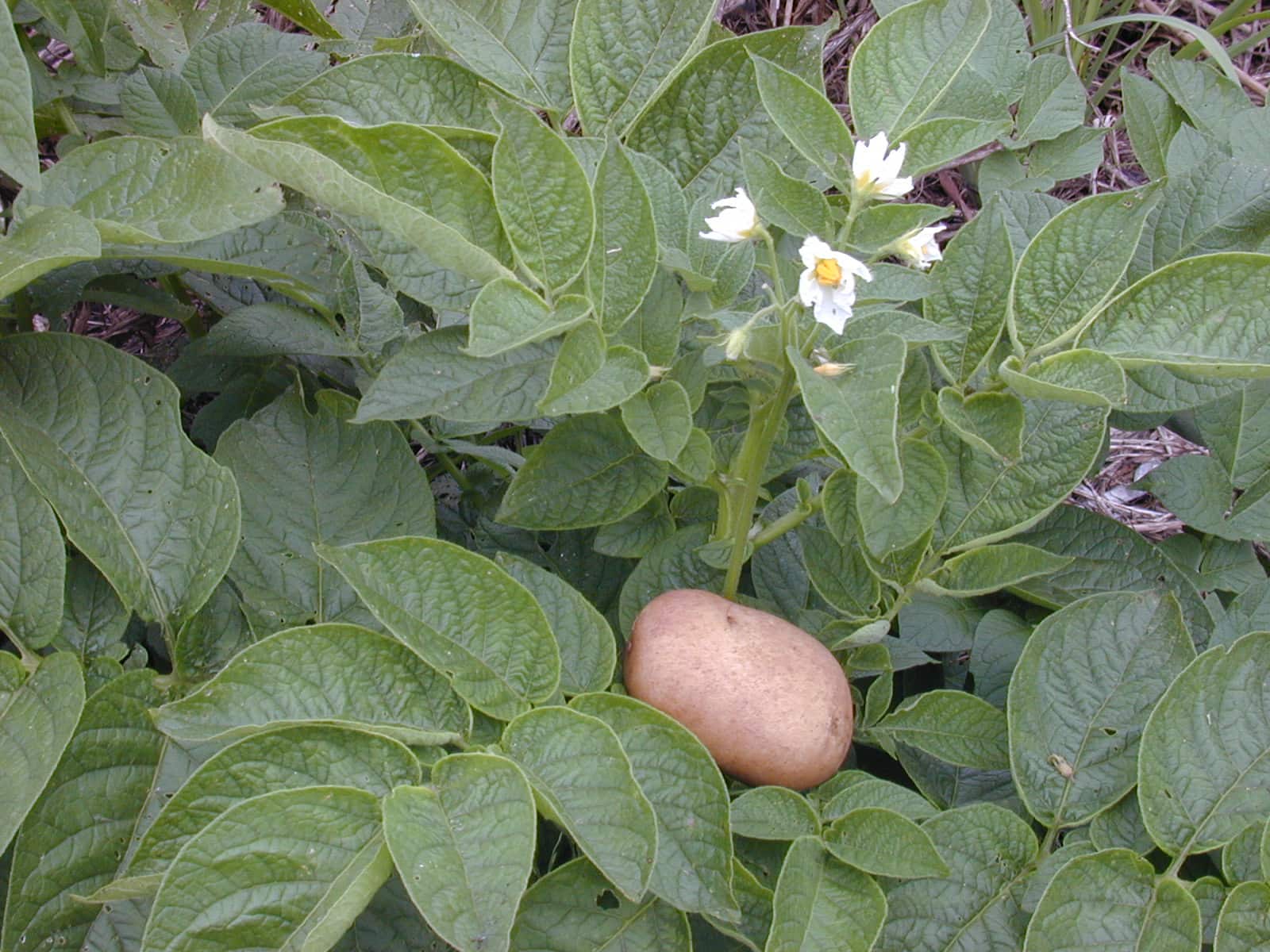
Solanum tuberosum · also called Aloo, Olu (Kashmiri)A cool season tuber crop planted from seed tubers on ridges. It needs cool nights to form tubers and is hurt by frost.
South interior: Bengaluru, Mysuru, interior Tamil Nadu
At a glance
Potato in the South interior
Across India
When to sow it
Twelve growing regions, January to December. Your region comes first.
Sow now
The window here is Mid-October to November.
- Sow
- Harvest
- Today
- Not suited here
Compare all 12 regionsShow fewer regions
See the dates as a table
| Region | Sow | Nursery | Transplant | Harvest |
|---|---|---|---|---|
| South interior | March to AprilAugust to SeptemberJanuary to FebruaryEnd of JuneMid-October to November | |||
| Temperate Himalaya | Mid-March to AprilApril to MayJanuary to February | September to OctoberSeptember to OctoberMay to June | ||
| Cold desert | April to May | September to October | ||
| Sub-tropical foothills | September to OctoberSecond half of January | January to FebruaryApril to May | ||
| North-west plains | Last week of September to mid-OctoberSecond half of January | February to MarchApril | ||
| Gangetic plains | Mid-OctoberEnd of October to mid-NovemberEarly November | February to MarchJanuary to February | ||
| North-east hills and valleys | March to April | July to August | ||
| Arid west | Mid-OctoberMid-September | February to MarchMid-November to December | ||
| Central plateau | Mid-October to NovemberEnd of June | February to MarchSeptember to October | ||
| Deccan plateau | End of June to JulyMid-October to November | September to OctoberFebruary to March | ||
| West coast | Not suited here | |||
| East coast | Early NovemberOctober to November | January to February | ||
From seed to harvest
One season, day by day
Days from sowing
Day 0
Sow
Basal, at planting
Farmyard manure (FYM)
15 t per hectare
Apply as a basal dose.
Basal, at planting
Azospirillum and phosphobacterium (biofertilisers)
2 kg each per hectare
Apply with the FYM.
Day 90 to 120
Last picking
No published guide covers this for the South interior, so this is an AI suggestion. Check it with local advice before you rely on it.
Day 0
Sow
Farmyard manure (FYM)
15 t per hectare · Apply as a basal dose.
Azospirillum and phosphobacterium (biofertilisers)7
2 kg each per hectare · Apply with the FYM.
Day 14 to 28
Seeds come up1,2,4Part of this comes from the sources cited. The rest is an AI suggestion.
Day 75 to 120
First picking4
Day 90 to 120
Last pickingNo published guide covers this for the South interior, so this is an AI suggestion. Check it with local advice before you rely on it.
Mostly rainfed in the hills, where rainfall is 1,200 to 2,000 mm. Where irrigated, water 10 days after planting and then once a week.7
What it needs
Soil, sun and warmth
Soil pH1
4.8 to 5.4
Grows in alluvial, black, red and laterite soils. Alkaline and saline soils do not suit it.
Sunlight3
Full sun. Grows well when days are sunny and nights are cool.
Temperature1
Grows best at 15 to 20 °C
Frost: none tolerated.
Monthly temperatures for the South interior aren't in the library yet.
Water and feeding
Watering7
Mostly rainfed in the hills, where rainfall is 1,200 to 2,000 mm. Where irrigated, water 10 days after planting and then once a week.
Weeding7
Keep the field weed free for the first 60 days. Hoe first on day 45 without disturbing the stolons, then hoe again and earth up on day 60.
| When | What | How much | How |
|---|---|---|---|
| Basal, at planting | Farmyard manure (FYM) | 15 t per hectare | Apply as a basal dose. |
| Basal, at planting | Azospirillum and phosphobacterium (biofertilisers) | 2 kg each per hectare | Apply with the FYM. |
Varieties and yield
15 to 20 tonnes a hectare
Yields vary with the plot, the seed and the season.
Kufri Jyoti
Late blight resistant; Nilgiris and Karnataka.
Kufri Swarna
Resists potato cyst nematode.
Kufri Thangam
Late blight resistant.
Kufri Malar
Late blight resistant.
Kufri Muthu
Kufri Soga
Kufri Giriraj
Good neighbours4Part of this comes from the sources cited. The rest is an AI suggestion.
Pests and diseases7
Organic and cultural controls only.
Potato cyst nematode and other nematodes
Signs
Patchy, stunted plants with small tubers.
What to do
- Apply Pseudomonas fluorescens at 10 kg/ha.
- Grow Kufri Swarna, which resists the cyst nematode.
Prevention
- Do not grow potato year after year in the same field; rotate with vegetables and green manure.
Cutworm
Signs
Plants cut at ground level.
What to do
- Run light traps in summer for the moths.
- Run sprinklers in the daytime to bring larvae up for birds to eat.
White grub
Signs
Grubs feed on roots and tubers.
What to do
- Run light traps from 7 to 9 pm in April and May.
- Hand pick the beetles in the morning.
- Hand pick the grubs in July and August.
Prevention
- Plough in summer to expose pupae and adults.
Potato tuber moth
Signs
Caterpillars tunnel into tubers in the field and in store.
What to do
- Set pheromone traps, 20 a hectare, and in stores.
- Spray neem seed kernel extract 5% against leaf damage.
- Cover stored potatoes with lantana or eupatorium branches to keep moths off.
Prevention
- Plant tubers 10 to 15 cm deep.
- Earth up at 60 days so tubers are not exposed for egg laying.
Late blight
Signs
Dark, spreading patches on leaves in cool wet weather.
What to do
- Remove ground creepers that carry the infection.
- Grow resistant varieties such as Kufri Jyoti, Kufri Malar and Kufri Thangam.
Brown rot (bacterial wilt)
Signs
Plants wilt; tubers rot with a brown ring.
What to do
- Plant tubers from a field without brown rot.
- Drain the field well.
- Remove and destroy affected plants.
Virus diseases
Signs
Mottled or rolled leaves and weak plants.
What to do
- Use virus-free seed.
- Rogue out affected plants regularly.
Seed and the season's end
Saving seed1,3
Plant a seed crop from healthy, virus-free seed tubers. Pull out sick-looking plants as they appear. Renew seed every 3 to 4 years: yield falls when the same seed is replanted year after year.
When the seed is ready
Cut the haulms once aphids reach 20 per 100 leaves, then leave the tubers in the soil for about 15 days to mature.
Grade the tubers and keep them in cold storage at 2 to 4 °C until the next planting season.
After the last picking7
Do not plant potato after potato; follow with other vegetables or a green manure crop to keep nematodes down.
Collect and destroy crop debris and cull tubers; do not leave rejected tubers lying in the open.
Rotation
Grow potato in a rotation with cereals and pulses, for example potato, mung, paddy, rather than potato after potato.
Sources
Where this comes from
Our team has checked this guide against the sources at the end of the page.Reviewed by our team on 13 November 2026.
These published guides are the sources. Where none of them covers a detail for this region, the page shows an AI suggestion and labels it.
- Package of Practices for Vegetable Crops 2020 (Potato)Directorate of Extension, SKUAST-JammuRead the source
- Package of Practices for Vegetable Crops 2016 (Potato)Directorate of Extension, SKUAST-JammuRead the source
- Potato: package of practices (source NHB)Vikaspedia (Government of India), citing National Horticulture BoardRead the source
- Production Technology of Vegetables and Flowers (VSF-231), Part I: Vegetable production (Potato)CSK Himachal Pradesh Krishi Vishvavidyalaya, Palampur (Department of Vegetable Science and Floriculture)Read the source
- AESA based IPM package: PotatoNational Institute of Plant Health Management and Directorate of Plant Protection, Quarantine and Storage, Government of IndiaRead the source
- Horticulture: Vegetables: Potato (TNAU Agritech Portal)Tamil Nadu Agricultural UniversityRead the source
AI Farm Manager · In development
Plan this crop on your land
AI Farm Manager will turn guides like this one into a plan for your own plot. It doesn't make plans yet.