
Growing rice
Oryza sativaPaddy is usually raised in a nursery and transplanted into puddled, flooded fields, though it can also be sown direct. Most regions grow it in the monsoon; some take a second or third crop.
Temperate Himalaya: Kashmir valley, Shimla, Kullu, Uttarakhand hills
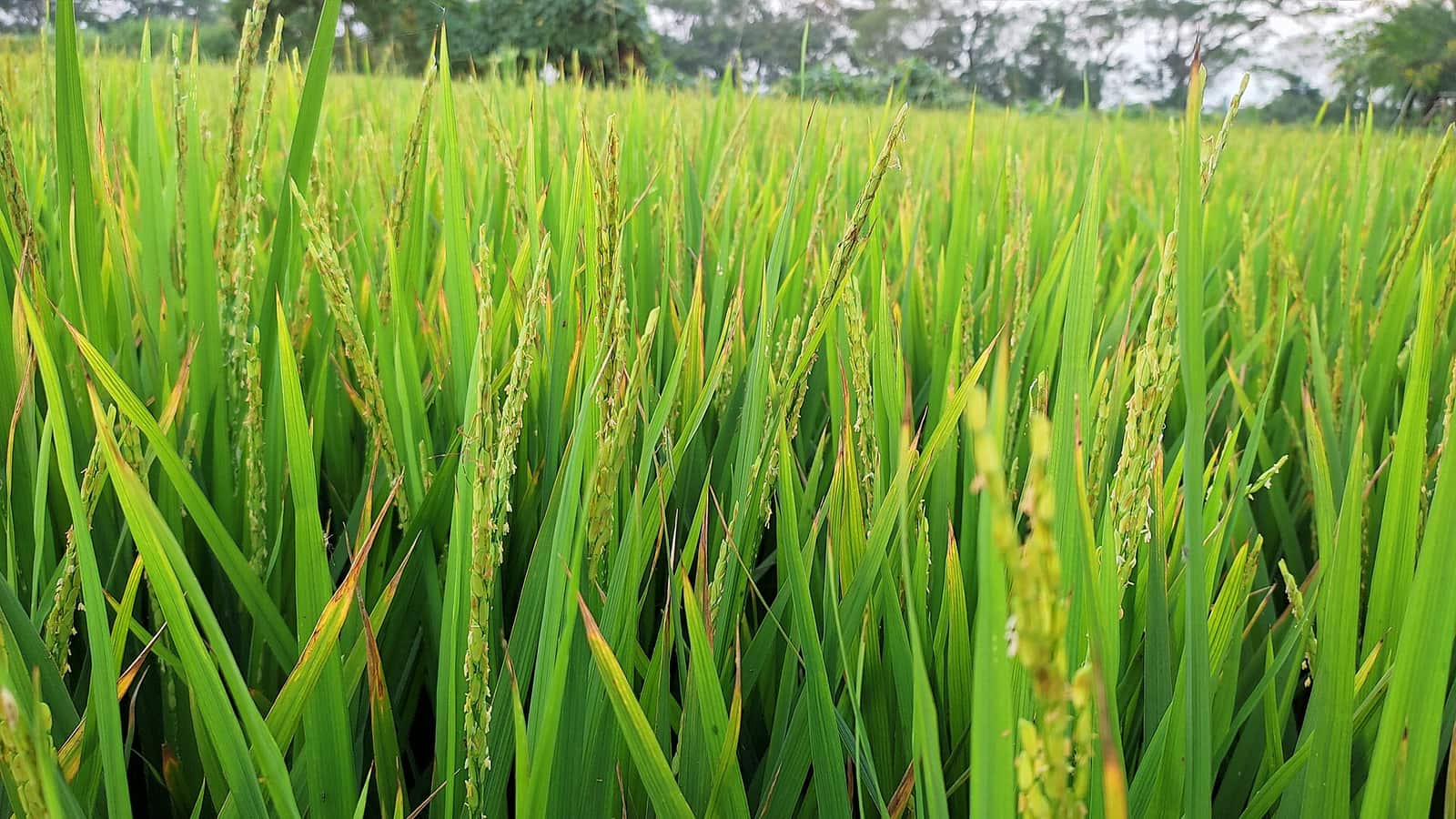
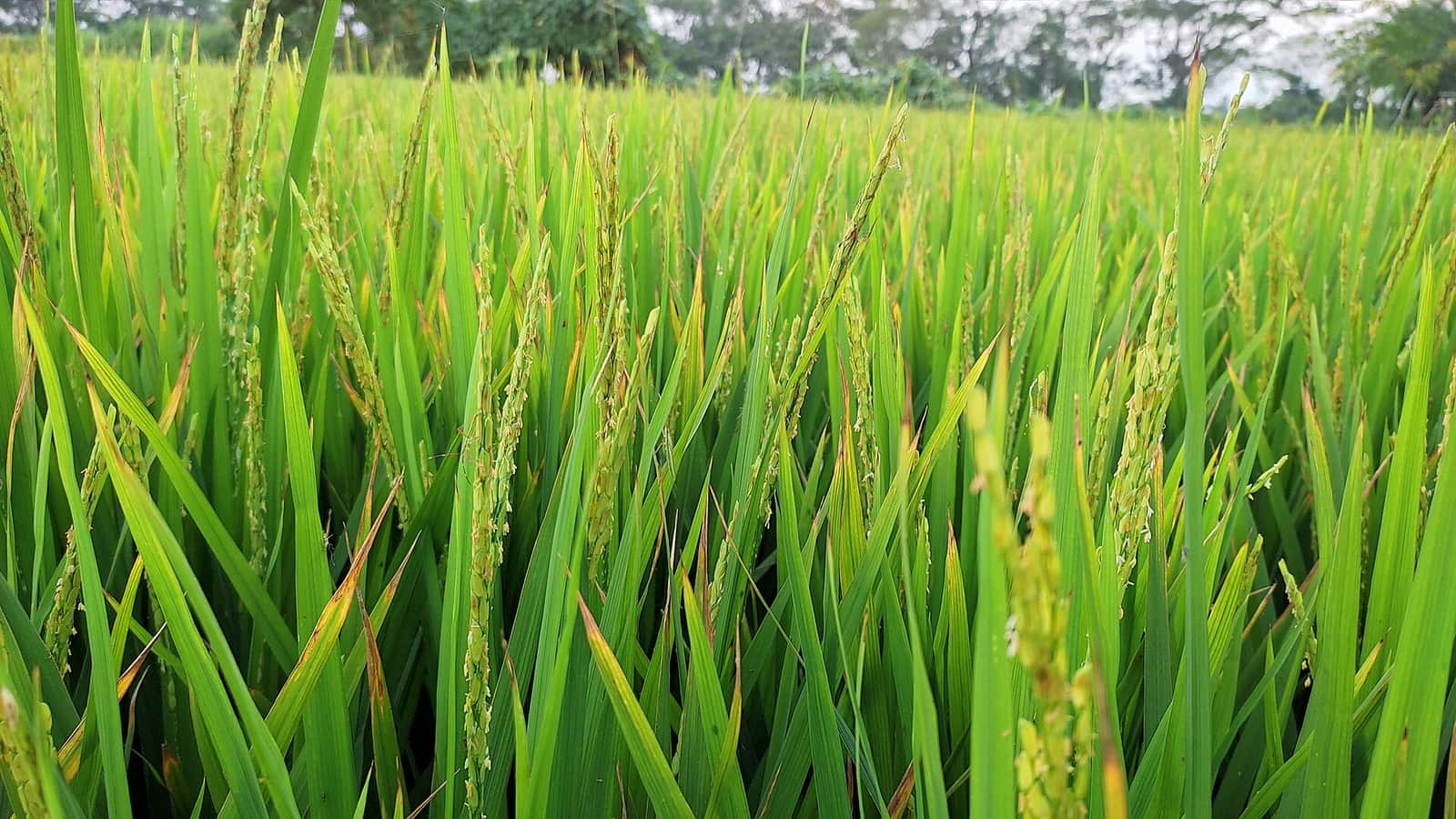
At a glance
Rice in the Temperate Himalaya
Kharif. Nursery in late April under a low tunnel, transplanting from late May to mid-June.5,6
About 140 to 160 days from nursery sowing to harvest. The cold spring makes the crop slower than in the plains.
No published guide covers this for the Temperate Himalaya, so this is an AI suggestion. Check it with local advice before you rely on it.Last week of April (Kashmir valley)5,6,7
Part of this comes from the sources cited. The rest is an AI suggestion.
Across India
When to sow it
Twelve growing regions, January to December. Your region comes first.
Wait until March
The next sowing here is Late March to late April (temperate Jammu, higher areas earlier).
- Sow
- Nursery
- Transplant
- Harvest
- Today
- Not suited here
Compare all 12 regionsShow fewer regions
See the dates as a table
| Region | Sow | Nursery | Transplant | Harvest |
|---|---|---|---|---|
| Temperate Himalaya | Last week of April (Kashmir valley)Late March to late April (temperate Jammu, higher areas earlier) | Last week of May (lower belts) to mid-June (higher belts); finish by 21 June | Late September to October, later in the higher belts | |
| Cold desert | Not suited here | |||
| Sub-tropical foothills | With the first monsoon shower (direct-sown rainfed rice) | Early May to the third week of June, by variety | Mid-June to 21 July (late dates only when the monsoon fails) | Early October (PC-19 in the recommended rice-marigold-French bean sequence) |
| North-west plains | 1 to 15 June (direct-seeded rice) | 20 May to 20 June | 20 June to 10 July | |
| Gangetic plains | Late May to late July, by variety duration (Bihar)November to December | July to early August, with 3 to 4 week seedlingsAfter mid-January, once it is warmer than 10°C | By mid-November (long-duration varieties)May to June | |
| North-east hills and valleys | March to AprilJune to July | April to MayJuly to AugustSeptember (late sali, 4 to 6 seedlings a hill) | ||
| Arid west | Not suited here | |||
| Central plateau | Late June to early July (direct-sown, with the first good rain) | Mid-June to early July, with the monsoon | July to early August | Late October to November |
| Deccan plateau | June to JulyLate November to December | July to AugustJanuary to early February | Late October to NovemberLate April to May | |
| South interior | December to JanuaryApril to JuneSeptember to October | |||
| West coast | April to MaySeptember to OctoberDecember to January | September to OctoberDecember to JanuaryMarch to April | ||
| East coast | June to JulyAugustSeptember to OctoberDecember to JanuaryApril to May | |||
From seed to harvest
One season, day by day
Days from sowing
Before sowing
Nursery bed
Well-rotted farmyard manure or compost
1.5 kg per m² of nursery bed (15 kg per 10 m²)
Mix into the bed soil before sowing
Field preparation
Farmyard manure or compost
15 t per hectare
Mix in at puddling; the guide then halves the other nutrients
Day 0
Sow
Day 140 to 160
Last picking
No published guide covers this for the Temperate Himalaya, so this is an AI suggestion. Check it with local advice before you rely on it.
Before sowing
Well-rotted farmyard manure or compost
1.5 kg per m² of nursery bed (15 kg per 10 m²) · Mix into the bed soil before sowing · Nursery bed
Farmyard manure or compost7
15 t per hectare · Mix in at puddling; the guide then halves the other nutrients · Field preparation
Day 0
Sow
Day 1 to 2
Day 25 to 30
Day 140 to 160
Last pickingNo published guide covers this for the Temperate Himalaya, so this is an AI suggestion. Check it with local advice before you rely on it.
Keep about 3 to 5 cm of water in the field, raised to about 6 cm once the seedlings take. Drain now and then at tillering, never at flowering. In cold hill areas let water stand for a few days to warm up instead of running it from terrace to terrace.5,7
What it needs
Soil, sun and warmth
Soil pH4,7,12
5 to 9
Clay to clay loam soils that turn to soft mud when puddled and hold water well; loams also suit. Soils that drain fast waste water.
Sunlight4
At least 6 hours a day
Full sun. Punjab's guide links high yields to about 6 to 11 hours of bright sunshine a day, depending on crop stage.
Temperature4,7,12
Grows best at 20 to 34 °C
Monthly temperatures for the Temperate Himalaya aren't in the library yet.
Water and feeding
| When | What | How much | How |
|---|---|---|---|
| Nursery bed | Well-rotted farmyard manure or compost | 1.5 kg per m² of nursery bed (15 kg per 10 m²) | Mix into the bed soil before sowing |
| Field preparation | Farmyard manure or compost | 15 t per hectare | Mix in at puddling; the guide then halves the other nutrients |
Varieties and yield
40 to 60 quintals a hectare
Yields vary with the plot, the seed and the season.
Shalimar Rice-1, Shalimar Rice-2, Shalimar Rice-3, Shalimar Rice-4
Lower belts of the Kashmir valley (SKUAST-Kashmir)
Kohsaar, K-332, Shalimar Rice-5
Higher belts of the Kashmir valley (SKUAST-Kashmir)
Jhelum (SKAU-27), Chenab (SKAU-23), K-39 (SKAU-5)
Temperate Jammu, about 900 to 1550 m (SKUAST-Jammu)
Barkat (K-78)
Up to about 1800 m; K-332 above 1800 m (SKUAST-Jammu)
Good neighboursNo published guide covers this for the Temperate Himalaya, so this is an AI suggestion. Check it with local advice before you rely on it.
Organic and cultural controls only.
Snails and slugs
What to do
- Fit 5 mm mesh screens at water inlets and pick the snails off by hand
- Let ducks graze the paddy
- Drain the field so the sun reaches the snails
Stem borer
Signs
Young plants show a dead, yellow central shoot; older plants give white, empty ears.
What to do
- Set up bird perches in the field
- Use pheromone traps to catch the males
Blast
Signs
Eye-shaped spots with ash-grey centres and brown edges on leaves; in bad years the neck and ear are hit too.
Prevention
- Raise the nursery from healthy seed taken from a clean crop
Seed and the season's end
Saving seed1,4
Pick a good patch of the standing crop and rogue out off-types and sick plants. Harvest and thresh it separately.
Dry the grain well, to about 12 per cent moisture, and keep it in clean bins.
After the last picking7
SKUAST-Jammu suggests rotations by altitude: rice then wheat, sarson, barley or lentil at 900 to 1350 m; rice then oats at 1350 to 1500 m; and rice then vegetable peas, berseem, sarson, barley or oats from 1500 to 1650 m.
Mixing or keeping rice straw in the field builds soil health over the years. Jammu's guide chops straw into pieces of about 5 cm and ploughs it in about 10 days before the next crop.
Rotation
Common rotations in the north: rice followed by wheat, berseem, gram, potato, peas, mustard or barley, often with summer moong or a green manure crop before the next rice.
Sources
Where this comes from
Our team has checked this guide against the sources at the end of the page.Reviewed by our team on 13 November 2026.
These published guides are the sources. Where none of them covers a detail for this region, the page shows an AI suggestion and labels it.
- Paddy: crop production guide (Agro Advisory Services)TNAU Agritech Portal, Tamil Nadu Agricultural UniversityRead the source
- Rice: seasons and varietiesTNAU Agritech Portal, Tamil Nadu Agricultural UniversityRead the source
- Transplanted puddled lowland rice: wet nurseryTNAU Agritech Portal, Tamil Nadu Agricultural UniversityRead the source
- Monthly workshop for extension functionaries: message for June (paddy)Directorate of Extension, SKUAST-KashmirRead the source
- Monthly workshop for extension functionaries: message for April (rice nursery)Directorate of Extension, SKUAST-KashmirRead the source
- Package of Practices for Kharif Crops 2016: Rice; Rice cultivation in temperate and semi-temperate regionsDirectorate of Extension, SKUAST-JammuRead the source
AI Farm Manager · In development
Plan this crop on your land
AI Farm Manager will turn guides like this one into a plan for your own plot. It doesn't make plans yet.