
Growing walnut
Juglans regia · also called akhrot, doon (Kashmiri)Walnut is a large, long-lived nut tree of the temperate Himalaya, grown across the Kashmir valley and the hills of Jammu. It needs deep soil, a spring free of frost and no extreme summer heat, so it does not suit the warm plains or coasts.
North-east hills and valleys: Assam, Meghalaya, Sikkim, Darjeeling
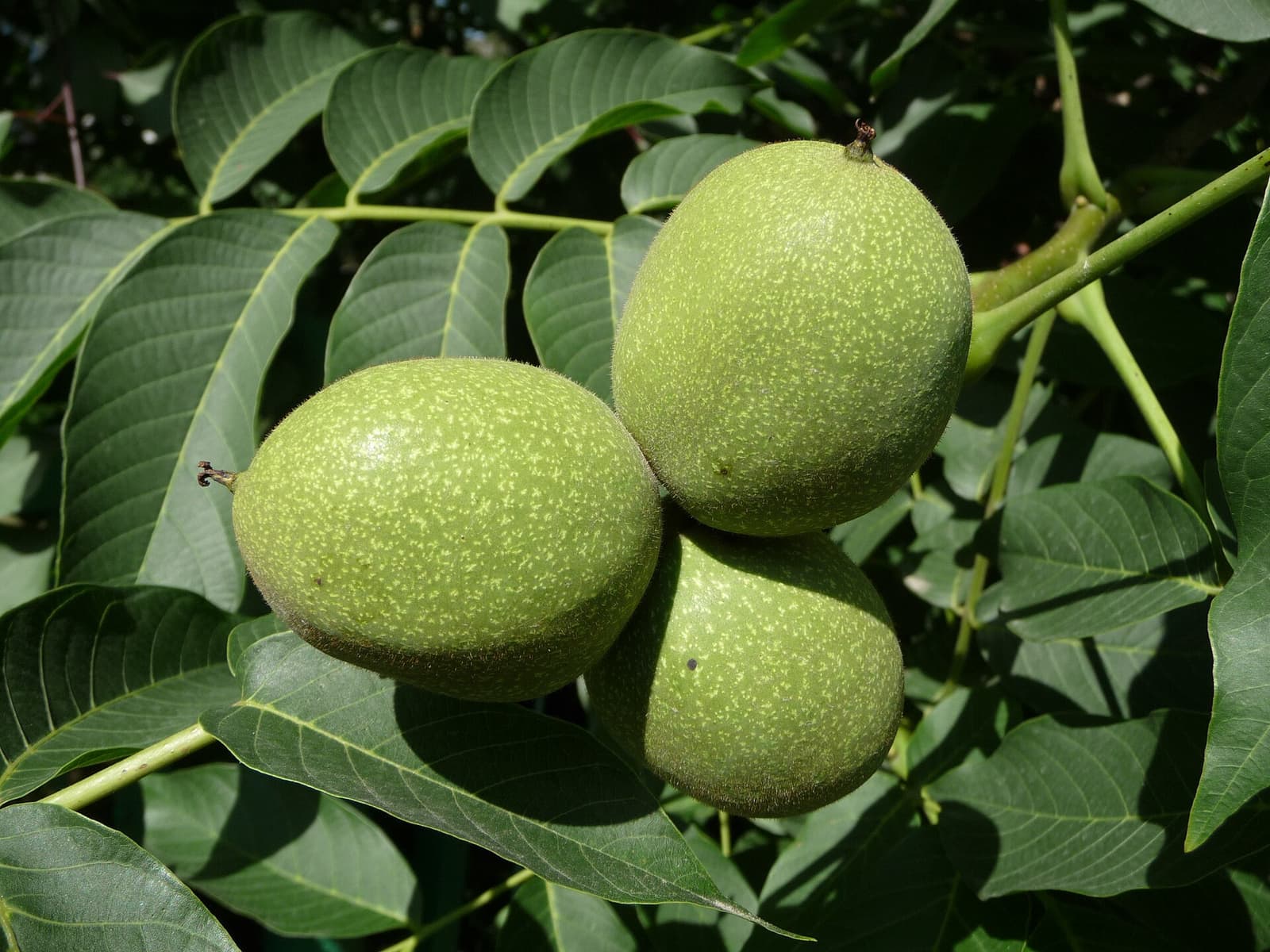
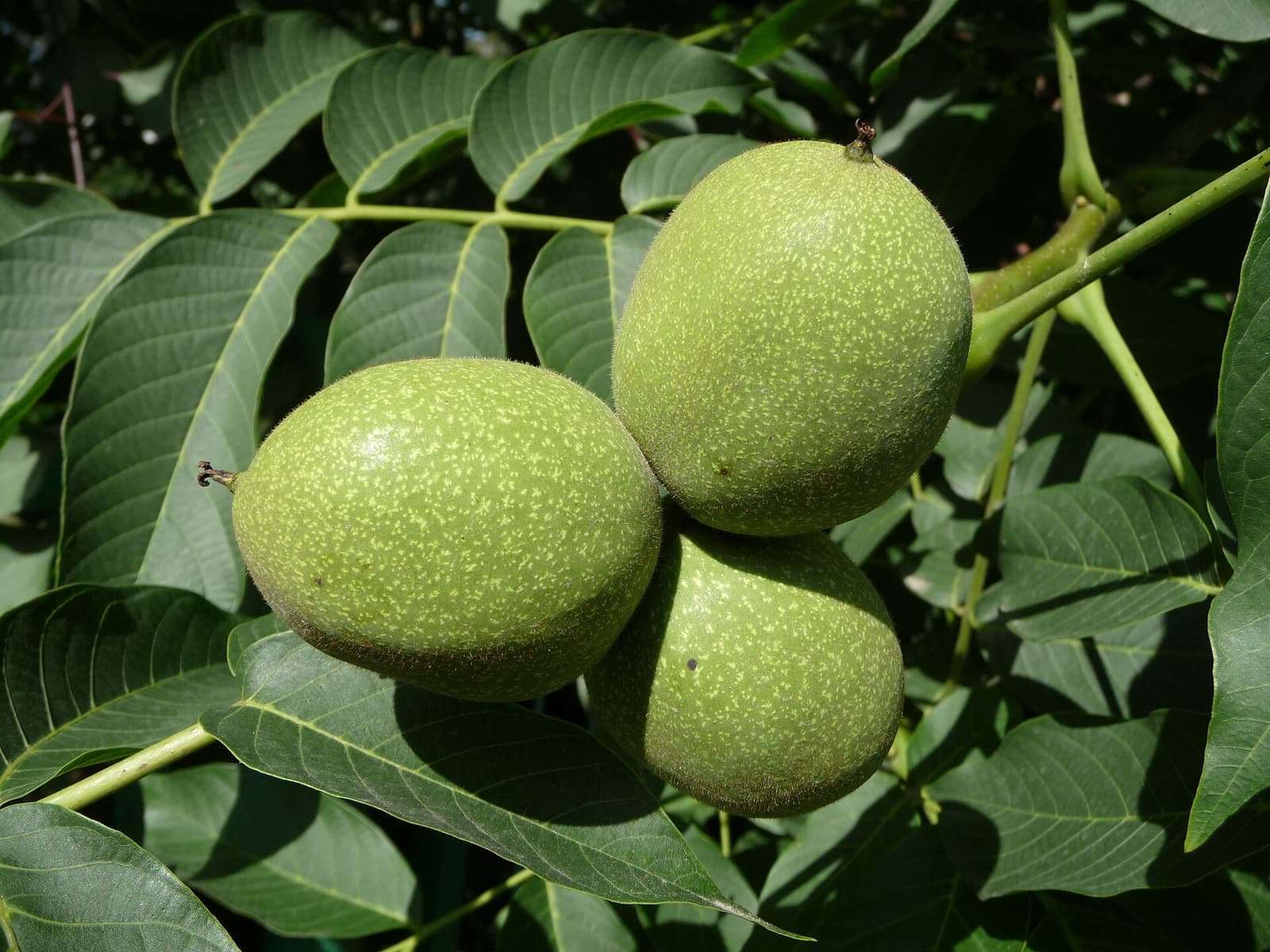
At a glance
Walnut in the North-east hills and valleys
Nuts picked in late summer and autumn, about August to October
No published guide covers this for the North-east hills and valleys, so this is an AI suggestion. Check it with local advice before you rely on it.A perennial tree. Seedling trees take about 8 to 10 years to bear and grafted trees about 4 to 5 years.
No published guide covers this for the North-east hills and valleys, so this is an AI suggestion. Check it with local advice before you rely on it.Late December to February
No published guide covers this for the North-east hills and valleys, so this is an AI suggestion. Check it with local advice before you rely on it.
Across India
When to sow it
Twelve growing regions, January to December. Your region comes first.
Wait until December
The next sowing here is Late December to February.
- Nursery
- Transplant
- Harvest
- Today
- Not suited here
Compare all 12 regionsShow fewer regions
See the dates as a table
| Region | Sow | Nursery | Transplant | Harvest |
|---|---|---|---|---|
| North-east hills and valleys | Late December to February | Late August to early October | ||
| Temperate Himalaya | December | Early spring (about March) | September to October | |
| Cold desert | Not suited here | |||
| Sub-tropical foothills | Not suited here | |||
| North-west plains | Not suited here | |||
| Gangetic plains | Not suited here | |||
| Arid west | Not suited here | |||
| Central plateau | Not suited here | |||
| Deccan plateau | Not suited here | |||
| South interior | Not suited here | |||
| West coast | Not suited here | |||
| East coast | Not suited here | |||
From seed to harvest
One season, day by day
Days from sowing
Before sowing
Well-rotted FYM and topsoil, one part FYM to two parts soil
Fill each 1 m pit with the mix · Pit filling, before planting
Well-rotted FYM or compostNo published guide covers this for the North-east hills and valleys, so this is an AI suggestion. Check it with local advice before you rely on it.
Spread under the canopy and fork in lightly before bud break · Every year, in the dormant season
Day 30
Water young trees while they settle in and during dry spells. Walnut does not stand waterlogging, so on heavy rain sites keep drains open and never let water stand at the roots. Water in the two to four weeks before harvest if the weather is dry.3Part of this comes from the sources cited. The rest is an AI suggestion.
What it needs
Soil, sun and warmth
Soil pH1,3
6 to 7
Deep, well-drained silt loam or loam with plenty of organic matter, 2 to 3 m deep. The subsoil must be free of rock, hard clay and gravel layers so the roots can go down evenly. Avoid alkaline and sandy soils, and any spot where water stands.
Sunlight3
Full sun. Plant in an open site with no shade.
Temperature1,2Part of this comes from the sources cited. The rest is an AI suggestion.
Grows best at 18 to 30 °C
Takes light frost.
Monthly temperatures for the North-east hills and valleys aren't in the library yet.
Water and feeding
Watering3Part of this comes from the sources cited. The rest is an AI suggestion.
Water young trees while they settle in and during dry spells. Walnut does not stand waterlogging, so on heavy rain sites keep drains open and never let water stand at the roots. Water in the two to four weeks before harvest if the weather is dry.
Weeding3
Hoe deeply in the first year, then weed regularly around the young trees and mulch the basins with 10 to 15 cm of dry grass or straw. In the first 2 to 4 years, peas, beans, soybean or cowpea between the rows keep weeds down and feed the soil.
| When | What | How much | How |
|---|---|---|---|
| Pit filling, before planting | Well-rotted FYM and topsoil, one part FYM to two parts soil | Fill each 1 m pit with the mix | |
| Every year, in the dormant season | Well-rotted FYM or compost | Spread under the canopy and fork in lightly before bud break |
Varieties and yield
15 to 30 kg a tree
Yields vary with the plot, the seed and the season.
Good neighbours3Part of this comes from the sources cited. The rest is an AI suggestion.
Pests and diseases3
Organic and cultural controls only.
Stem borer and shot hole borer
Signs
Holes in the trunk and branches with sawdust, then yellowing and wilting leaves.
What to do
- Prune out and burn infested shoots and branches in winter
- Push a flexible wire into the borer hole to kill the grub, then seal the hole with mud
Walnut weevil
Signs
Grubs bore into the young nuts and eat the kernel.
What to do
- Collect and destroy fallen and infested nuts every week until harvest
- Plough the orchard after harvest
Hairy caterpillar (gypsy moth)
Signs
Caterpillars eat the leaves and can strip trees.
What to do
- Collect and destroy egg masses
- Hand-pick the gregarious caterpillars and cocoons from the trunk
Leaf blotch, anthracnose and walnut blight
Signs
Brown spots and blotches on the leaves; dark spots on shoots and young nuts.
What to do
- Collect and destroy fallen leaves in autumn
Prevention
- Space trees well so air moves through them
- Keep irrigation water off the leaves
Phytophthora root and crown rot
Signs
Cankers on the bark at the soil line; the tree declines.
Prevention
- Plant in well-drained soil
- Keep the graft union a few centimetres above the soil
Seed and the season's end
Saving seed1
Take seed nuts from vigorous, high-yielding trees with big, bright brown nuts, shells that crack well and bright yellow, well-flavoured kernels.
When the seed is ready
The green hull splits open and the nut drops or comes away easily, in September and October.
Cleaning the seed
Wash the seed clean in water and dry it in the shade.
Keep dry seed in airtight containers in a cool, dry place. Walnut seed keeps for 1 to 3 years.
After the last picking3Part of this comes from the sources cited. The rest is an AI suggestion.
Walnut is a perennial, so nothing is cleared after harvest. Rake up and compost fallen leaves and hulls, gather the pruned wood after leaf fall, and prune in the dormant season.
Rake up fallen leaves and hulls in autumn and compost them in a pit away from the trees, since the leaves carry leaf blotch to next spring. Burn diseased wood rather than leaving it in the orchard.
Rotation
Walnut stands for many decades. When an old tree is removed, grow a few seasons of fodder grasses or legumes before replanting, and do not set a new tree back into the old pit.
Sources
Where this comes from
Our team has checked this guide against the sources at the end of the page.Reviewed by our team on 13 November 2026.
These published guides are the sources. Where none of them covers a detail for this region, the page shows an AI suggestion and labels it.
- Chip budding techniques for walnut (Juglans regia): enhancing propagation efficiency (Indian Farming 75(06): 08-12)ICAR (Indian Farming); authors at KVK Chamba and Dr YS Parmar University of Horticulture and Forestry, Nauni, SolanRead the source
- AESA based IPM package: walnutDirectorate of Plant Protection, Quarantine and Storage and National Institute of Plant Health Management, Ministry of Agriculture and Farmers Welfare, Government of IndiaRead the source
AI Farm Manager · In development
Plan this crop on your land
AI Farm Manager will turn guides like this one into a plan for your own plot. It doesn't make plans yet.