
Growing walnut
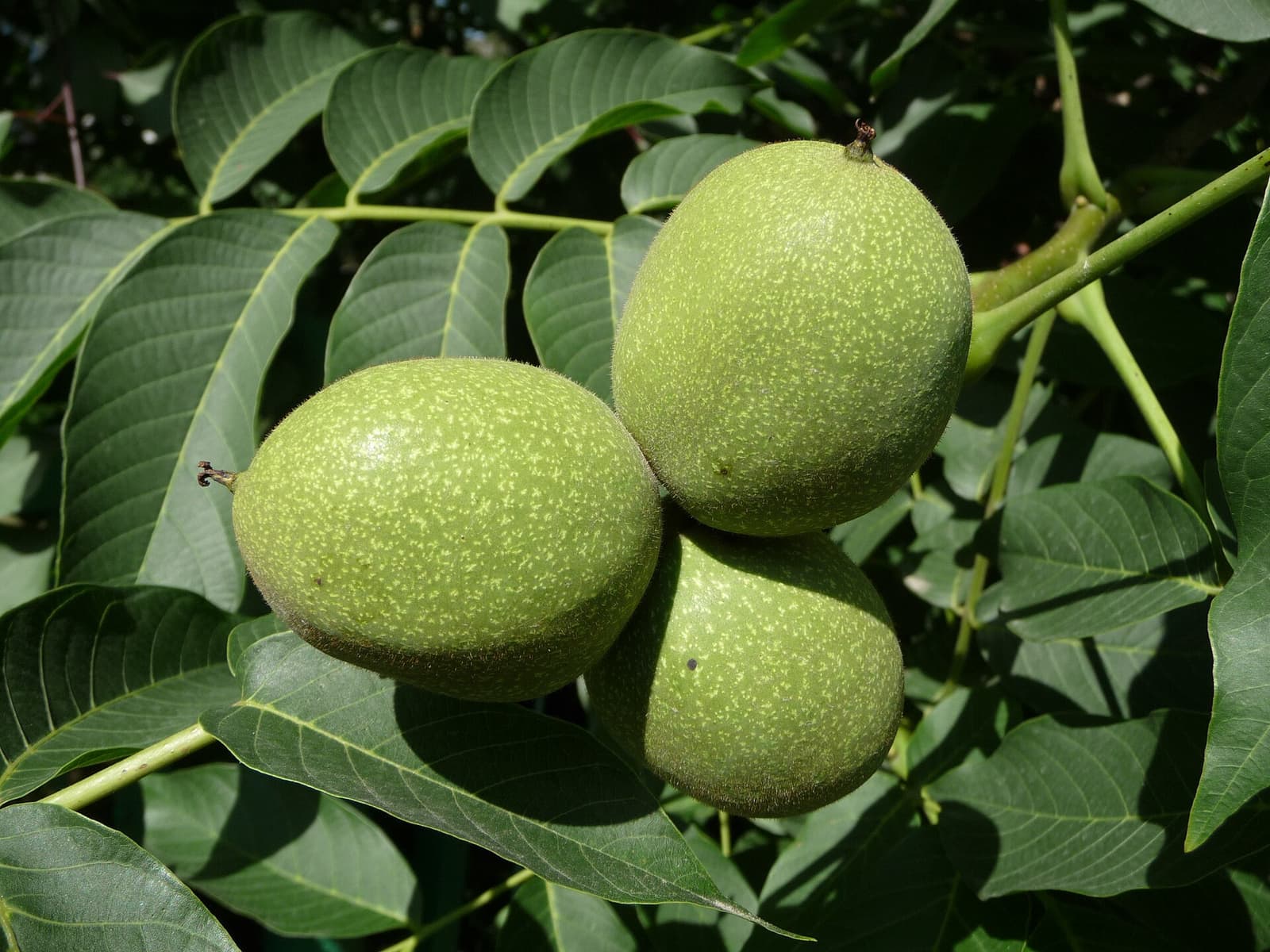
Juglans regia · also called akhrot, doon (Kashmiri)Walnut is a large, long-lived nut tree of the temperate Himalaya, grown across the Kashmir valley and the hills of Jammu. It needs deep soil, a spring free of frost and no extreme summer heat, so it does not suit the warm plains or coasts.
Temperate Himalaya: Kashmir valley, Shimla, Kullu, Uttarakhand hills
At a glance
Walnut in the Temperate Himalaya
Across India
When to sow it
Twelve growing regions, January to December. Your region comes first.
Wait until December
The next sowing here is December.
- Nursery
- Transplant
- Harvest
- Today
- Not suited here
Compare all 12 regionsShow fewer regions
See the dates as a table
| Region | Sow | Nursery | Transplant | Harvest |
|---|---|---|---|---|
| Temperate Himalaya | December | Early spring (about March) | September to October | |
| Cold desert | Not suited here | |||
| Sub-tropical foothills | Not suited here | |||
| North-west plains | Not suited here | |||
| Gangetic plains | Not suited here | |||
| North-east hills and valleys | Late December to February | Late August to early October | ||
| Arid west | Not suited here | |||
| Central plateau | Not suited here | |||
| Deccan plateau | Not suited here | |||
| South interior | Not suited here | |||
| West coast | Not suited here | |||
| East coast | Not suited here | |||
From seed to harvest
One season, day by day
Days from sowing
Before sowing
Well-rotted FYM
5 to 6 kg per m² · Mix into the soil when preparing the beds · Nursery beds
Well-rotted FYM and topsoil, one part FYM to two parts soil
Fill each 1 m pit with the mix · Pit filling, before planting
FYM (well-rotted farmyard manure)1,2,3
Spread under the canopy each year; the amount rises with the age of the tree. SKUAST-Jammu says February to March; the national IPM package says December to January, in a trench 20 to 30 cm deep and 30 cm wide along the drip line. · Every year, from the first year
Day 30
Water is most needed while grafts and young trees settle in, and the need falls as the roots spread. How often to water depends on the tree's age, the soil, the rain, mulching and how the orchard floor is kept. Water during long dry spells in summer so trees do not wilt, and give a watering in the two to four weeks before the expected harvest. Walnut does not stand waterlogging, so keep the drains open and never let water stand at the roots.1,3
What it needs
Soil, sun and warmth
Soil pH1,3
6 to 7
Deep, well-drained silt loam or loam with plenty of organic matter, 2 to 3 m deep. The subsoil must be free of rock, hard clay and gravel layers so the roots can go down evenly. Avoid alkaline and sandy soils, and any spot where water stands.
Sunlight3
Full sun. Plant in an open site with no shade.
Temperature1,2Part of this comes from the sources cited. The rest is an AI suggestion.
Grows best at 18 to 30 °C
Takes light frost.
Monthly temperatures for the Temperate Himalaya aren't in the library yet.
Water and feeding
Watering1,3
Water is most needed while grafts and young trees settle in, and the need falls as the roots spread. How often to water depends on the tree's age, the soil, the rain, mulching and how the orchard floor is kept. Water during long dry spells in summer so trees do not wilt, and give a watering in the two to four weeks before the expected harvest. Walnut does not stand waterlogging, so keep the drains open and never let water stand at the roots.
Weeding3
Hoe deeply in the first year, then weed regularly around the young trees. Mulch the basins with 10 to 15 cm of dry grass or straw. Between the rows, slash or mow the weeds, or in the first 2 to 4 years grow peas, beans, soybean, cowpea or vegetables, which feed the soil and give a return.
| When | What | How much | How |
|---|---|---|---|
| Nursery beds | Well-rotted FYM | 5 to 6 kg per m² | Mix into the soil when preparing the beds |
| Pit filling, before planting | Well-rotted FYM and topsoil, one part FYM to two parts soil | Fill each 1 m pit with the mix | |
| Every year, from the first year | FYM (well-rotted farmyard manure) | Spread under the canopy each year; the amount rises with the age of the tree. SKUAST-Jammu says February to March; the national IPM package says December to January, in a trench 20 to 30 cm deep and 30 cm wide along the drip line. |
Varieties and yield
20 to 40 kg a tree
Yields vary with the plot, the seed and the season.
Burzal (thin shelled)
A broad shell group, not a single variety. Most trees are of seedling origin and no standard cultivar is grown yet.
Kagzi (medium shelled)
A broad shell group, not a single variety.
Lake English
An introduction found promising in the temperate areas of Jammu.
Opex Culchery
An introduction found promising in the temperate areas of Jammu (name as printed).
Good neighbours3Part of this comes from the sources cited. The rest is an AI suggestion.
Organic and cultural controls only.
Mealy bugs
Signs
Insects under a white cottony mass below the collar of the plant. Nursery plants wilt and dry. Old, weak orchards suffer most and look sickly, with poor yields.
What to do
- Remove dead and drying trees
- Rake the soil under the trunk in early November to expose the young insects
- Tie a smooth band of polythene sheet or a grease band about 25 cm wide round the trunk, about 30 cm above the ground, in mid-December, so the crawlers cannot climb
- Plough the orchard in summer to expose the eggs to heat and natural enemies
Prevention
- Do not plant infested saplings
Leaf curl aphid, green peach aphid and walnut aphids
Signs
Aphids suck sap from leaves, leaf stalks, blossoms and young fruit. Leaves curl, twist, yellow and drop early, blossoms wither and young fruit falls.
What to do
- Grow buckwheat and other flowers that draw in the aphids' natural enemies
Prevention
- Do not plant infested stock
- Keep trees vigorous with balanced feeding
Lecanium scale and San Jose scale
Signs
Scales suck sap from bark and shoots. Branches attacked for 2 to 3 years may die, and sooty mould grows on the sticky exudate. Bark around San Jose scale often turns red.
What to do
- Prune out infested branches and twigs and destroy them
- Plough the orchard after harvest
- Protect ladybird beetles, lacewings and the small wasps that attack scale
Prevention
- Keep trees vigorous with balanced feeding
Hairy caterpillar (Indian gypsy moth)
Signs
Caterpillars eat the leaves. Heavy attacks strip trees bare, and repeated stripping weakens and can kill them.
What to do
- Collect and destroy the egg masses
- Staple sacking (burlap) skirts around the trunks and collect and destroy the caterpillars and pupae under them from May to the end of June
- Hand-pick the gregarious caterpillars and cocoons from the trunk
Chaffer beetles
Signs
Beetles eat leaves, buds, blossoms and young fruit, leaving holed leaves. The grubs feed on roots and plants may wilt.
What to do
- Use a light trap in the evenings
Stem borer and shot hole (pin hole) borer
Signs
Holes in the trunk and branches with sawdust coming out, or fine galleries under the bark; leaves then yellow and wilt. A bad attack can kill the tree.
What to do
- Prune out and burn infested shoots and branches in winter
- Push a flexible wire into the borer hole to kill the grub, then seal the hole with mud
Prevention
- Keep trees vigorous with balanced feeding
Grey weevil
Signs
Weevils nibble the leaves. Nursery plants suffer most and can be stripped bare.
What to do
- Rake the soil round the trunk to expose the eggs to the sun and natural enemies
Walnut weevil
Signs
Eggs are laid in pits cut into the young fruit. Grubs bore in and eat the kernel; adults leave round holes.
What to do
- Collect and destroy fallen and infested nuts every week until harvest, together with neighbours
- Plough the orchard after harvest to expose the overwintering adults
- Destroy leftover nuts in the orchard and in stores
Codling moth
Signs
Caterpillars bore into the fruit. The national package lists it as a regional pest.
What to do
- Pheromone traps to watch for the moths, and mating-disruption dispensers from late May to the third week of July
Leaf blotch and anthracnose (Marssonina)
Signs
Small, round, light brown spots on the leaves grow into large, irregular blotches that can cover the whole leaf. The fungus lives through winter on fallen leaves.
What to do
- Collect and burn the fallen leaves in autumn
- Prune out diseased leaves and shoots
Prevention
- Space trees well so air moves through them
- Keep irrigation water off the leaves
Walnut blight
Signs
Dark spots on leaves, shoots and young nuts.
What to do
- Remove leaf debris from under the trees
Prevention
- Keep irrigation water off the leaves
- Space trees well so air moves through them
Phytophthora root and crown rot
Signs
Cankers on the bark at the soil line; the tree declines. Soil that stays wet for a day or more favours it.
Prevention
- Plant in well-drained soil, and level the land or lay drains where needed
- Keep irrigation water off the trunk
- Keep the graft union a few centimetres above the soil
Crown gall
Signs
Swollen galls on the roots and the base of the trunk.
Prevention
- Plant only healthy nursery stock from a clean nursery
- Plant in well-drained soil
- Avoid wounding the roots and trunk
Armillaria root rot
Signs
Trees wilt and die from a root rot.
What to do
- Dig out and remove diseased and dead trees
Mistletoe
Signs
A parasitic plant that forms witches' brooms on the tree and feeds on it, lowering the crop.
What to do
- Cut the parasite out of the tree together with its roots in the wood
- Where it is bad, cut out the whole branch or twig and burn it
Seed and the season's end
Saving seed1
Take seed nuts from vigorous, high-yielding trees with big, bright brown nuts, shells that crack well and bright yellow, well-flavoured kernels.
When the seed is ready
The green hull splits open and the nut drops or comes away easily, in September and October.
Cleaning the seed
Wash the seed clean in water and dry it in the shade.
Keep dry seed in airtight containers in a cool, dry place. Walnut seed keeps for 1 to 3 years.
After the last picking3Part of this comes from the sources cited. The rest is an AI suggestion.
Walnut is a perennial, so nothing is cleared after harvest. Rake up and compost the fallen leaves and hulls, and gather the pruned wood after leaf fall, which cuts the pests and leaf blotch carried to next spring. Then prune in the dormant season.
Rake up fallen leaves and hulls in autumn and compost them in a pit away from the trees, since the leaves carry leaf blotch to next spring. Burn diseased wood rather than leaving it in the orchard.
Rotation
Walnut stands for many decades. When an old tree is removed, grow a few seasons of fodder grasses or legumes before replanting, and do not set a new tree back into the old pit.
Sources
Where this comes from
Our team has checked this guide against the sources at the end of the page.Reviewed by our team on 13 November 2026.
These published guides are the sources. Where none of them covers a detail for this region, the page shows an AI suggestion and labels it.
- Package of practices for fruit crops 2020 (walnut chapter and nursery raising)Directorate of Extension, SKUAST-JammuRead the source
- Chip budding techniques for walnut (Juglans regia): enhancing propagation efficiency (Indian Farming 75(06): 08-12)ICAR (Indian Farming); authors at KVK Chamba and Dr YS Parmar University of Horticulture and Forestry, Nauni, SolanRead the source
- AESA based IPM package: walnutDirectorate of Plant Protection, Quarantine and Storage and National Institute of Plant Health Management, Ministry of Agriculture and Farmers Welfare, Government of IndiaRead the source
AI Farm Manager · In development
Plan this crop on your land
AI Farm Manager will turn guides like this one into a plan for your own plot. It doesn't make plans yet.