
Growing chilli
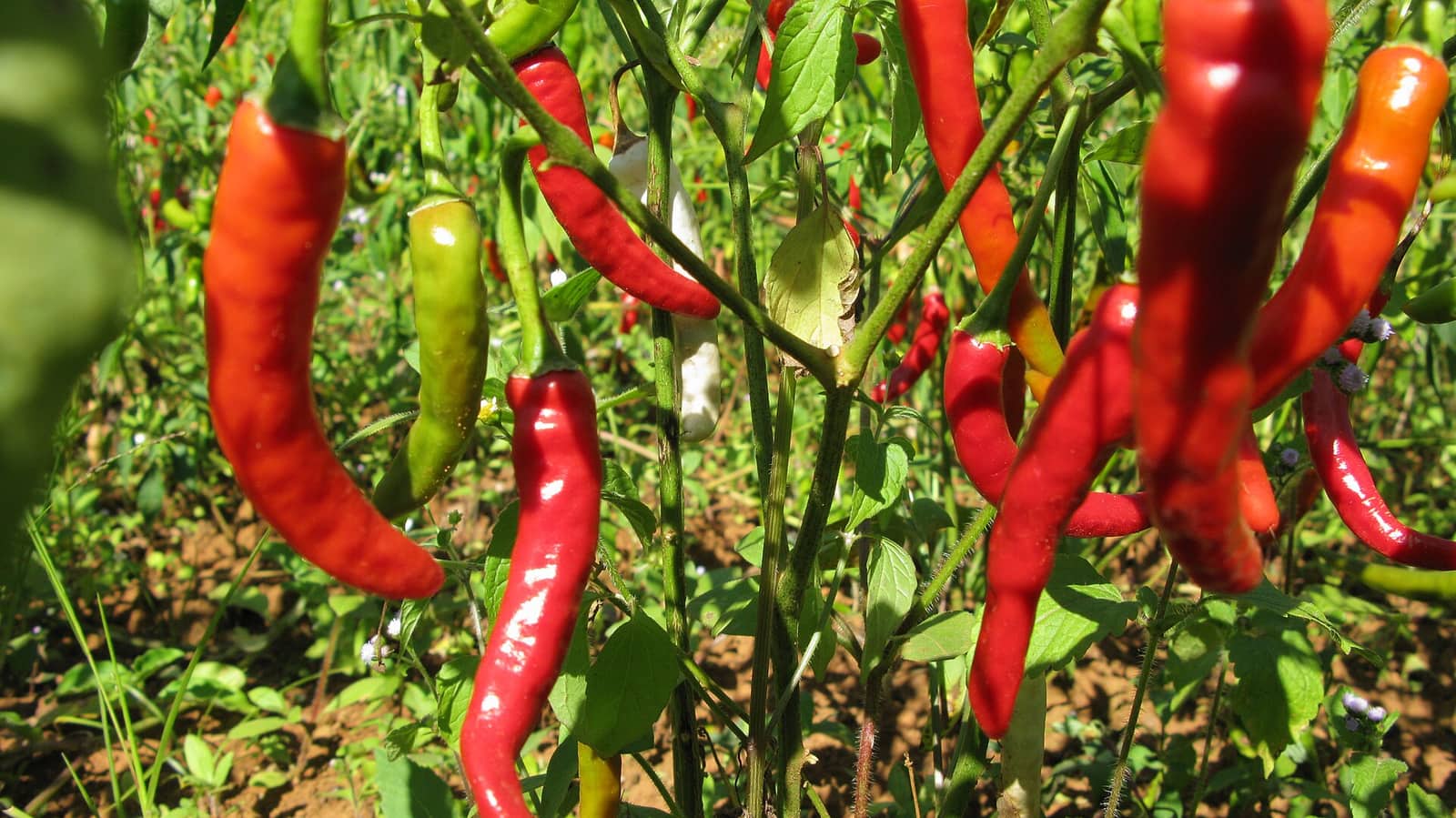
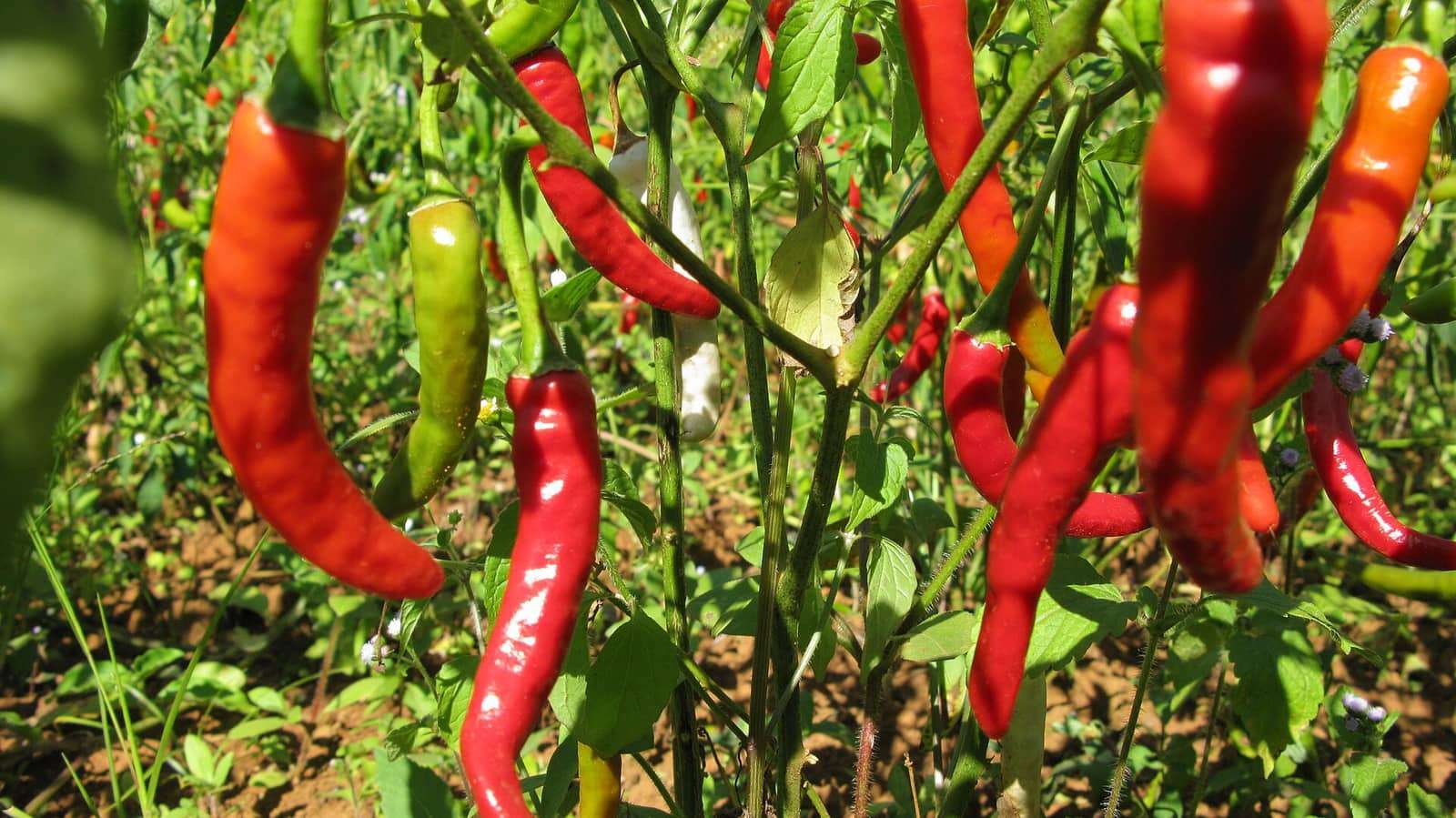
Capsicum annuum · also called Mirch, Marchwangun (Kashmiri)A warm season fruit vegetable and spice, raised in a nursery and transplanted. It needs sun and warmth, and frost kills it.
Temperate Himalaya: Kashmir valley, Shimla, Kullu, Uttarakhand hills
At a glance
Chilli in the Temperate Himalaya
Across India
When to sow it
Twelve growing regions, January to December. Your region comes first.
Wait until March
The next sowing here is March to May.
- Sow
- Nursery
- Transplant
- Under cover
- Today
- Not suited here
Compare all 12 regionsShow fewer regions
See the dates as a table
| Region | Sow | Nursery | Transplant | Harvest |
|---|---|---|---|---|
| Temperate Himalaya | March to MayApril | April to JuneApril to May | ||
| Cold desert | Not suited here | |||
| Sub-tropical foothills | NovemberFebruary to MarchMay to JuneMarch to AprilApril to May | JanuaryMarch to AprilJune to JulyApril to MayMay to June | ||
| North-west plains | End of October to mid-NovemberUnder cover: Third week of NovemberUnder cover: First week of February | February to MarchMid-FebruaryEnd of April | ||
| Gangetic plains | DecemberMay to June | FebruaryJune to July | ||
| North-east hills and valleys | December to January | |||
| Arid west | DecemberMay to June | FebruaryJune to July | ||
| Central plateau | June to JulyOctober to NovemberJanuary to February | |||
| Deccan plateau | End of JuneOctober to NovemberJanuary to February | |||
| South interior | January to FebruaryJune to JulySeptember to October | |||
| West coast | May to JuneSeptember to October | |||
| East coast | January to FebruaryJune to JulySeptember to October | |||
From seed to harvest
One season, day by day
Days from sowing
Before sowing
Transplanting
Farmyard manure
250 quintals per hectare
Apply the full amount at transplanting and mix it into the soil.
Day 0
Sow
Day 150 to 180
Last picking
No published guide covers this for the Temperate Himalaya, so this is an AI suggestion. Check it with local advice before you rely on it.
Before sowing
Farmyard manure3
250 quintals per hectare · Apply the full amount at transplanting and mix it into the soil. · Transplanting
Day 0
Sow
Day 7 to 14
Seeds come up1,2Part of this comes from the sources cited. The rest is an AI suggestion.
Day 28 to 42
Day 150 to 180
Last pickingNo published guide covers this for the Temperate Himalaya, so this is an AI suggestion. Check it with local advice before you rely on it.
Water every 7 days, more at flowering, fruit set and fruit development.3
What it needs
Soil, sun and warmth
Soil pH1
6.5 to 7.5
Almost any well drained soil, from sandy loam to heavy clay rich in organic matter. It tolerates some salinity but not waterlogging.
SunlightNo published guide covers this for the Temperate Himalaya, so this is an AI suggestion. Check it with local advice before you rely on it.
At least 6 hours a day
Full sun.
Temperature2,1
Grows best at 20 to 33 °C
Frost: none tolerated.
Monthly temperatures for the Temperate Himalaya aren't in the library yet.
Water and feeding
Watering3
Give a light irrigation on the third day after transplanting, then water once a week when rain falls short. Fill gaps in the rows at the second irrigation, about 10 days after transplanting.
Weeding3
Weeds take hold early in a widely spaced crop. Hand weed at 20 and 40 days after transplanting, and again later along with top dressing.
| When | What | How much | How |
|---|---|---|---|
| Transplanting | Farmyard manure | 250 quintals per hectare | Apply the full amount at transplanting and mix it into the soil. |
Varieties and yield
200 to 300 quintals a hectare
Yields vary with the plot, the seed and the season.
Good neighbours5
Organic and cultural controls only.
Thrips
Signs
Tiny insects rasp and suck the leaves, which curl upwards.
What to do
- Sprinkle water over nursery seedlings to slow their build-up.
- Apply neem cake to the beds in two splits, at planting and 30 days after transplanting.
- Conserve predatory mites and flower bugs.
Prevention
- Grow a barrier of Sesbania grandiflora as an intercrop.
- Do not grow chilli mixed with onion: thrips attack both.
Yellow mite and other mites
Signs
Leaves curl downwards, turn narrow, brittle and pale.
What to do
- Where mites are few, spray neem seed powder extract 4% every 10 days.
- Conserve predatory mites, predatory bugs and spiders.
Prevention
- Border the chilli with two rows of maize.
Fruit borer (Helicoverpa armigera)
Signs
Caterpillars bore into the fruits, which fall or rot.
What to do
- Plant one row of 45 day old African marigold for every 18 rows of chilli as a trap crop and pick the larvae off its flowers.
- Put up pheromone traps to watch moth numbers and change the lures every 2 to 3 weeks.
- Put up bird perches for drongos and mynahs.
- Release the egg parasitoid Trichogramma from the start of flowering.
Prevention
- Rotate chilli with a cereal, a cucurbit or a cabbage family crop.
- Grow basil (Ocimum) as a repellent plant.
Tobacco caterpillar (Spodoptera litura)
Signs
Groups of young caterpillars scrape the leaves; older ones eat leaves and fruits.
What to do
- Grow castor along the border as a trap crop and destroy the egg masses and young caterpillars on it.
- Set up a light trap and pheromone traps for the moths.
- Spray neem seed kernel extract 5% against eggs and first stage caterpillars.
Prevention
- Plough deep in summer to expose resting stages in the soil.
- Keep the field clean.
Wilt complex (root rot, collar rot and wilt)
Signs
Plants die suddenly, most often once the monsoon sets in while they are bearing. It is reported from temperate as well as warmer chilli belts.
What to do
- Water only as needed and never let water stand.
Prevention
- Grow resistant or tolerant varieties.
- Plant in well drained fields.
- Where the disease is common, rotate with crops outside the tomato family.
Anthracnose, ripe fruit rot and die back
Signs
Spots on the fruits turn from brown to black.
Prevention
- Use clean seed from healthy plants.
Bacterial wilt
Signs
Plants wilt, stay stunted or turn yellow all over.
Prevention
- Rotate with cabbage family vegetables.
- Keep the field clean.
Chilli leaf curl virus
Signs
Leaves curl towards the midrib and shrink; plants stay stunted and drop flowers. Whiteflies spread it.
Prevention
- Manage as for tomato leaf curl: control whiteflies and remove infected plants.
Seed and the season's end
Saving seed1,4
Chilli often crosses: keep at least 400 m between two varieties, including sweet pepper.
When the seed is ready
Remove off types before flowering, at full bloom and just before picking. Keep only true to type plants and pick their red ripe fruits.
Cleaning the seed
Dry the red fruits in the sun and take the seed out by hand.
After the last pickingNo published guide covers this for the Temperate Himalaya, so this is an AI suggestion. Check it with local advice before you rely on it.
Pull out the plants after the last picking, before the first autumn frost, and compost the healthy ones. Take any plants that showed virus or wilt off the field.
Clear and destroy the residues of a crop that had mealybugs.
Rotation
Rotate with a cereal, a cucurbit or a cabbage family crop; where wilt is common, keep tomato family crops off the field.
Growing under coverNo published guide covers this for the Temperate Himalaya, so this is an AI suggestion. Check it with local advice before you rely on it.
For an earlier crop in the valley, raise the nursery under a polythene tunnel or polyhouse in March and harden the seedlings in the open for a week before transplanting.
Sources
Where this comes from
Our team has checked this guide against the sources at the end of the page.Reviewed by our team on 13 November 2026.
These published guides are the sources. Where none of them covers a detail for this region, the page shows an AI suggestion and labels it.
- Production Technology of Vegetables and Flowers (VSF-231), Part I: Vegetable production (Chilli and bell pepper)CSK Himachal Pradesh Krishi Vishvavidyalaya, Palampur (Department of Vegetable Science and Floriculture)Read the source
- AESA based IPM package No. 24: Chillies and capsicumNational Institute of Plant Health Management and Directorate of Plant Protection, Quarantine and Storage, Government of IndiaRead the source
- Horticulture: Vegetables: Chilli (soil, season, seed rate, seed treatment; varieties)TNAU Agritech Portal, Tamil Nadu Agricultural UniversityRead the source
AI Farm Manager · In development
Plan this crop on your land
AI Farm Manager will turn guides like this one into a plan for your own plot. It doesn't make plans yet.