
Growing chilli
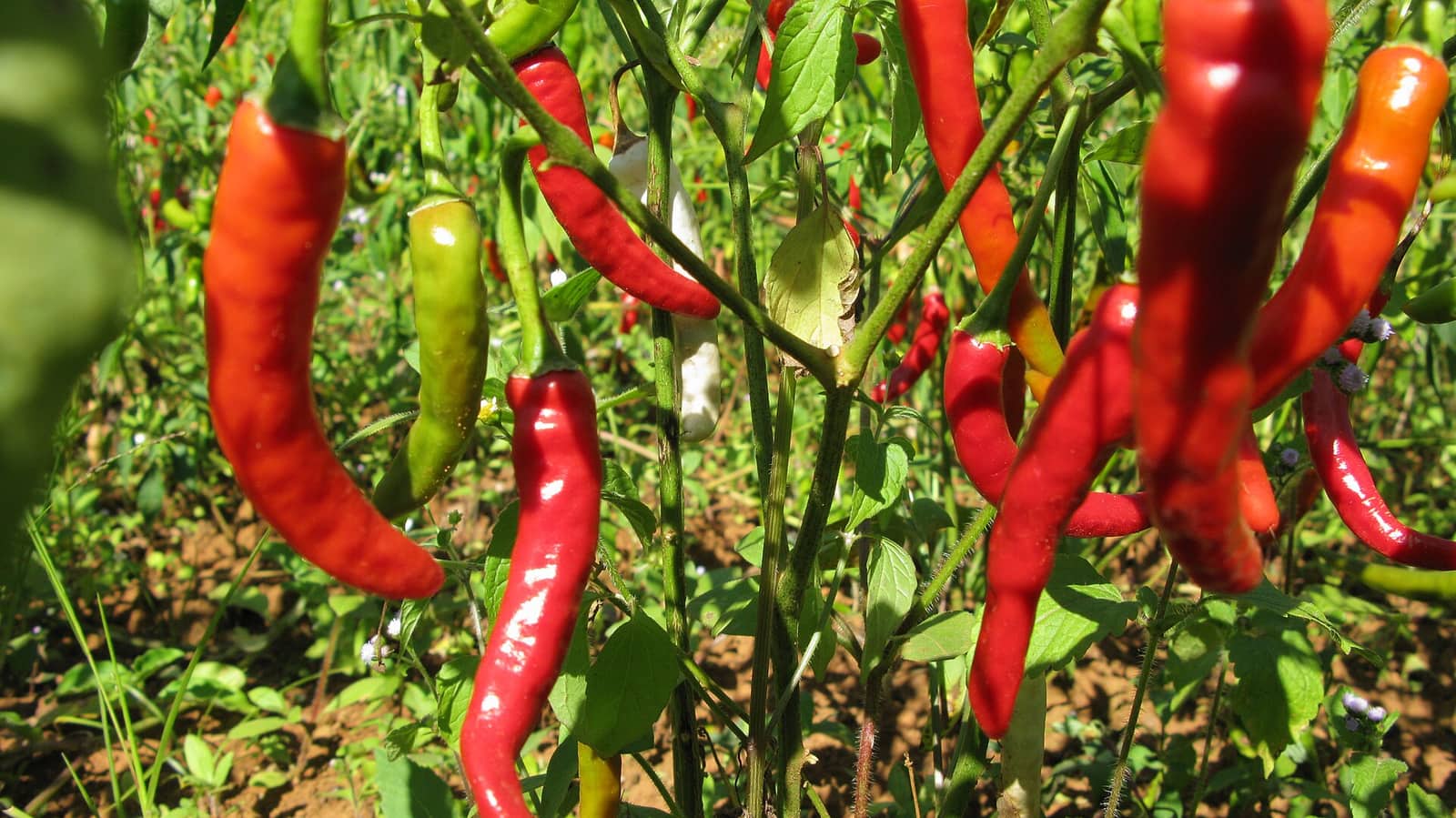
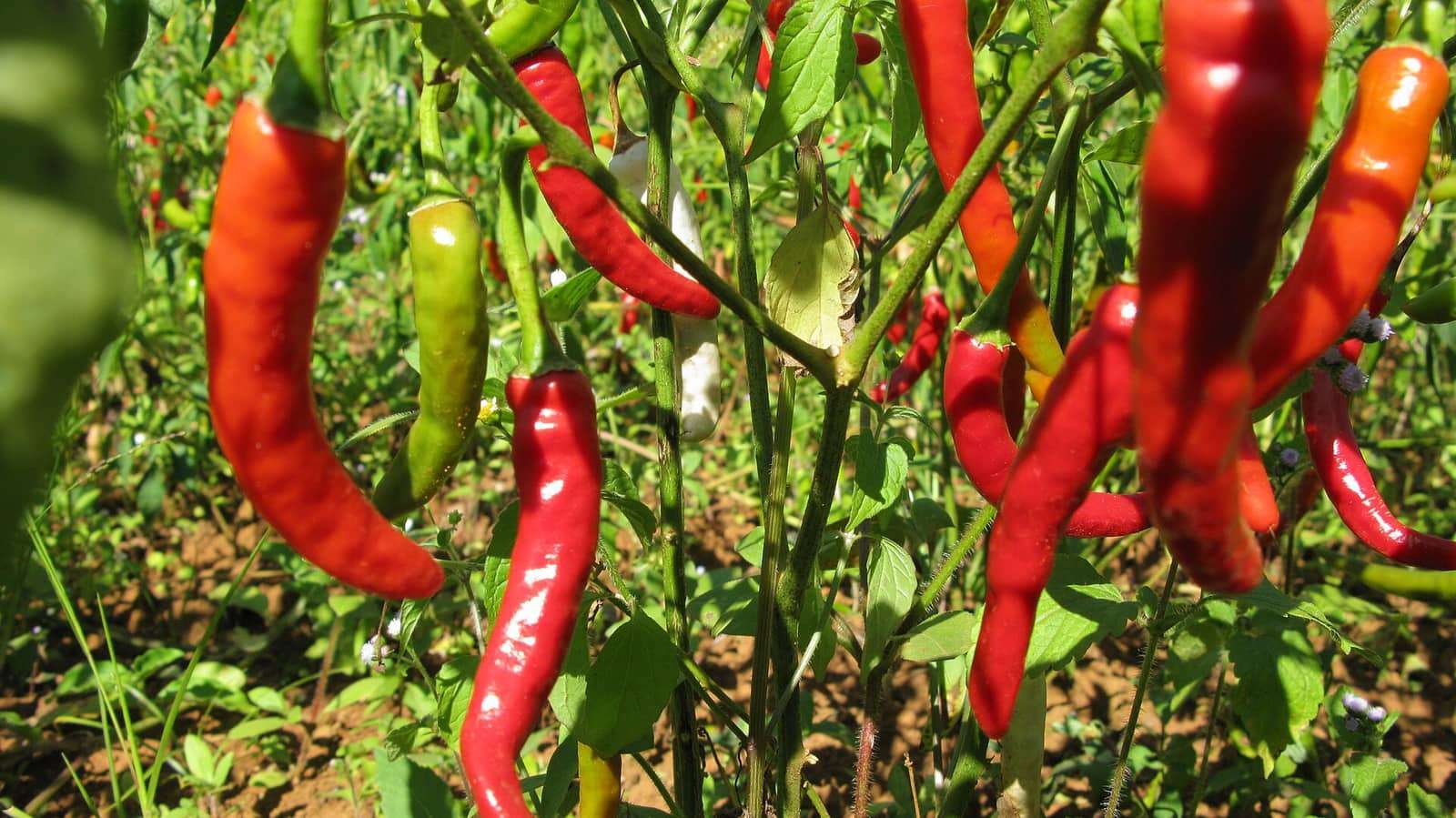
Capsicum annuum · also called Mirch, Marchwangun (Kashmiri)A warm season fruit vegetable and spice, raised in a nursery and transplanted. It needs sun and warmth, and frost kills it.
North-west plains: Punjab, Haryana, Delhi, western Uttar Pradesh
At a glance
Chilli in the North-west plains
Nursery in autumn, transplanting in late winter, picking through summer4
About seven to nine months from an autumn nursery to the last picking.
No published guide covers this for the North-west plains, so this is an AI suggestion. Check it with local advice before you rely on it.End of October to mid-November4
Across India
When to sow it
Twelve growing regions, January to December. Your region comes first.
Sow now
The window here is End of October to mid-November.
Under cover, from Third week of November.
- Sow
- Nursery
- Transplant
- Under cover
- Today
- Not suited here
Compare all 12 regionsShow fewer regions
See the dates as a table
| Region | Sow | Nursery | Transplant | Harvest |
|---|---|---|---|---|
| North-west plains | End of October to mid-NovemberUnder cover: Third week of NovemberUnder cover: First week of February | February to MarchMid-FebruaryEnd of April | ||
| Temperate Himalaya | March to MayApril | April to JuneApril to May | ||
| Cold desert | Not suited here | |||
| Sub-tropical foothills | NovemberFebruary to MarchMay to JuneMarch to AprilApril to May | JanuaryMarch to AprilJune to JulyApril to MayMay to June | ||
| Gangetic plains | DecemberMay to June | FebruaryJune to July | ||
| North-east hills and valleys | December to January | |||
| Arid west | DecemberMay to June | FebruaryJune to July | ||
| Central plateau | June to JulyOctober to NovemberJanuary to February | |||
| Deccan plateau | End of JuneOctober to NovemberJanuary to February | |||
| South interior | January to FebruaryJune to JulySeptember to October | |||
| West coast | May to JuneSeptember to October | |||
| East coast | January to FebruaryJune to JulySeptember to October | |||
From seed to harvest
One season, day by day
Days from sowing
Before sowing
Field preparation
Well rotted farmyard manure, or paddy straw compost
10 to 15 tonnes of farmyard manure, or 6 quintals of paddy straw compost, per acre
Work it in before transplanting.
Day 0
Sow
Day 210 to 270
Last picking
No published guide covers this for the North-west plains, so this is an AI suggestion. Check it with local advice before you rely on it.
Before sowing
Well rotted farmyard manure, or paddy straw compost4
10 to 15 tonnes of farmyard manure, or 6 quintals of paddy straw compost, per acre · Work it in before transplanting. · Field preparation
Day 0
Sow
Day 7 to 14
Seeds come up1,2Part of this comes from the sources cited. The rest is an AI suggestion.
Day 28 to 42
Day 210 to 270
Last pickingNo published guide covers this for the North-west plains, so this is an AI suggestion. Check it with local advice before you rely on it.
Water just after transplanting, then every 7 to 10 days; 15 or 16 irrigations in all. Alternate furrow watering saves water without cutting yield. With drip, water every two days; drip saves 46% of the water.4
What it needs
Soil, sun and warmth
Soil pH1
6.5 to 7.5
Almost any well drained soil, from sandy loam to heavy clay rich in organic matter. It tolerates some salinity but not waterlogging.
SunlightNo published guide covers this for the North-west plains, so this is an AI suggestion. Check it with local advice before you rely on it.
At least 6 hours a day
Full sun.
Temperature2,1
Grows best at 20 to 33 °C
Frost: none tolerated.
Monthly temperatures for the North-west plains aren't in the library yet.
Water and feeding
Watering4
Water just after transplanting, then every 7 to 10 days; 15 or 16 irrigations in all. Alternate furrow watering saves water without cutting yield. With drip, water every two days; drip saves 46% of the water.
Weeding5
Keep the field weed free for the first 30 days, with two hand weedings after transplanting.
| When | What | How much | How |
|---|---|---|---|
| Field preparation | Well rotted farmyard manure, or paddy straw compost | 10 to 15 tonnes of farmyard manure, or 6 quintals of paddy straw compost, per acre | Work it in before transplanting. |
Varieties and yield
80 to 120 quintals a hectare
Yields vary with the plot, the seed and the season.
Punjab Sindhuri
Early; red picking from about 75 days after transplanting; for fresh market and transport.
Punjab Tej
Early and very pungent; for processing and powder.
Punjab Surkh
Dual purpose for salad and drying; tolerant of fruit rot.
Punjab Guchhedar
Small erect fruits in clusters; late.
CH-27 (PAU hybrid)
Resistant to leaf curl, fruit rot and root knot nematode.
CH-52 (PAU hybrid)
Suited to low tunnels.
Good neighbours5
Pests and diseases4
Organic and cultural controls only.
Fruit borer
Signs
Caterpillars make holes in the fruits and spoil them.
What to do
- Pick and destroy all infested fruits.
Prevention
- Pick ripe fruits regularly.
Thrips, mites, aphids and whitefly
Signs
They suck sap from the leaves and lower the yield.
What to do
- Against mites, spray neem fruit aqueous extract 5%: soak 5 kg of coarse shade dried neem fruit powder in 100 litres of water for 12 hours, filter and spray.
Prevention
- Clear weeds from bunds, waste land, roadsides and channels, where these pests shelter.
- Do not overdo nitrogen; it makes plants prone to attack.
Fruit rot and die back (Colletotrichum capsici)
Signs
Tips of bearing branches dry as fruits ripen; dark sunken spots in rings appear on the fruits.
Prevention
- Use healthy seed.
Wet rot (Choanephora cucurbitarum)
Signs
Young branches, flowers and fruits rot with black pin heads of the fungus, worst after heavy rain.
Prevention
- Use healthy seed.
Leaf curl (virus)
Signs
Plants are stunted and rosetted, with leaves rolled downwards. Whiteflies spread it.
What to do
- Pull out and destroy infected plants.
Prevention
- Grow the resistant hybrid CH-27.
Mosaic (virus)
Signs
Leaves are mottled and blistered; plants turn pale and stunted. Aphids spread it.
What to do
- Pull out infected plants.
Prevention
- Save seed only from virus free plants.
- Avoid handling plants needlessly.
Seed and the season's end
Saving seed1,4
Chilli often crosses: keep at least 400 m between two varieties, including sweet pepper.
When the seed is ready
Remove off types before flowering, at full bloom and just before picking. Keep only true to type plants and pick their red ripe fruits.
Cleaning the seed
Dry the red fruits in the sun and take the seed out by hand.
After the last pickingNo published guide covers this for the North-west plains, so this is an AI suggestion. Check it with local advice before you rely on it.
After the last picking in summer, clear the plants and follow with a cereal or a cabbage family crop rather than another tomato family crop.
Clear and destroy the residues of a crop that had mealybugs.
Rotation
Rotate with a cereal, a cucurbit or a cabbage family crop; where wilt is common, keep tomato family crops off the field.
Growing under cover4
Raise the nursery of costly hybrid seed under a polyhouse of UV stabilised 200 micron film; CH-52 is suited to low tunnels.
Sources
Where this comes from
Our team has checked this guide against the sources at the end of the page.Reviewed by our team on 13 November 2026.
These published guides are the sources. Where none of them covers a detail for this region, the page shows an AI suggestion and labels it.
- Production Technology of Vegetables and Flowers (VSF-231), Part I: Vegetable production (Chilli and bell pepper)CSK Himachal Pradesh Krishi Vishvavidyalaya, Palampur (Department of Vegetable Science and Floriculture)Read the source
- Package of Practices for Cultivation of Vegetables (Chilli)Punjab Agricultural University, LudhianaRead the source
- AESA based IPM package No. 24: Chillies and capsicumNational Institute of Plant Health Management and Directorate of Plant Protection, Quarantine and Storage, Government of IndiaRead the source
- Horticulture: Vegetables: Chilli (soil, season, seed rate, seed treatment; varieties)TNAU Agritech Portal, Tamil Nadu Agricultural UniversityRead the source
AI Farm Manager · In development
Plan this crop on your land
AI Farm Manager will turn guides like this one into a plan for your own plot. It doesn't make plans yet.