
Growing chilli
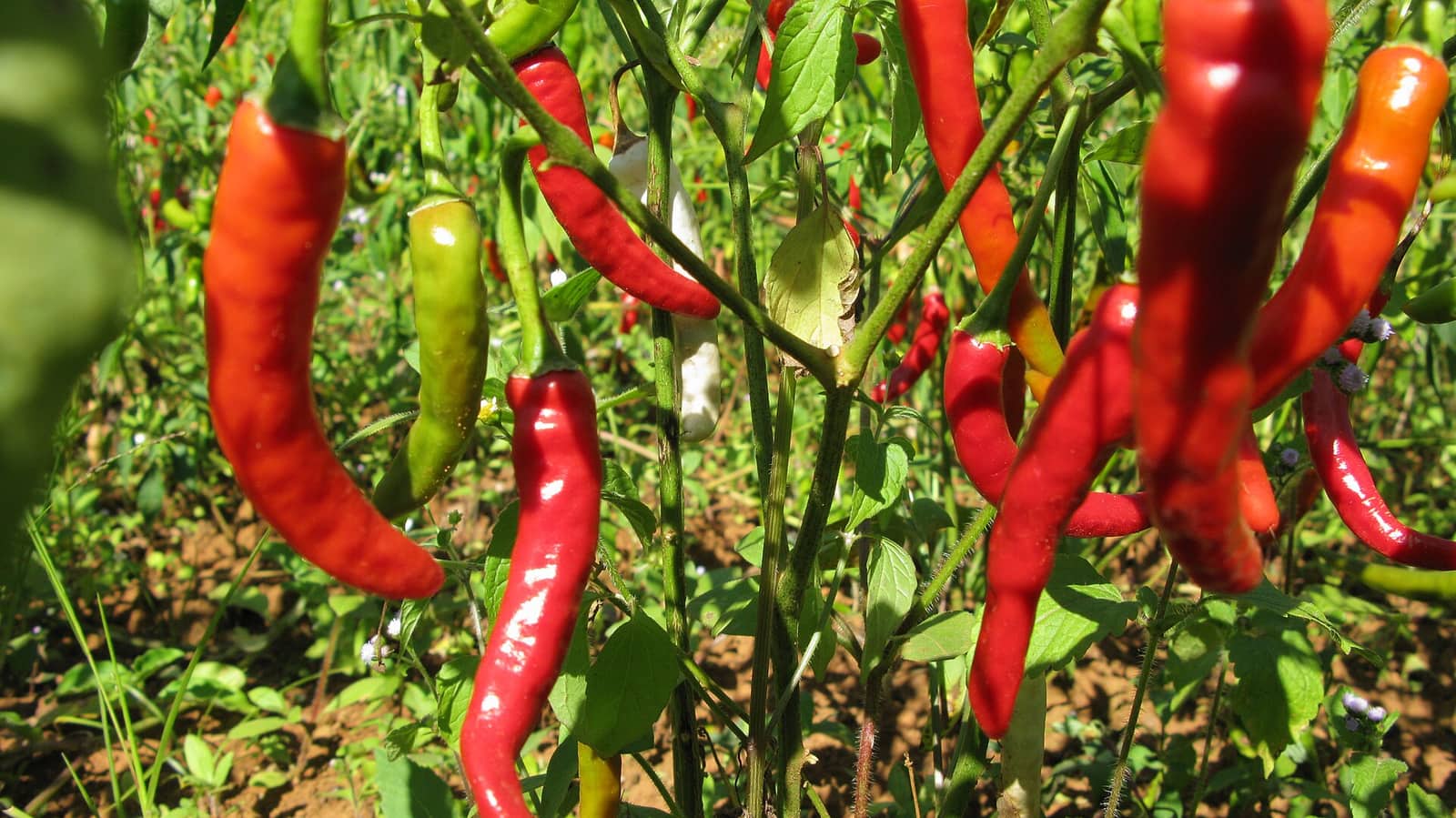
Capsicum annuum · also called Mirch, Marchwangun (Kashmiri)A warm season fruit vegetable and spice, raised in a nursery and transplanted. It needs sun and warmth, and frost kills it.
West coast: Kerala, Goa, Konkan, coastal Karnataka, south Gujarat
At a glance
Chilli in the West coast
Rainfed crop before the south-west monsoon, or an irrigated crop after it6
About five to six months from transplanting to the last picking.
No published guide covers this for the West coast, so this is an AI suggestion. Check it with local advice before you rely on it.May to June6
60 to 75 days after sowing
No published guide covers this for the West coast, so this is an AI suggestion. Check it with local advice before you rely on it.
Across India
When to sow it
Twelve growing regions, January to December. Your region comes first.
Too late this season
The window here was September to October. The next one opens in May.
- Sow
- Nursery
- Transplant
- Under cover
- Today
- Not suited here
Compare all 12 regionsShow fewer regions
See the dates as a table
| Region | Sow | Nursery | Transplant | Harvest |
|---|---|---|---|---|
| West coast | May to JuneSeptember to October | |||
| Temperate Himalaya | March to MayApril | April to JuneApril to May | ||
| Cold desert | Not suited here | |||
| Sub-tropical foothills | NovemberFebruary to MarchMay to JuneMarch to AprilApril to May | JanuaryMarch to AprilJune to JulyApril to MayMay to June | ||
| North-west plains | End of October to mid-NovemberUnder cover: Third week of NovemberUnder cover: First week of February | February to MarchMid-FebruaryEnd of April | ||
| Gangetic plains | DecemberMay to June | FebruaryJune to July | ||
| North-east hills and valleys | December to January | |||
| Arid west | DecemberMay to June | FebruaryJune to July | ||
| Central plateau | June to JulyOctober to NovemberJanuary to February | |||
| Deccan plateau | End of JuneOctober to NovemberJanuary to February | |||
| South interior | January to FebruaryJune to JulySeptember to October | |||
| East coast | January to FebruaryJune to JulySeptember to October | |||
From seed to harvest
One season, day by day
Days from sowing
Before sowing
Land preparation
Well rotted farmyard manure or compost
20 to 25 t per hectare
Mix it well into the soil.
Day 0
Sow
Day 60 to 75
First picking
Every 7 to 10 days.
No published guide covers this for the West coast, so this is an AI suggestion. Check it with local advice before you rely on it.
Day 150 to 180
Last picking
No published guide covers this for the West coast, so this is an AI suggestion. Check it with local advice before you rely on it.
Before sowing
Well rotted farmyard manure or compost6
20 to 25 t per hectare · Mix it well into the soil. · Land preparation
Day 0
Sow
Day 7 to 14
Seeds come up1,2Part of this comes from the sources cited. The rest is an AI suggestion.
Day 28 to 42
Day 60 to 75
First pickingNo published guide covers this for the West coast, so this is an AI suggestion. Check it with local advice before you rely on it.
Every 7 to 10 days.
Day 150 to 180
Last pickingNo published guide covers this for the West coast, so this is an AI suggestion. Check it with local advice before you rely on it.
Water every three to four days in summer.6
What it needs
Soil, sun and warmth
Soil pH1
6.5 to 7.5
Almost any well drained soil, from sandy loam to heavy clay rich in organic matter. It tolerates some salinity but not waterlogging.
SunlightNo published guide covers this for the West coast, so this is an AI suggestion. Check it with local advice before you rely on it.
At least 6 hours a day
Full sun.
Temperature2,1
Grows best at 20 to 33 °C
Frost: none tolerated.
Monthly temperatures for the West coast aren't in the library yet.
Water and feeding
Watering6
Water every three to four days in summer.
Weeding6
Weed and earth up one and two months after transplanting.
| When | What | How much | How |
|---|---|---|---|
| Land preparation | Well rotted farmyard manure or compost | 20 to 25 t per hectare | Mix it well into the soil. |
Varieties and yield
80 to 120 quintals a hectare
Yields vary with the plot, the seed and the season.
Jwalasakhi
Jwalamukhi
Jwala
Pant C-1
K-2
Vellayani Athulya
Tolerates shade; for southern Kerala.
Vellayani Samrudhi
Tolerates shade; for southern Kerala.
Ujwala
Resistant to bacterial wilt.
Anugraha
Resistant to bacterial wilt.
Good neighbours5
Pests and diseases6
Organic and cultural controls only.
Chilli mite (Polyphagotarsonemus latus)
Signs
Leaves curl downwards and turn brittle and tube like; it attacks the crop at every stage.
What to do
- Spray neem oil 5%, or a neem oil and garlic emulsion 2%.
Damping off
Signs
Seedlings rot and fall over in the nursery.
Prevention
- Sow thinly on raised beds in the open during the summer months.
Bacterial wilt
Signs
Plants wilt and die.
What to do
- Uproot and destroy affected plants.
Prevention
- Grow the resistant varieties Ujwala or Anugraha where wilt is common.
Mosaic
Signs
Mottled, distorted leaves.
What to do
- Uproot and destroy affected plants.
Seed and the season's end
Saving seed1,4
Chilli often crosses: keep at least 400 m between two varieties, including sweet pepper.
When the seed is ready
Remove off types before flowering, at full bloom and just before picking. Keep only true to type plants and pick their red ripe fruits.
Cleaning the seed
Dry the red fruits in the sun and take the seed out by hand.
After the last pickingNo published guide covers this for the West coast, so this is an AI suggestion. Check it with local advice before you rely on it.
Uproot the plants after the last picking and follow with a crop outside the tomato family, which helps keep bacterial wilt down.
Clear and destroy the residues of a crop that had mealybugs.
Rotation
Rotate with a cereal, a cucurbit or a cabbage family crop; where wilt is common, keep tomato family crops off the field.
Sources
Where this comes from
Our team has checked this guide against the sources at the end of the page.Reviewed by our team on 13 November 2026.
These published guides are the sources. Where none of them covers a detail for this region, the page shows an AI suggestion and labels it.
- Production Technology of Vegetables and Flowers (VSF-231), Part I: Vegetable production (Chilli and bell pepper)CSK Himachal Pradesh Krishi Vishvavidyalaya, Palampur (Department of Vegetable Science and Floriculture)Read the source
- AESA based IPM package No. 24: Chillies and capsicumNational Institute of Plant Health Management and Directorate of Plant Protection, Quarantine and Storage, Government of IndiaRead the source
- Package of Practices Recommendations: Crops 2011, Vegetables (Chilli)Kerala Agricultural UniversityRead the source
- Horticulture: Vegetables: Chilli (soil, season, seed rate, seed treatment; varieties)TNAU Agritech Portal, Tamil Nadu Agricultural UniversityRead the source
AI Farm Manager · In development
Plan this crop on your land
AI Farm Manager will turn guides like this one into a plan for your own plot. It doesn't make plans yet.