
Growing cucumber
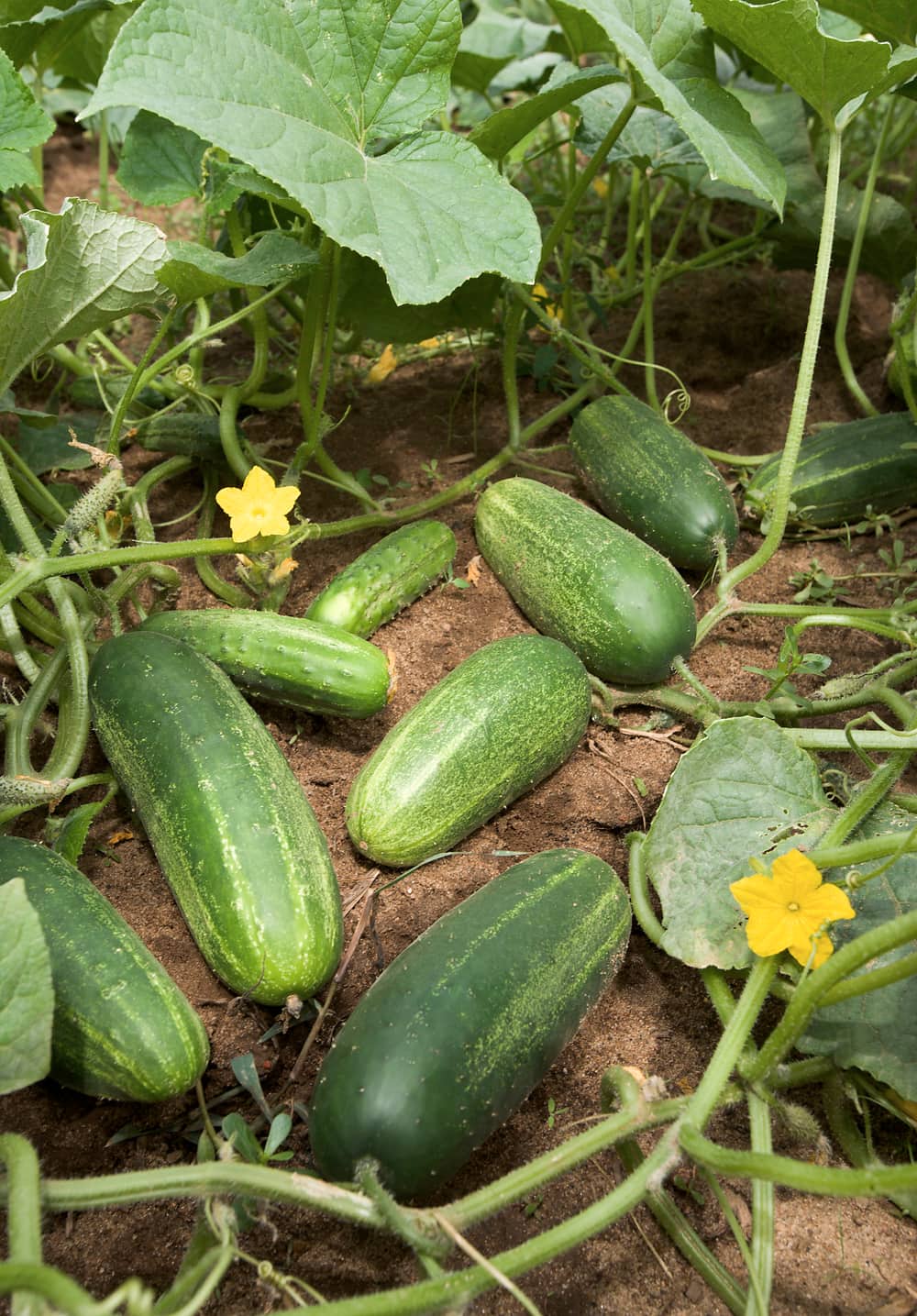
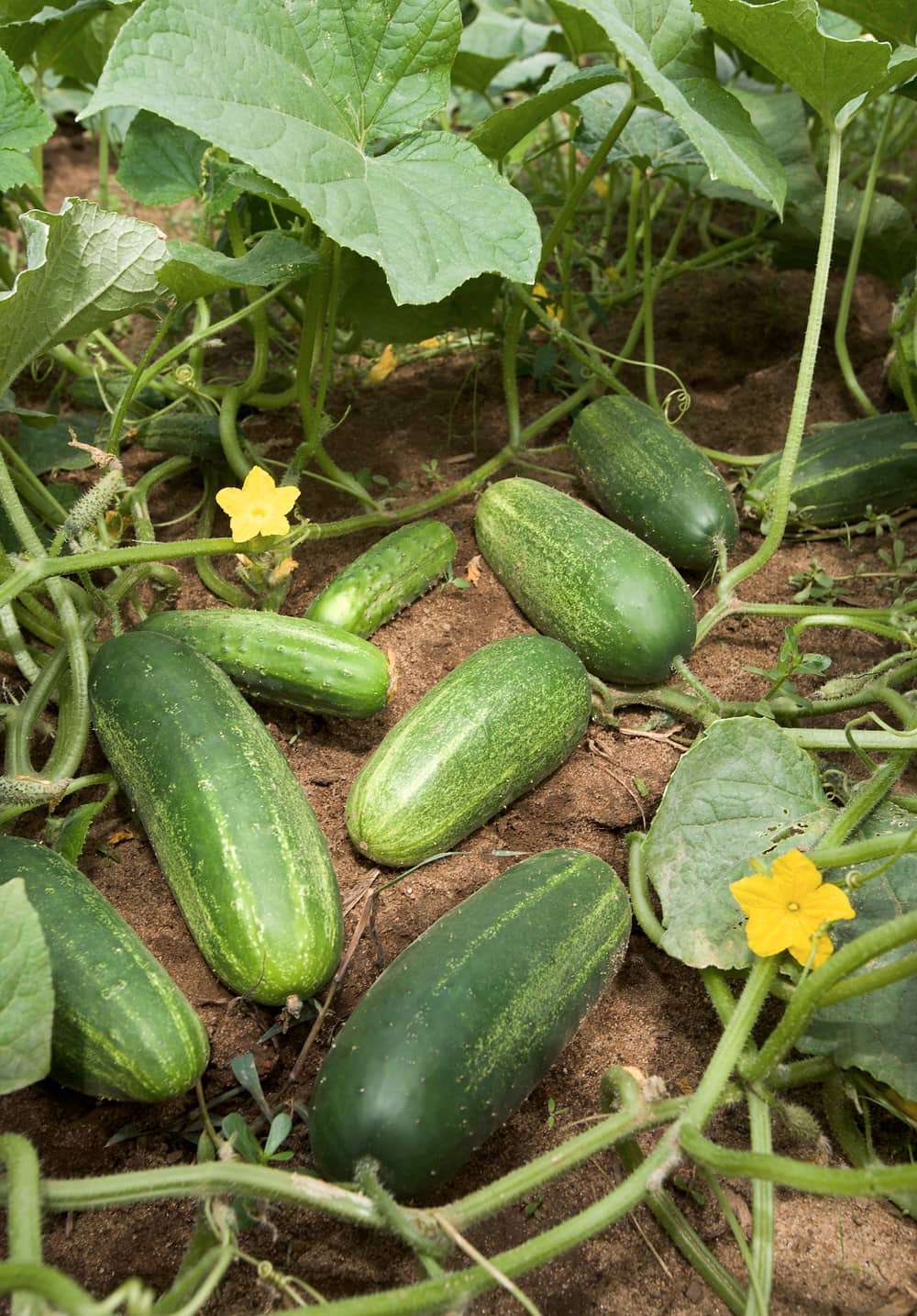
Cucumis sativus · also called Khira, KheeraA fast-growing warm-season vine producing crisp, hydrating fruits.
Sub-tropical foothills: Jammu, Kangra, Dehradun
At a glance
Cucumber in the Sub-tropical foothills
Spring-summer (February to March in the open, January under cover) and rainy season (June to July)8
About 80 to 100 days from sowing to the last picking.
No published guide covers this for the Sub-tropical foothills, so this is an AI suggestion. Check it with local advice before you rely on it.February to March8
Across India
When to sow it
Twelve growing regions, January to December. Your region comes first.
Wait until February
The next sowing here is February to March.
Under cover, from January.
- Sow
- Nursery
- Transplant
- Harvest
- Under cover
- Today
Compare all 12 regionsShow fewer regions
See the dates as a table
| Region | Sow | Nursery | Transplant | Harvest |
|---|---|---|---|---|
| Sub-tropical foothills | February to MarchJune to JulyUnder cover: JanuaryUnder cover: First half of January | Under cover: Last week of December to first week of January | Under cover: By the first half of February | |
| Temperate Himalaya | April to May | Mid-June to July | ||
| Cold desertUnder cover only | Under cover: April to mid-May | Under cover: Mid-June to mid-September | ||
| North-west plains | February to MarchJune to JulyUnder cover: Mid-November | Under cover: Mid-SeptemberUnder cover: January | Under cover: First week of OctoberUnder cover: First half of February | |
| Gangetic plains | Mid to late FebruaryLate June | |||
| North-east hills and valleys | February to mid-April | |||
| Arid west | February to mid-MarchLate June to July | |||
| Central plateau | Mid-January to FebruaryJune to mid-July | |||
| Deccan plateau | June to July | |||
| South interior | JuneJanuary to April | |||
| West coast | January to MarchSeptember to December | |||
| East coast | JuneJanuary to April |
From seed to harvest
One season, day by day
Days from sowing
Before sowing
Basal, at field preparation
Farmyard manure (FYM)
10 t per acre
Work in as a basal dressing
Day 0
Sow
Day 80 to 100
Last picking
No published guide covers this for the Sub-tropical foothills, so this is an AI suggestion. Check it with local advice before you rely on it.
Before sowing
Farmyard manure (FYM)8
10 t per acre · Work in as a basal dressing · Basal, at field preparation
Day 0
Sow
Day 5 to 7
Seeds come up1,2,3,8Part of this comes from the sources cited. The rest is an AI suggestion.
Day 40 to 55
Day 80 to 100
Last pickingNo published guide covers this for the Sub-tropical foothills, so this is an AI suggestion. Check it with local advice before you rely on it.
Water every 4 to 6 days, more at flower bud development and early fruit development.8
What it needs
Soil, sun and warmth
Soil pH1,2,3
6.5 to 7.5
Well-drained loam or sandy loam, rich in organic matter
SunlightNo published guide covers this for the Sub-tropical foothills, so this is an AI suggestion. Check it with local advice before you rely on it.
At least 6 hours a day
Full sun, at least 6 hours a day.
Temperature2,8
Grows best at 18 to 24 °C
Frost: none tolerated.
Monthly temperatures for the Sub-tropical foothills aren't in the library yet.
Water and feeding
Watering8
Water every 4 to 5 days for the spring-summer crop, every 5 to 6 days later in summer, and only when needed in the rainy season. Do not let it go dry while flower buds form and young fruit sets. Too much water early on gives a leafy vine with more male flowers. Ridges and furrows suit it.
| When | What | How much | How |
|---|---|---|---|
| Basal, at field preparation | Farmyard manure (FYM) | 10 t per acre | Work in as a basal dressing |
Varieties and yield
40 to 60 quintals an acre
Yields vary with the plot, the seed and the season.
Japanese Long Green
SKUAST-Jammu. Early, 40 to 45 days; long green fruit.
Straight Eight
SKUAST-Jammu. Early, short season; white-skinned fruit.
Poinsette
SKUAST-Jammu. Tolerant to downy mildew, anthracnose and angular leaf spot; 50 to 60 days.
Kheera Local
SKUAST-Jammu. 40 to 50 days; fruit 20 to 25 cm.
Pusa Sanyog
Hybrid listed by SKUAST-Jammu
Pant Sankar Khira-1
Hybrid listed by SKUAST-Jammu
Pusa Gynoecious Cucumber Hybrid-18
IARI. Recommended by AICRP for Zone I (J&K, Himachal, Uttarakhand)
Good neighboursNo published guide covers this for the Sub-tropical foothills, so this is an AI suggestion. Check it with local advice before you rely on it.
Grows well with
Keep it away from
Pests and diseases8Part of this comes from the sources cited. The rest is an AI suggestion.
Organic and cultural controls only.
Fruit fly
Signs
Lays eggs in young fruit, which then rots.
What to do
- Hang fruit fly lure traps, 2 to 4 an acre, and add more as needed.
Red pumpkin beetle
Signs
Orange beetles chew the seed leaves and young leaves soon after the seed comes up.
What to do
- Pick the beetles off by hand in the early morning.
- Dust young plants with wood ash.
Downy mildew
Signs
Yellow spots on the upper leaf, purple to brown below with white down. Worst on cucumber in April and May in irrigated plains and river beds; leaves wither early.
Prevention
- Collect seed only from healthy fruit.
Anthracnose
Signs
Dark brown spots on leaves, stems and fruit.
What to do
- Keep the field clean.
Prevention
- Sow early.
Fruit rot
Signs
Fruit lying on wet soil goes soft and rots.
What to do
- Keep the fruit off the soil.
- Pick the first ripe fruit on time.
- Water in trenches round the root zone only.
Powdery mildew
Signs
Small white patches that spread into a floury coat over leaves, stems, tendrils and fruit.
Seed and the season's end
Saving seed2
Keep at least 1000 m between cucumber varieties so the seed stays true to type. Pull out off-type and sick plants.
When the seed is ready
Leave seed fruit on the vine until it turns brown.
Cleaning the seed
Scoop the pulp into fresh water and leave it one to two days. Rub the seed free by hand and keep the heavy seed that sinks.
After the last picking8
In SKUAST-Jammu's sub-tropical cropping systems a spring cucumber is followed by brinjal in the rainy season and knol-khol in winter. A rainy-season cucumber (July to October) can follow spring okra and come before potato.
Destroy old cucurbit vines so downy mildew has nowhere to overwinter.
Rotation
Where root knot nematode is a problem, rotate with rice, oats, wheat or taramira.
Growing under cover8
Seedlings raised in polythene bags fruit 20 to 25 days earlier. Use 15 by 10 cm bags of 100 gauge, holed at the base and filled with soil, sand and well-rotted FYM (2:1:1). Sow two seeds a bag, 1 to 1.5 cm deep, in the last week of December or first week of January, keep the bags against a sunny wall and plant out at 25 to 30 days, by the first half of February. In river bed (trench) growing, cucumber is sown in the first half of January in trenches filled with soil, sand and manure and covered with polythene.
From the shop
Linked from this guide by our team.
Sources
Where this comes from
Our team has checked this guide against the sources at the end of the page.Reviewed by our team on 13 November 2026.
These published guides are the sources. Where none of them covers a detail for this region, the page shows an AI suggestion and labels it.
- Cucumber: crop production guide (Horticulture, vegetables)TNAU Agritech Portal, Tamil Nadu Agricultural UniversityRead the source
- Pusa Gynoecious Cucumber Hybrid-18 (Indian Horticulture, May to June 2021, pages 40 to 43)ICAR-Indian Agricultural Research Institute, Division of Vegetable Science (Munshi, Behera, Sureja, Tomar, Singh and Dey)Read the source
- Advisory for Kharif Season in Uttarakhand (2 May 2020)G B Pant University of Agriculture and Technology, Directorate of Extension EducationRead the source
- Package of Practices for Vegetable Crops 2020 (chapter 6, Cucumber; cucurbit pest and disease management; hybrids; cropping systems; protected and river bed cultivation)Directorate of Extension, SKUAST-JammuRead the source
AI Farm Manager · In development
Plan this crop on your land
AI Farm Manager will turn guides like this one into a plan for your own plot. It doesn't make plans yet.