
Growing radish
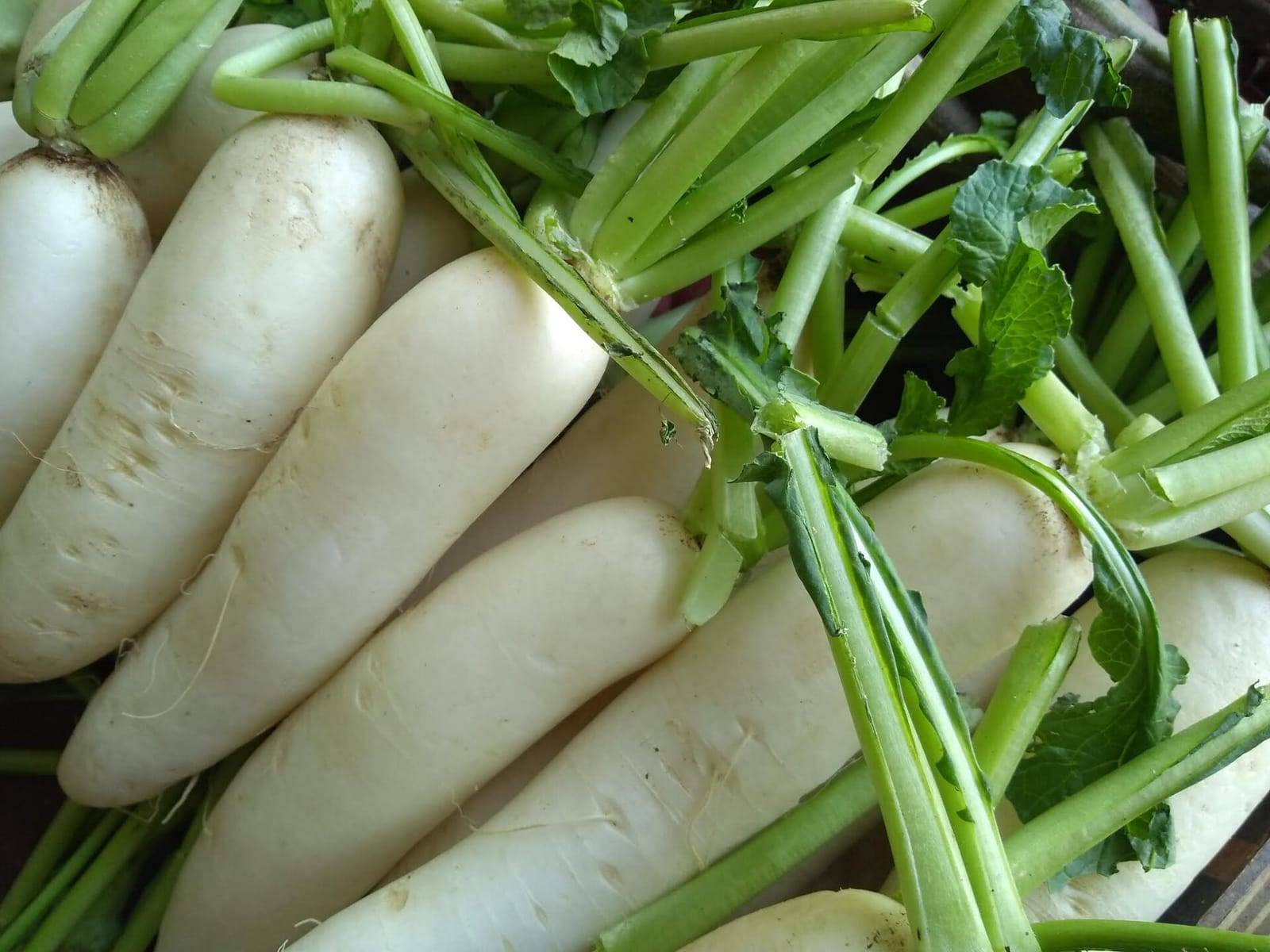
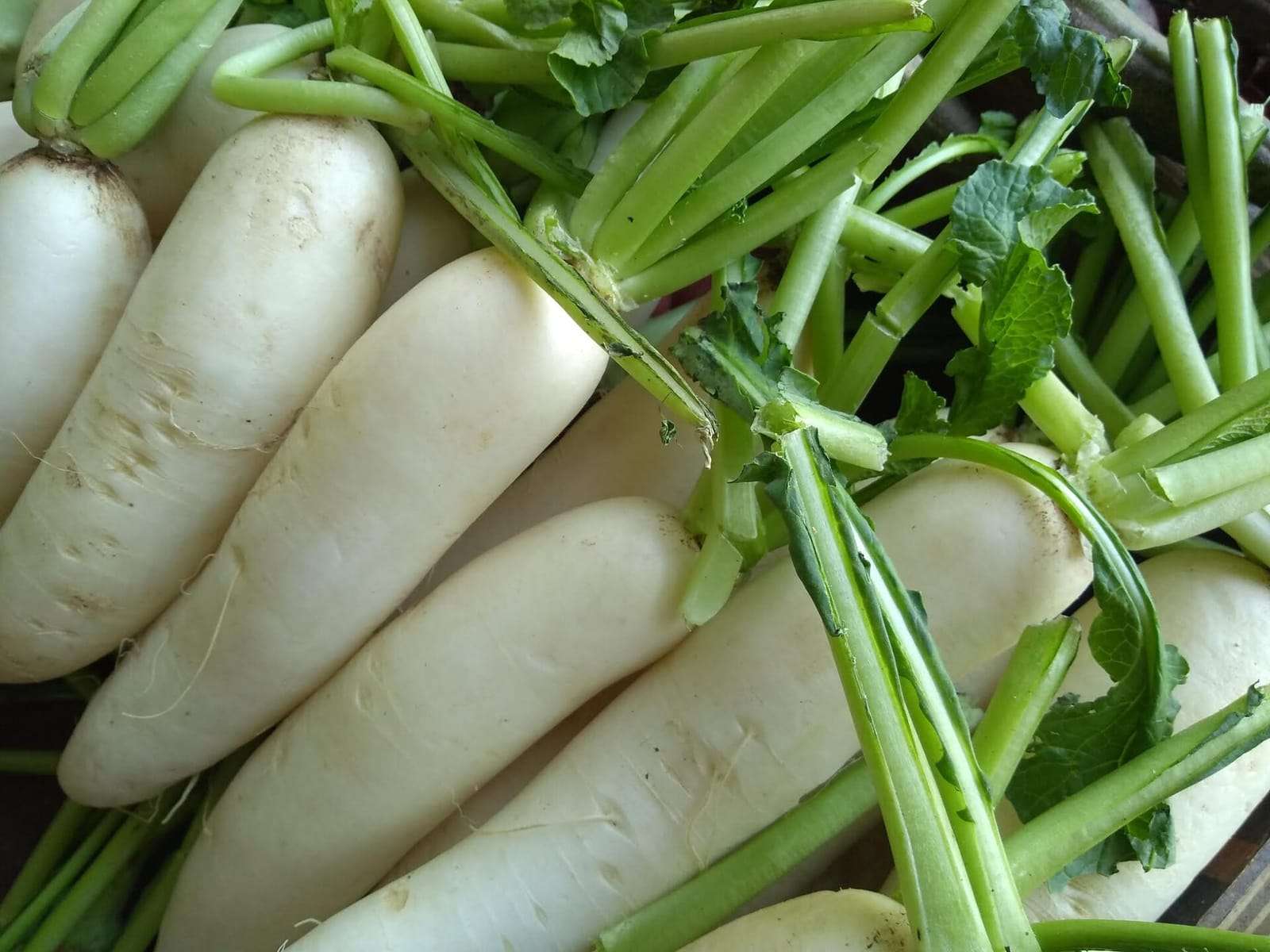
Raphanus sativus · also called Mooli, Muj (Kashmiri)A quick cool season root crop sown straight into ridges. Asiatic types take more heat; European types need cool weather, so the right variety lets radish be grown for much of the year.
North-west plains: Punjab, Haryana, Delhi, western Uttar Pradesh
At a glance
Radish in the North-west plains
Across India
When to sow it
Twelve growing regions, January to December. Your region comes first.
Sow now
The window here is November to December (Japanese White).
- Sow
- Harvest
- Today
Compare all 12 regionsShow fewer regions
See the dates as a table
| Region | Sow | Nursery | Transplant | Harvest |
|---|---|---|---|---|
| North-west plains | January to February (Pusa Himani)Second half of March (Punjab Pasand)April to August (Pusa Chetki)Mid September to October (Punjab Safed Mooli 2, Punjab Pasand, Japanese White)November to December (Japanese White) | February to AprilEnd of April to MayMay to SeptemberOctober to DecemberDecember to January | ||
| Temperate Himalaya | July to OctoberMarch to August | |||
| Cold desert | March to August | |||
| Sub-tropical foothills | March to May (Pusa Chetki)September to October (Pusa Reshmi, Minowase)End of November to January (Japanese White, Arka Nishant, Minowase, Pusa Desi, Pusa Himani)Mid August to November (Japanese White, Minowase)March to June (Pusa Himani)August to September (Pusa Reshmi, Japanese White, Minowase) | |||
| Gangetic plains | Early April to mid August (Pusa Chetki)Mid August to mid October (Pusa Desi)Mid September to mid November (Pusa Reshmi)Mid October to mid December (Japanese White)Mid October to mid February (Pusa Himani) | Early May to SeptemberLast week of September to early DecemberMid December to early MarchMid February to mid April | ||
| North-east hills and valleys | August to September (early varieties)October to November (late varieties) | |||
| Arid west | 1 September to 1 December | |||
| Central plateau | 1 September to 1 DecemberMid March to mid August (Pusa Chetki) | |||
| Deccan plateau | September to mid December | |||
| South interior | SeptemberJune to JulyApril to June | |||
| West coast | June to January | |||
| East coast | September |
From seed to harvest
One season, day by day
Days from sowing
Day 0
Sow
At sowing
Well rotted farmyard manure
15 t per acre
Apply at sowing. Use only well rotted manure.
Day 0
Sow
Well rotted farmyard manure2
15 t per acre · Apply at sowing. Use only well rotted manure.
Day 3 to 6
Seeds come up1,3Part of this comes from the sources cited. The rest is an AI suggestion.
Day 45 to 60
First picking2
Day 45 to 65
Last picking2
Water straight after sowing, then every 6 to 7 days in summer and 10 to 12 days in winter, depending on the soil. The crop needs 5 to 6 waterings. Too much water gives misshapen, hairy roots.2
What it needs
Soil, sun and warmth
Soil pH1,2
5.5 to 6.8
Light, friable sandy loam rich in humus. Heavy clay soils give rough, misshapen roots with many small side roots.
SunlightNo published guide covers this for the North-west plains, so this is an AI suggestion. Check it with local advice before you rely on it.
At least 6 hours a day
Full sun. Grows in light shade but the roots stay smaller.
Temperature1,2,3Part of this comes from the sources cited. The rest is an AI suggestion.
Grows best at 10 to 15 °C
Takes light frost.
Monthly temperatures for the North-west plains aren't in the library yet.
Water and feeding
Watering2
Water straight after sowing, then every 6 to 7 days in summer and 10 to 12 days in winter, depending on the soil. The crop needs 5 to 6 waterings. Too much water gives misshapen, hairy roots.
Weeding2
One weeding 2 to 3 weeks after sowing is enough. Earth up straight after, especially for desi types whose roots push above the soil. Thin when true leaves form to about 7.5 cm between plants.
| When | What | How much | How |
|---|---|---|---|
| At sowing | Well rotted farmyard manure | 15 t per acre | Apply at sowing. Use only well rotted manure. |
Varieties and yield
200 to 500 quintals a hectare
Yields vary with the plot, the seed and the season.
Punjab Safed Mooli 2
Long white roots; first harvest about 47 days after an early October sowing.
Punjab Pasand
Early; ready 45 days after sowing. Main season or second half of March.
Pusa Himani
Temperate type for sowing in the second half of January.
Pusa Chetki
Takes heat; for April to August sowing.
Japanese White
For late sowing in the main season.
Good neighboursNo published guide covers this for the North-west plains, so this is an AI suggestion. Check it with local advice before you rely on it.
Pests and diseases2Part of this comes from the sources cited. The rest is an AI suggestion.
Organic and cultural controls only.
Stem borer (Hellula undalis)
Signs
Larvae bore into the central shoot of young plants; serious in July and August.
What to do
- Pick out infested plant parts and destroy them.
Prevention
- Check young plants regularly.
Diamondback moth (Plutella xylostella)
Signs
Larvae feed on leaves, leaving papery windows or shot holes; serious in August and September and again in February and March.
What to do
- Spray Bacillus thuringiensis var. kurstaki products in the evening when needed, 7 days apart.
Tobacco caterpillar (Spodoptera litura) and cabbage caterpillar (Pieris brassicae)
Signs
Young caterpillars feed in groups and can strip the leaves.
What to do
- Pick off egg masses and clusters of young caterpillars and destroy them.
Prevention
- Check the crop regularly.
Aphid (Lipaphis erysimi)
Signs
Suck sap from leaves in January and February and check growth.
What to do
- Harvest marketable roots early when aphids build up.
Prevention
- Clear weeds on bunds, roadsides and channels, where aphids build up.
- Do not overfeed with nitrogen: aphids are worse on heavily fed plants.
Damping off
Signs
Seedlings die before or soon after they come up.
What to do
- Sow on raised ridges and avoid waterlogging.
Prevention
- Do not sow too thickly.
Alternaria blight
Signs
Brown round spots with dark rings on older leaves.
What to do
- Remove and destroy spotted leaves.
Prevention
- Save seed only from healthy plants.
Seed and the season's end
Saving seed1,2Part of this comes from the sources cited. The rest is an AI suggestion.
Raise roots as for the market, select true to type roots and replant them as stecklings at 60 by 60 cm. Remove off types three times: at the leafy stage, at flowering and at maturity.
When the seed is ready
Plants flower in March and April and the pods are ready to harvest in May and June. Keep a seed crop 1,600 m from other radish varieties.
Cleaning the seed
Dry the ripe pods in the sun and thresh them. The pods are tough, so threshing often has to be repeated.
Store fully dried seed in a sealed container in a cool, dry place.
After the last picking2
Fits rotations such as potato, then muskmelon, then radish, or seed potato, then radish for seed, then okra for seed.
Leaves left after harvest can be fed to cattle or composted.
Rotation
Fits short vegetable rotations, for example potato, then muskmelon, then radish.
Sources
Where this comes from
Our team has checked this guide against the sources at the end of the page.Reviewed by our team on 13 November 2026.
These published guides are the sources. Where none of them covers a detail for this region, the page shows an AI suggestion and labels it.
- Package of Practices for Cultivation of Vegetables 2021 (Radish and Turnip; cropping systems; organic farming)Punjab Agricultural University, LudhianaRead the source
- Production Technology of Vegetables and Flowers (VSF-231), Part I: Vegetable production (Radish; classification of vegetables)CSK Himachal Pradesh Krishi Vishvavidyalaya, Palampur (Department of Vegetable Science and Floriculture)Read the source
- Horticulture: Vegetables: RadishTNAU Agritech Portal, Tamil Nadu Agricultural UniversityRead the source
- Radish: planting (land preparation, season, method of planting)National Horticulture BoardRead the source
- Radish: varietiesNational Horticulture BoardRead the source
AI Farm Manager · In development
Plan this crop on your land
AI Farm Manager will turn guides like this one into a plan for your own plot. It doesn't make plans yet.