
Growing apple
Malus domesticaApple is a temperate fruit tree raised from grafted saplings in the Himalayan hills. It needs a long cold winter to flower and fruit well, so it suits the high hills and not the warm plains or coasts.
Temperate Himalaya: Kashmir valley, Shimla, Kullu, Uttarakhand hills
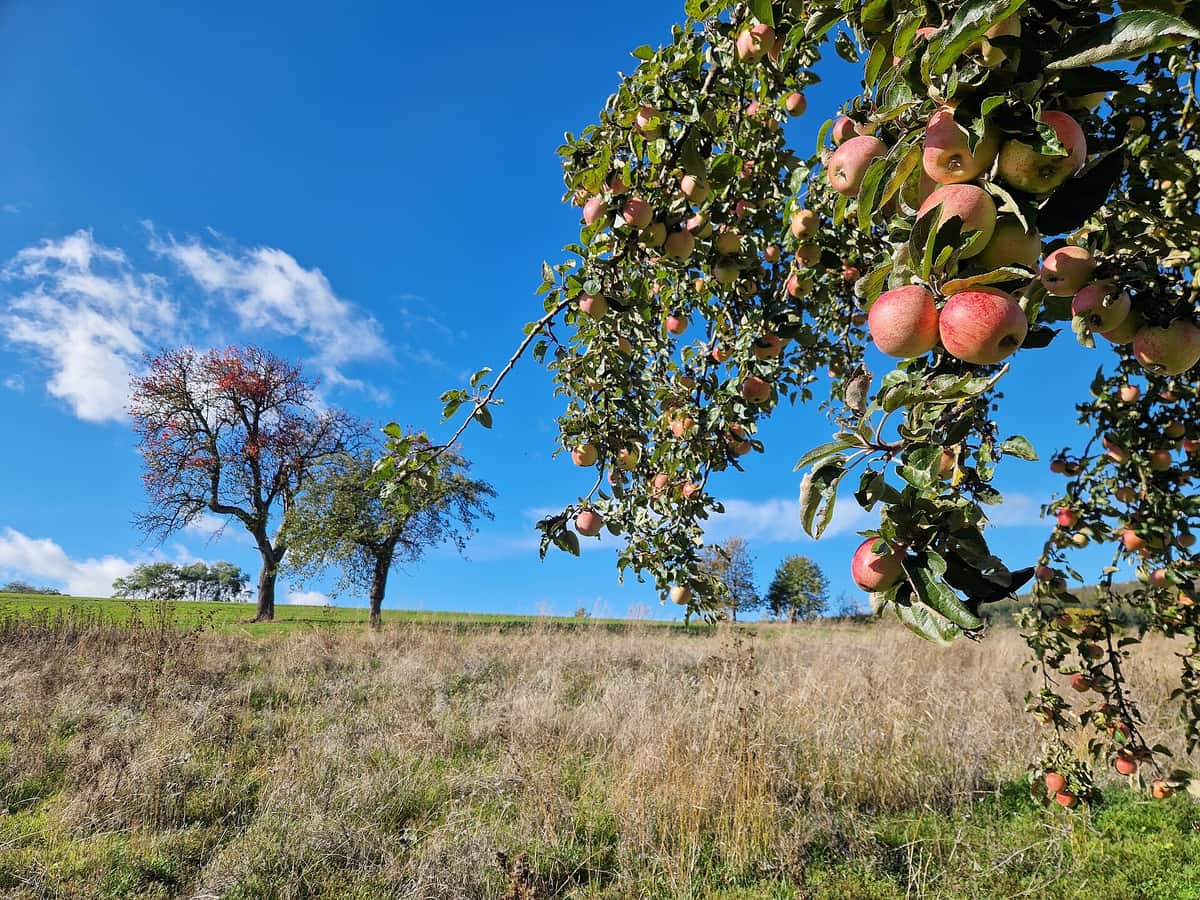
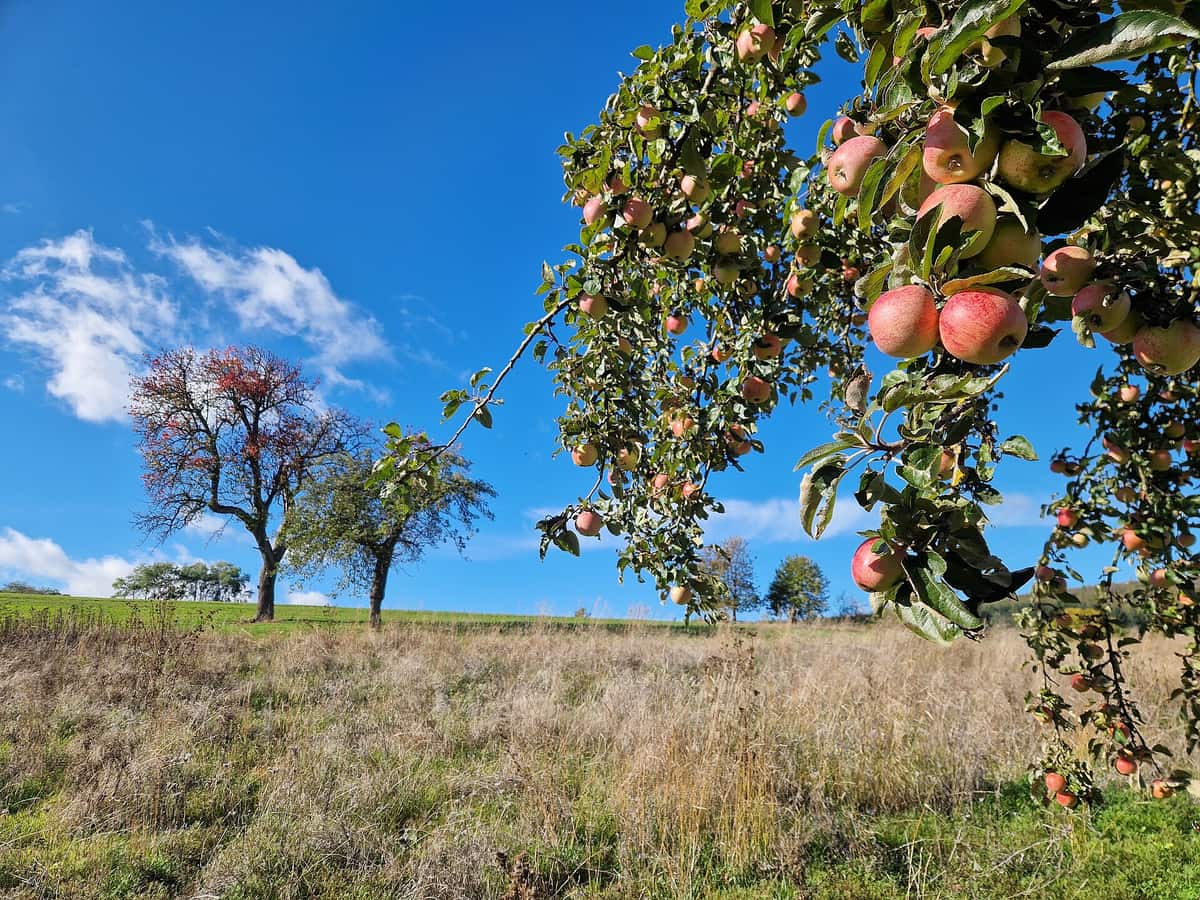
At a glance
Apple in the Temperate Himalaya
Picked from late July to October, depending on height and variety4,11,13
Fruit is picked about 130 to 150 days after full bloom, by variety. A grafted tree starts bearing in its second to fifth year and keeps bearing for decades.
No published guide covers this for the Temperate Himalaya, so this is an AI suggestion. Check it with local advice before you rely on it.
Across India
When to sow it
Twelve growing regions, January to December. Your region comes first.
Wait until December
The next sowing here is December.
- Transplant
- Harvest
- Today
- Not suited here
Compare all 12 regionsShow fewer regions
See the dates as a table
| Region | Sow | Nursery | Transplant | Harvest |
|---|---|---|---|---|
| Temperate Himalaya | DecemberMarch | Late July to October | ||
| Cold desert | Mid-March to April | September to October | ||
| Sub-tropical foothills | Not suited here | |||
| North-west plains | Not suited here | |||
| Gangetic plains | Not suited here | |||
| North-east hills and valleys | December to February | Late July to September | ||
| Arid west | Not suited here | |||
| Central plateau | Not suited here | |||
| Deccan plateau | Not suited here | |||
| South interior | Not suited here | |||
| West coast | Not suited here | |||
| East coast | Not suited here | |||
From seed to harvest
One season, day by day
Days from sowing
Before sowing
High density: pit filling
Vermicompost
3 to 5 kg per pit
High density: year of planting
FYM and vermicompost
3 kg FYM and 2 kg vermicompost per tree
High density: second year
FYM and vermicompost
4 kg FYM and 2.5 kg vermicompost per tree
High density: third year
FYM and vermicompost
5 kg FYM and 3 kg vermicompost per tree
High density: fourth year
FYM and vermicompost
6 kg FYM and 3.5 kg vermicompost per tree
High density: fifth year
FYM and vermicompost
7 kg FYM and 4 kg vermicompost per tree
High density: sixth year onwards
FYM and vermicompost
8 kg FYM and 5 kg vermicompost per tree
Standard trees on seedling rootstock
FYM
5 kg per tree in the first year, adding 5 kg a year to 50 kg in the tenth year, then 60, 70, 80 and 90 kg, and 100 kg per tree from the fifteenth year
Apply in February and March
Day 0
Sow
Day 130 to 150
Last picking
No published guide covers this for the Temperate Himalaya, so this is an AI suggestion. Check it with local advice before you rely on it.
Before sowing
Vermicompost
3 to 5 kg per pit · High density: pit filling
FYM and vermicompost
3 kg FYM and 2 kg vermicompost per tree · High density: year of planting
FYM and vermicompost
4 kg FYM and 2.5 kg vermicompost per tree · High density: second year
FYM and vermicompost
5 kg FYM and 3 kg vermicompost per tree · High density: third year
FYM and vermicompost
6 kg FYM and 3.5 kg vermicompost per tree · High density: fourth year
FYM and vermicompost
7 kg FYM and 4 kg vermicompost per tree · High density: fifth year
FYM and vermicompost
8 kg FYM and 5 kg vermicompost per tree · High density: sixth year onwards
Day 0
Sow
Day 130 to 150
Last pickingNo published guide covers this for the Temperate Himalaya, so this is an AI suggestion. Check it with local advice before you rely on it.
Water every 7 to 10 days, more at fruit set and fruit growth, April to August.5,11,12,16
What it needs
Soil, sun and warmth
Soil pH1,11,12,16
5.5 to 6.5
Deep, well-drained loam rich in organic matter, at least 45 cm deep, with no hard layer underneath and no standing water. Avoid heavy clay and compact subsoil.
Sunlight1,11
Full sun. Plenty of summer sunshine is needed for the fruit to colour well.
Temperature1,11,16
Grows best at 21 to 24 °C
Monthly temperatures for the Temperate Himalaya aren't in the library yet.
Water and feeding
Watering5,11,12,16
Apple trees suffer quickly in dry soil: fewer and smaller fruit and more June drop. April to August is the critical period, with the peak need after fruit set. Water every 7 to 10 days in summer and weekly after fruit set, then every 3 to 4 weeks until the trees go dormant. Watering in the fortnight before harvest improves fruit colour. In the temperate areas of Jammu, give 2 to 3 irrigations in June, July and August when dry weather lasts, cut drainage channels on wet or low-lying land, and mulch rainfed orchards with 15 cm of FYM, straw or cut grass.
In SKUAST trials, high-density trees needed from under 1 litre a tree a day at bud break in the first year to about 8 litres a tree a day in July for mature trees. Over-watering invites collar and root rot.
Weeding6,11,12,16
Weed regularly in the first years, since young trees lose nutrients to weeds. In bearing orchards keep the basin clean from bud break to July. Hand weeding, shallow hoeing that does not cut the surface roots, and organic mulch all work. A 10 cm mulch of dry grass keeps weeds down and holds moisture. Clover, fescue and orchard grass can be grown between the trees to build soil fertility and give fodder for milch animals.
| When | What | How much | How |
|---|---|---|---|
| High density: pit filling | Vermicompost | 3 to 5 kg per pit | |
| High density: year of planting | FYM and vermicompost | 3 kg FYM and 2 kg vermicompost per tree | |
| High density: second year | FYM and vermicompost | 4 kg FYM and 2.5 kg vermicompost per tree | |
| High density: third year | FYM and vermicompost | 5 kg FYM and 3 kg vermicompost per tree | |
| High density: fourth year | FYM and vermicompost | 6 kg FYM and 3.5 kg vermicompost per tree | |
| High density: fifth year | FYM and vermicompost | 7 kg FYM and 4 kg vermicompost per tree | |
| High density: sixth year onwards | FYM and vermicompost | 8 kg FYM and 5 kg vermicompost per tree | |
| Standard trees on seedling rootstock | FYM | 5 kg per tree in the first year, adding 5 kg a year to 50 kg in the tenth year, then 60, 70, 80 and 90 kg, and 100 kg per tree from the fifteenth year | Apply in February and March |
Varieties and yield
30 to 50 kg a tree
Yields vary with the plot, the seed and the season.
Red Delicious
Mid season; widely planted in Himachal. Spur and colour strains such as Super Chief, Scarlet Spur II, Red Velox and Jeromine suit high-density planting.
Golden Delicious
Late season; Jammu and Kashmir and Himachal. Also used as a polliniser.
Lal Ambri
Jammu and Kashmir; a cross of Red Delicious and Ambri that keeps well.
McIntosh
Himachal and Uttarakhand; prone to scab.
Chaubattia Anupam
Uttarakhand; yellow fruit with red stripes.
Gala (Redlum Gala, Gala Mitch)
Mid season, picked in August; used as pollinisers.
Fuji and Granny Smith
Late season, picked in October; pollinisers. The season may be too short for them at very high sites.
Firdous and Shireen
Scab-resistant varieties developed in Kashmir.
Mollies Delicious, Starkrimson, Red June and Irish Peach
Early season varieties listed for J&K. Tydeman's Early Worcester is an early polliniser.
Cox's Orange Pippin and Razakwar Jonathan
Mid season; also used as pollinisers.
Ambri
Late season; listed for J&K.
Good neighboursNo published guide covers this for the Temperate Himalaya, so this is an AI suggestion. Check it with local advice before you rely on it.
Grows well with
Organic and cultural controls only.
San Jose scale
Signs
Tiny grey scales on bark and young wood, purplish-red rings on young bark and red spots on fruit. Heavy attacks weaken and can kill trees.
What to do
- Prune out heavily infested branches in the dormant season and burn them
- Scrape scales off nursery plants with a gunny bag without hurting the bark
- Protect the natural enemies (Encarsia and Aphytis wasps, Chilocorus beetles) by avoiding needless sprays
Prevention
- Do not plant infested nursery stock or graft wood
- Do not grow willow or poplar in and around the orchard
Woolly apple aphid
Signs
White woolly colonies on bark, shoots and pruning wounds, and galls on the roots. Trees become stunted and fruit stays small.
What to do
- Remove water sprouts and cover pruning cuts and bark cracks
- Protect the parasitic wasp Aphelinus mali, which is well established in Kashmir orchards
Prevention
- Graft onto resistant Malling Merton (MM) rootstocks
European red mite
Signs
Leaves speckled, then dull, bronzed and dropping. Fruit stays small and may drop early.
What to do
- Prune out and destroy infested twigs in the dormant season
- Encourage ladybird beetles, predatory mites and anthocorid bugs
Prevention
- Keep trees vigorous with balanced feeding and timely irrigation
Codling moth
Signs
Caterpillars bore into the fruit and tunnel to the core; damaged fruit drops early.
What to do
- Pheromone traps, about 25 traps per hectare
- Collect and destroy overwintering cocoons from April to June
- Bury fallen fruit deep in August
Blossom thrips
Signs
Flowers wither or open lopsided, giving poor fruit set. Worse in hot, dry weather.
What to do
- Encourage the predators Chrysopa and ladybird beetles
Apple leaf blotch miner
Signs
Silvery or see-through mines in the leaves; heavy attacks cause leaf drop.
What to do
- Check leaves regularly
- Collect and destroy fallen leaves, which may hold pupae
- Pheromone traps for the male moths
- Remove loose bark to expose pupae
Root borer
Signs
Grubs feed on the thick roots in sandy loam; damage often shows only after heavy loss.
What to do
- Trap and kill the chestnut-red beetles in September
Prevention
- Avoid planting apple on dry, sandy soils
Hairy caterpillar
Signs
Caterpillars eat the leaves; heavy attacks strip trees bare and repeated attacks weaken them.
What to do
- Collect and destroy the egg masses
- Staple sacking (burlap) bands around the trunks and collect and destroy the caterpillars and pupae under them from May to the end of June
Shot hole and stem borers
Signs
Small holes in the bark, tunnels in the wood and sawdust at the holes, then yellowing and wilting leaves. Bad attacks can kill a tree.
What to do
- Prune out and destroy infested branches
- Leave a few fallen trunks and branches in the orchard in June and early July to trap egg-laying beetles
Prevention
- Keep trees vigorous with balanced feeding
Chaffer beetles
Signs
Beetles eat holes in leaves, buds, flowers and fruitlets at night; the white grubs feed on the roots and young plants may wilt.
What to do
- Shake young trees at dusk and collect and destroy the beetles
- Light traps from March to July to collect the beetles
Apple scab
Signs
Olive-green, velvety spots on the underside of young leaves that turn brown to black; leaves curl and drop. Fruit gets dark, corky spots and may crack.
What to do
- Collect fallen leaves in winter and destroy them or decompose them in a compost pit
- Shred fallen leaves in autumn and winter
- Prune for good air movement so leaves dry fast
Screen a photo with AI HealthPrevention
- Grow resistant varieties such as Firdous, Shireen, Prima, Priscilla or Sir Prize
- Keep the orchard floor clean of weeds, bushes and leaf litter
Marssonina leaf blotch (premature leaf fall)
Signs
Dark green mottling on mature leaves, then brown spots 5 to 10 mm across; leaves yellow and fall early in humid weather. Dark sunken spots on fruit.
Screen a photo with AI HealthWhat to do
- Collect fallen leaves and fruit from the orchard floor and compost them
- Prune for open, airy canopies
Alternaria leaf blotch
Signs
Small light brown spots with purple edges about a month after petal fall, later grey-brown patches; leaves drop early. Delicious strains are more prone.
What to do
- Remove winter prunings and fallen leaves
- Keep mites in check, since mite damage opens the way for this disease
Screen a photo with AI HealthPrevention
- Keep trees well fed and watered
Powdery mildew
Signs
White to grey powdery patches on young leaves and shoots; leaves fold and harden, shoots stay stunted. Worse in dry weather and on nursery plants.
What to do
- Cut out and destroy silvery infected shoot tips and buds while pruning
Screen a photo with AI HealthPrevention
- Keep the canopy open so air moves through it
Sooty blotch and flyspeck
Signs
Dull black smudges and clusters of tiny black dots on the fruit skin in late summer, mostly on fruit in shade.
What to do
- Prune for light and air so fruit dries quickly
- Keep weeds down and trim hedgerows near the orchard
Collar rot
Signs
Weak growth, sparse yellow or bronze leaves and small fruit; the bark at the base turns orange to dark brown underneath.
What to do
- Avoid wounding the collar
- Rogue out and destroy badly infected trees
- Clear crop residue, fallen fruit, weeds and long grass from the tree basin
Prevention
- Keep the bud or graft union 40 to 70 cm above the soil
- Do not over-water, and give flat land drainage channels
White root rot
Signs
Fine roots rot first, then the larger roots. Leaves yellow and drop early, fruit stays small, and badly affected trees pull out of the ground easily.
What to do
- Cut away the rotten roots
- Give the orchard a central drainage system
Black rot and canker
Signs
Frog-eye spots on the leaves, black rot on the fruit and reddish-brown sunken cankers with rings on the limbs and trunk.
What to do
- Avoid wounding the bark
- Cut out girdled limbs
- Take mummified fruit, dead wood and prunings out of the orchard and destroy them
Seed and the season's end
Saving seed16Part of this comes from the sources cited. The rest is an AI suggestion.
Apple does not come true from seed, so seed is saved only to raise rootstock seedlings. Take it from fully ripe fruit of healthy, vigorous, high-yielding trees. Crab apple, White Dotted Red, Yellow Newton, Golden Delicious and Northern Spy give seed that germinates and grows well.
Cleaning the seed
Wash the seed clean in water and dry it in the shade.
Keep dry seed in airtight containers in a cool, dry place; apple seed keeps for 2 to 3 years. Before sowing it needs 50 to 70 days of moist chilling at 1 to 5°C.
After the last pickingNo published guide covers this for the Temperate Himalaya, so this is an AI suggestion. Check it with local advice before you rely on it.
Apple is a perennial, so nothing is cleared after harvest. Once the leaves fall, rake them up and compost them, which cuts the scab carried to next spring. Take out fallen and mummified fruit, then prune in the dormant season. When an old orchard is replaced, do not plant new apple trees back into the old pits.
Rake up fallen leaves and fruit after leaf fall and compost them in a pit away from the trees. Chip or compost prunings; burn diseased wood rather than leaving it in the orchard.
Rotation
When an old orchard is removed, grow a few seasons of legumes, fodder grasses or vegetables before planting apple again, and do not set new trees back into the old pits.
Sources
Where this comes from
Our team has checked this guide against the sources at the end of the page.Reviewed by our team on 13 November 2026.
These published guides are the sources. Where none of them covers a detail for this region, the page shows an AI suggestion and labels it.
- Apple: soil and climateNational Horticulture BoardRead the source
- Apple: area under cultivationNational Horticulture BoardRead the source
- Package of practices for high density appleSKUAST-JammuRead the source
- IPM package of practices for apple (for producing quality fruits for export)Directorate of Plant Protection, Quarantine and Storage, Government of India (reviewed by ICAR-CITH Srinagar)Read the source
- Orchard management, plant establishment: apple varieties, rootstocks and spacingsH.P. Horticulture Development Society, Department of Horticulture, Himachal PradeshRead the source
- Spray schedule year 2026 (apple): preventive measuresDepartment of Horticulture, Himachal Pradesh, and Dr Y.S. Parmar University of Horticulture and Forestry, NauniRead the source
- Package of practices for fruit crops 2020 (apple chapter)Directorate of Extension, SKUAST-JammuRead the source
- Apple: plantingNational Horticulture BoardRead the source
- Apple: propagationNational Horticulture BoardRead the source
- Apple: harvesting and yieldNational Horticulture BoardRead the source
- Apple: irrigationNational Horticulture BoardRead the source
- Apple: intercultural operationsNational Horticulture BoardRead the source
- Apple: diseasesNational Horticulture BoardRead the source
- Apple: pestsNational Horticulture BoardRead the source
- Apple: varietiesNational Horticulture BoardRead the source
AI Farm Manager · In development
Plan this crop on your land
AI Farm Manager will turn guides like this one into a plan for your own plot. It doesn't make plans yet.