
Growing mango
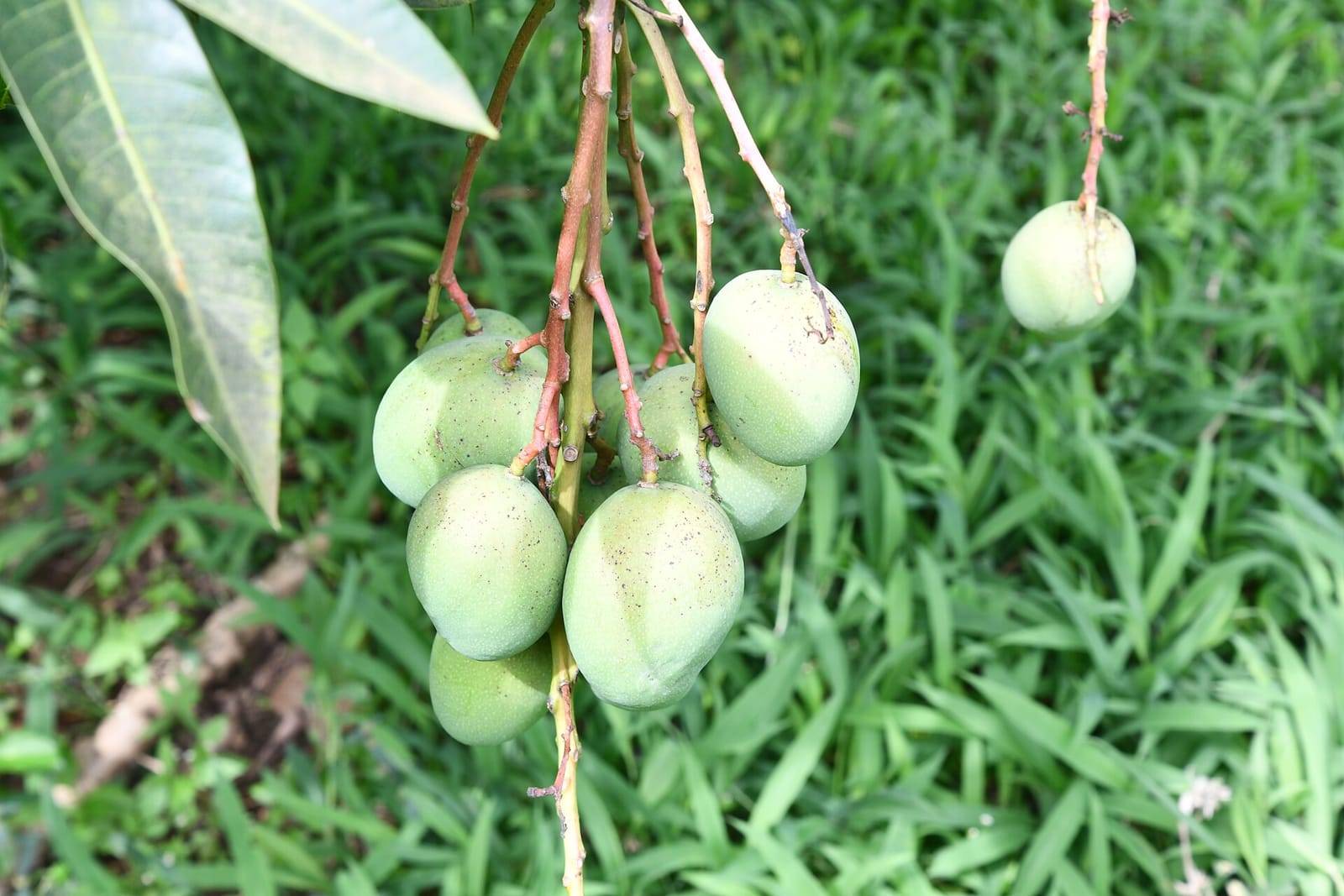
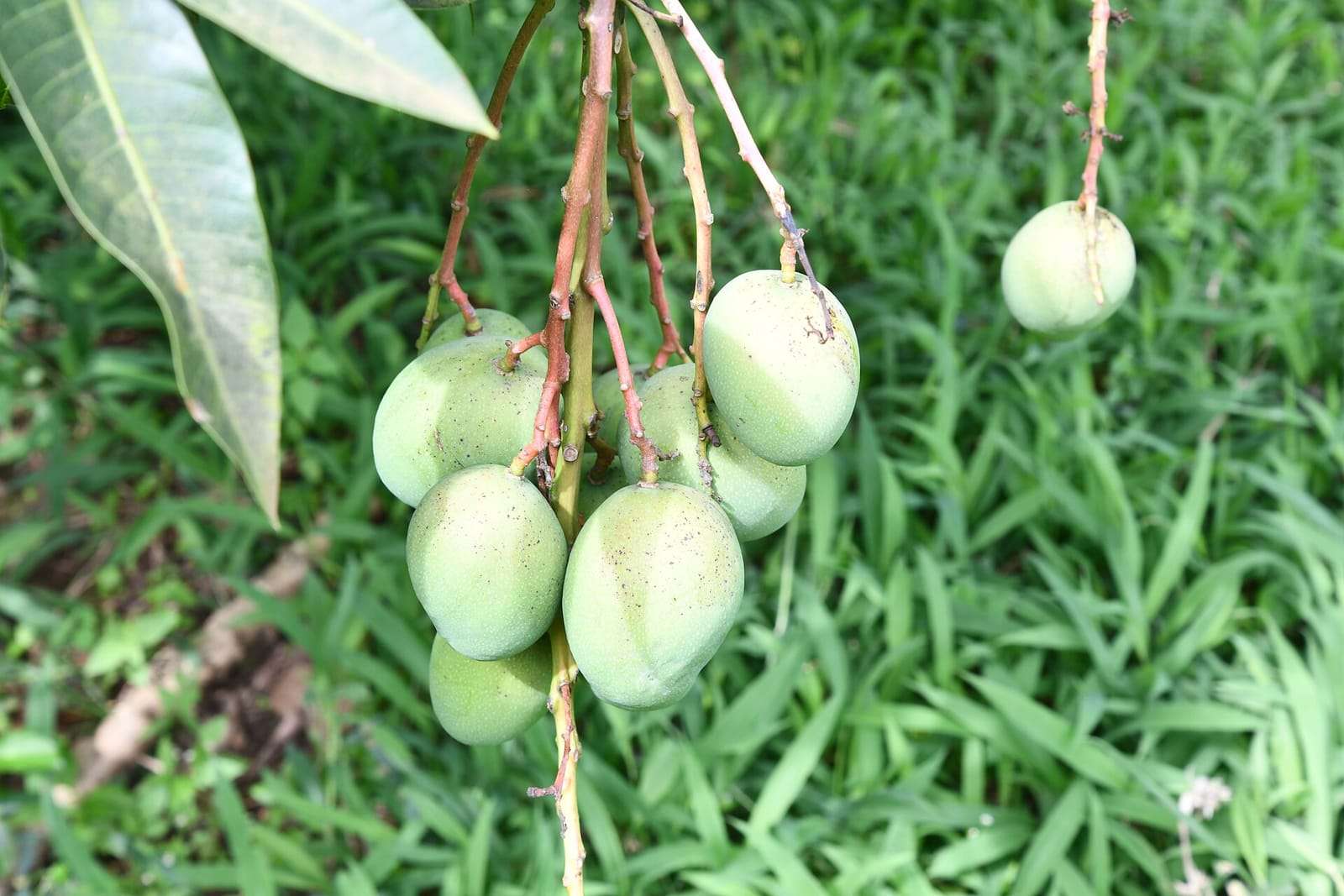
Mangifera indica · also called aamMango is a large evergreen fruit tree of the warm plains and coasts, raised from grafted plants. It needs frost-free winters and dry weather at flowering, so it does not suit the Kashmir valley or Ladakh.
North-west plains: Punjab, Haryana, Delhi, western Uttar Pradesh
At a glance
Mango in the North-west plains
Across India
When to sow it
Twelve growing regions, January to December. Your region comes first.
Too late this season
The window here was August to September. The next one opens in February.
- Transplant
- Harvest
- Today
- Not suited here
Compare all 12 regionsShow fewer regions
See the dates as a table
| Region | Sow | Nursery | Transplant | Harvest |
|---|---|---|---|---|
| North-west plains | August to SeptemberFebruary to March | First week of JulySecond week of JulyEnd of July | ||
| Temperate Himalaya | Not suited here | |||
| Cold desert | Not suited here | |||
| Sub-tropical foothills | September to early OctoberFebruary to April | MayLate JuneFirst half of JulySecond half of JulyFirst half of August | ||
| Gangetic plains | July to AugustFebruary to March | Late May to August | ||
| North-east hills and valleys | June to August, in the monsoon | June to August | ||
| Arid west | July to AugustFebruary to March | May to July | ||
| Central plateau | July to AugustFebruary to March | May to July | ||
| Deccan plateau | July to AugustFebruary to March | April to June | ||
| South interior | July to December | March to June | ||
| West coast | July to AugustFebruary to March | March to May | ||
| East coast | July to December | March to June | ||
From seed to harvest
One season, day by day
Days from sowing
Before sowing
1 to 3 years
FYM
5 to 20 kg per tree
Apply all the FYM in December
4 to 6 years
FYM
25 to 50 kg per tree
Apply all the FYM in December
7 to 9 years
FYM
60 to 90 kg per tree
Apply all the FYM in December
10 years and above
FYM
100 kg per tree
Apply all the FYM in December
Day 0
Sow
Before sowing
FYM
5 to 20 kg per tree · Apply all the FYM in December · 1 to 3 years
FYM
25 to 50 kg per tree · Apply all the FYM in December · 4 to 6 years
FYM
60 to 90 kg per tree · Apply all the FYM in December · 7 to 9 years
FYM4
100 kg per tree · Apply all the FYM in December · 10 years and above
Day 0
Sow
Day 105 to 112
Last picking4
Water every 10 to 12 days, more at fruit development, April to June.4
What it needs
Soil, sun and warmth
Soil pH1
5.5 to 8.5
Deep soil with no hard pan or kankar in the top 6 feet, pH below 8.5 to 60 cm, low salt and lime, and the water table below 3 m.
SunlightNo published guide covers this for the North-west plains, so this is an AI suggestion. Check it with local advice before you rely on it.
Full sun. Mango is a large tree that fruits on the outside of a sunny, open canopy.
Temperature1,3
Grows best at 24 to 27 °C
Frost: none tolerated.
Monthly temperatures for the North-west plains aren't in the library yet.
Water and feeding
Watering4
Young trees have shallow roots and need frequent watering in dry spells. Bearing trees need water while the fruit develops, from April to the end of June, every 10 to 12 days depending on the weather. Give one irrigation in February when the trees are fed. Give no water for 2 to 3 months from October to December.
Weeding4
Mango takes 3 to 7 years to start bearing, so grow intercrops in the space between young trees: they also cut weeds and soil loss. Onion, tomato, radish, beans, cauliflower, cabbage, leafy vegetables, moong, mash, gram and lentil suit; do not grow maize, sugarcane or bajra. Papaya, peach and plum can be grown as fillers until the mango bears. Give intercrops their own manure and water.
| When | What | How much | How |
|---|---|---|---|
| 1 to 3 years | FYM | 5 to 20 kg per tree | Apply all the FYM in December |
| 4 to 6 years | FYM | 25 to 50 kg per tree | Apply all the FYM in December |
| 7 to 9 years | FYM | 60 to 90 kg per tree | Apply all the FYM in December |
| 10 years and above | FYM | 100 kg per tree | Apply all the FYM in December |
Varieties and yield
60 to 120 kg a tree
Yields vary with the plot, the seed and the season.
Dusehri
Matures in the first week of July. Small to medium, sweet, fibreless fruit that keeps well.
Langra
Matures in the second week of July. Medium to large green fruit, fibreless, with fine flavour.
Alphonso
Recommended in 2000; matures in the first week of July. Medium fruit with firm, fibreless flesh.
Gangian Sandhuri (GN-19)
A sucking mango; matures at the end of July. Large fruit with orange pulp and plenty of juice.
GN1 to GN7
Sucking-type selections recommended in 1981, maturing from mid to late July; GN6 is known as Punjab Beauty.
Good neighbours1
Grows well with
Organic and cultural controls only.
Mango mealy bug
Signs
From January to April, nymphs and females suck sap from panicles, tender leaves, shoots and fruit stalks; panicles shrivel and trees get sooty mould. The nymphs hatch in the soil and climb the trunk.
What to do
- Dig or plough around the trees in summer to kill the eggs
Prevention
- By mid-December, fix a 15 to 20 cm wide slippery alkathene band round the base of the trunk with small nails, pack soil against its lower edge and wipe it now and then in the rains
Mango hopper
Signs
Very active in February and March at flowering. Swarms on tender leaves and flowers suck sap; flowers turn sticky and sooty, brown and drop. Worst in old, dense, neglected orchards.
What to do
- In old dense orchards, prune some branches in winter to let in light
Prevention
- Do not plant at high density
Stem borer
Signs
Grubs tunnel under the bark and up the trunk; sap and frass ooze from holes, and branches dry up.
What to do
- Kill the grubs by pushing an iron wire into their holes
Mango shoot borer
Signs
Caterpillars bore into leaf midribs and then down young shoots, which wither and droop. Young grafted plants suffer most.
Fruit flies
Signs
Active from the last week of May to the last week of July. Females lay eggs in ripening fruit, sticky fluid oozes from the punctures, and the fruit rots and drops.
What to do
- Hang PAU fruit fly traps, 16 per acre, in the third week of May and recharge them after 30 days if needed
Mango scales
Signs
A serious pest in some localities: scales suck sap from the leaves.
Mango malformation
Signs
Seedlings form clusters of small leafy shoots at the tips. On bearing trees, panicles thicken into a crowded witch's broom with few fertile flowers, then turn grey-brown and black.
What to do
- Remove affected shoots every month and destroy them
Powdery mildew
Signs
White powder on the panicles and flower stalks; flowers get dark streaks and drop, leaving the panicle bare.
Anthracnose and twig die-back
Signs
Dark brown to black spots on shoots, which wither; small dark raised spots on fruit; twigs die back from light brown spots.
What to do
- Prune out shoots with spots or canker and dead branches
Stem canker
Signs
Leaves on one or more branches discolour and dry, gum oozes from the bark, and rows of small dirty-white shell-like fungi appear on dead branches.
Black tip
Signs
Fruit grows long at the tip, which turns black and ripens early; it can cover half the fruit. Linked to gases from brick-kiln chimneys.
Prevention
- Plant orchards 5 to 6 km away from brick kilns
Seed and the season's end
Saving seed1
Mango is grown from grafted plants, because seedlings vary. Stones are saved only to raise rootstocks: take them from ripe fruit of seedling trees.
Mango stones lose viability quickly, so do not store them: sow soon after taking them out of the fruit, and keep only stones that sink in water.
After the last picking4
Mango is a perennial, so nothing is cleared after harvest. Take pruned wood out of the orchard at once, since it harbours stem and shoot borers. Trees over about 30 years old that bear poorly can be rejuvenated by heading them back.
Collect fallen and damaged fruit and destroy it, which cuts fruit fly. Compost healthy leaves and prunings; burn diseased twigs rather than leaving them in the orchard.
Rotation
When an old orchard is removed, grow a few seasons of legumes, green manure or vegetables before planting fruit trees again.
Sources
Where this comes from
Our team has checked this guide against the sources at the end of the page.Reviewed by our team on 13 November 2026.
These published guides are the sources. Where none of them covers a detail for this region, the page shows an AI suggestion and labels it.
- IPM package of practices for mango (for producing quality fruits for export)Directorate of Plant Protection, Quarantine and Storage, Government of India (reviewed by ICAR-CISH Lucknow)Read the source
- Package of practices for cultivation of fruits 2021 (mango chapter)Punjab Agricultural University, LudhianaRead the source
- Mango (horticulture: fruits)TNAU Agritech Portal, Tamil Nadu Agricultural UniversityRead the source
AI Farm Manager · In development
Plan this crop on your land
AI Farm Manager will turn guides like this one into a plan for your own plot. It doesn't make plans yet.